Home

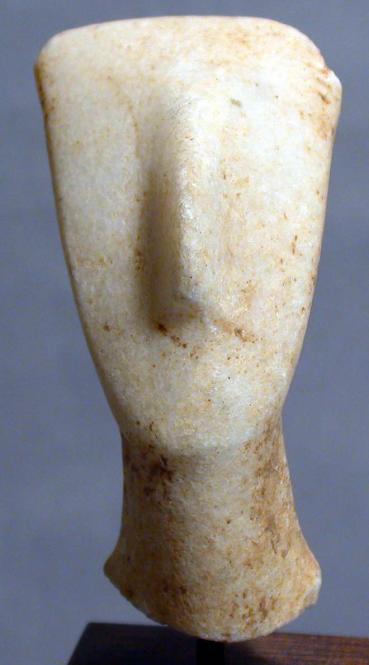
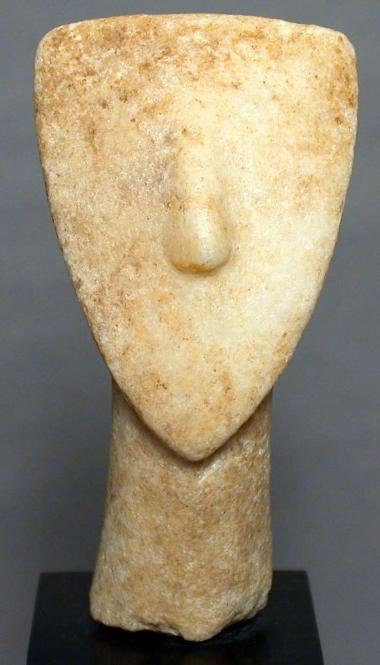
2021.40.16

Object Title
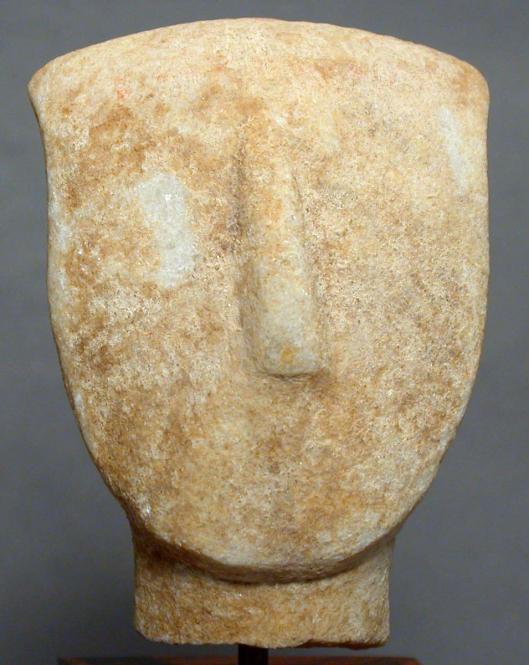
Head and neck of a marble figure
Measurements
H. 7 cm
Creation Date
2700–2300 B.C.
Credit Line
Bequest of Nanette B. Kelekian, 2020
Museum Contact
provenance.research@metmuseum.org
Culture
Country of Origin
Object Type
Materials / Techniques
Object URL
https://www.metmuseum.org/art/collection/search/330001
Museum's Definition of Antiquity
Created before the fall of the Roman Empire (476 AD)
Provenance Information
[With Nicolas Koutoulakis, Geneva]; [with Charles D. Kelekian, New York]; from after 1970 and until 2020, collection of Nanette B. Kelekian, New York.
Exhibition Information
None
Publication Information
None
Section of the AAMD Guidelines relied upon for the exception to 1970
Gift or bequest expected or on loan prior to 2008
Explain why the object fits the exception set forth above
The object qualifies as an exception to the 1970 rule because Nanette Kelekian signed a will prior to 2008 that documents her intent to bequeath the object to the Museum. Additionally, Charles D. Kelekian (d. 1982) had a practice of collecting works once owned by the Dikran G. Kelekian gallery, dissolved in 1952. He transferred many of these works to his daughter, Nanette, during his lifetime. Her records indicate this work was transferred after 1970.
2021.40.12

Object Title
Head and neck from a marble figure
Measurements
H. 7.4 cm
Creation Date
2700-2300 B.C
Credit Line
Bequest of Nanette B. Kelekian, 2020
Museum Contact
provenance.research@metmuseum.org
Culture
Country of Origin
Object Type
Materials / Techniques
Object URL
https://www.metmuseum.org/art/collection/search/329997
Museum's Definition of Antiquity
Created before the fall of the Roman Empire (476 AD)
Provenance Information
Until 1972, with Nicolas Koutoulakis, Paris]; 1972, purchased by Nanette B. Kelekian from N. Koutoulakis; 1972-2020, collection of Nanette B. Kelekian, New York.
Exhibition Information
None
Publication Information
None
Section of the AAMD Guidelines relied upon for the exception to 1970
Gift or bequest expected or on loan prior to 2008
Explain why the object fits the exception set forth above
This object qualifies as an exception to the 1970 rule because Nanette Kelekian signed a will prior to 2008 that documents her intent to bequeath the object to the Museum.

2021.40.11

Object Title
Head and neck from a marble figure
Measurements
H. 7.5 cm
Creation Date
2700-2300 B.C
Credit Line
Bequest of Nanette B. Kelekian, 2020
Museum Contact
provenance.research@metmuseum.org
Culture
Country of Origin
Object Type
Materials / Techniques
Object URL
https://www.metmuseum.org/art/collection/search/329996
Museum's Definition of Antiquity
Created before the fall of the Roman Empire (476 AD)
Provenance Information
[Until 1972, with Simone de Monbrison, Paris]; 1972, purchased by Nanette B. Kelekian from Simone de Monbrison; 1972-2020, collection of Nanette B. Kelekian, New York.
Exhibition Information
None
Publication Information
None
Section of the AAMD Guidelines relied upon for the exception to 1970
Gift or bequest expected or on loan prior to 2008
Explain why the object fits the exception set forth above
The object qualifies as an exception to the 1970 rule because Nanette Kelekian signed a will prior to 2008 that documents her intent to bequeath the object to the Museum.

2021.40.9

Object Title
Terracotta mastoid skyphos
Measurements
H. 7.3 cm (2-7/8 in.) x W. 15 cm (5-7/8 in.) (across handles)
Creation Date
ca. 500 B.C.
Credit Line
Bequest of Nanette B. Kelekian, 2020
Museum Contact
provenance.research@metmuseum.org
Culture
Country of Origin
Object Type
Materials / Techniques
Object URL
https://www.metmuseum.org/art/collection/search/329994
Museum's Definition of Antiquity
Created before the fall of the Roman Empire (476 AD)
Provenance Information
[With Koeffler (Kofler?) Gallery, Lucerne, Switzerland]; [until 1978, with Charles D. Kelekian, New York]; by 1978 and until 2020, collection of Nanette B. Kelekian, New York.
Exhibition Information
None
Publication Information
None
Section of the AAMD Guidelines relied upon for the exception to 1970
Gift or bequest expected or on loan prior to 2008
Explain why the object fits the exception set forth above
The objects qualifies as an exception to the 1970 rule because Nanette Kelekian signed a will prior to 2008 that documents her intent to bequeath the object to the Museum. Additionally, Charles D. Kelekian (d. 1982) had a practice of collecting works once owned by the Dikran G. Kelekian gallery, dissolved in 1952. He transferred many of these works to his daughter, Nanette, during his lifetime. Her records indicate this work was transferred in by 1978.

2021.19.1

Object Title
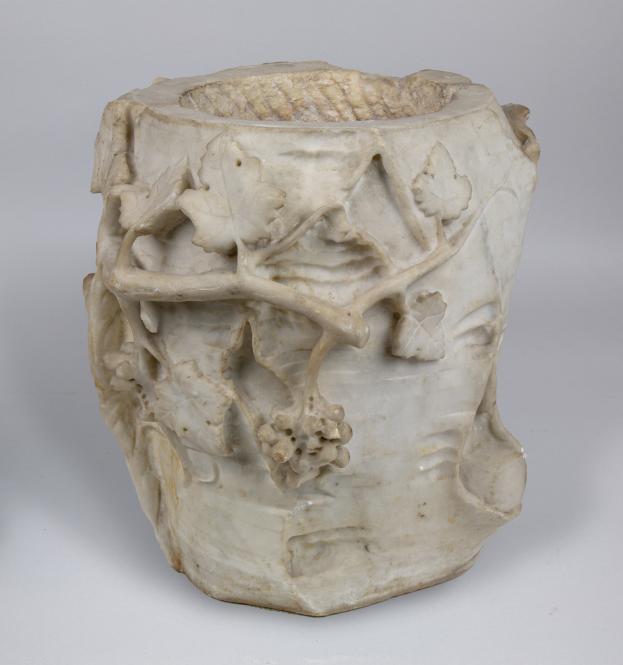
Marble cinerary urn in the form of a tree stump with leaves and grapes
Measurements
H: 11 ¼ in. (28.6 cm)
Creation Date
ca. 1st century A.D.
Credit Line
Gift of John J. Medveckis in honor of Emily Rafferty and in celebration of the Museum's 150th Anniversary, 2021
Museum Contact
provenance.research@metmuseum.org
Culture
Country of Origin
Object Type
Materials / Techniques
Object URL
https://www.metmuseum.org/art/collection/search/257866
Museum's Definition of Antiquity
Created before the fall of the Roman Empire (476 AD)
Provenance Information
By 1963, collection of Giorgio Sangiorgi (1887-1965), Rome, Italy and Monaco; 1965 – 2001, by descent to his son Sergio Sangiorgi, Monaco; December 6, 2001, acquired by John Medveckis, purchased from Sergio Sangiorgi through Christie’s, New York (lot 596); 2001 – present, collection of John Medveckis, Philadelphia; 2007 – present, on loan to the Metropolitan Museum of Art (displayed in the Roman Court, MMA L.2007.1.1)
Exhibition Information
The object has been on display in the Roman Imperial Court (Gallery 162) since 2007.
Publication Information
Christie’s, New York in the sale of December 6, 2001, p. 224, lot 596.
Section of the AAMD Guidelines relied upon for the exception to 1970
Gift or bequest expected or on loan prior to 2008
Explain why the object fits the exception set forth above
The marble cinerary urn has been on loan and on display in the galleries since 2007. In addition, research into its provenance has traced the object’s history back to 1963, when it was in the collection of Giorgio Sangiorgi (1887-1965), Rome and Monaco, by descent to his son Sergio Sangiorgi, of Monaco. We understand the Senior Sangiorgi emigrated to Monaco before his death. The object was likely produced in Italy. Cinerary urns with elaborately carved foliate designs are widespread in Early Imperial Rome and other major Roman-period cities in Italy. While a tree trump is not a common shape, urns of this period frequently imitated other media and shapes in marble.

2019.193.80

Object Title
Railing pillar with a female nature spirit (yakshi) standing on a grotesque (gana)
Measurements
H. 211/4 in. (54 cm)
Creation Date
ca. 2nd century A.D
Credit Line
Gift of Florence and Herbert Irving, 2019
Museum Contact
provenance.research@metmuseum.org
Culture
Country of Origin
Object Type
Materials / Techniques
Object URL
https://www.metmuseum.org/art/collection/search/748360
Museum's Definition of Antiquity
Created before mid-6th century AD (end of Gupta era)
Provenance Information
[R. H. Ellsworth Ltd. , New York, until 1987; sold to Irving]; Florence and Herbert Irving , New York (1987–2019; donated to MMA)
Exhibition Information
None
Publication Information
None
Section of the AAMD Guidelines relied upon for the exception to 1970
Gift or bequest expected or on loan prior to 2008
Explain why the object fits the exception set forth above
The object was designated as a promised gift by the Irvings in 1989.

2019.193.1

Object Title
Pendant in the shape of a coiling dragon
Measurements
Diam. 1 ¾ in. (4.4 cm)
Creation Date
Shang dynasty (ca. 1600-1046 B.C.), 13th -12th century B.C.
Credit Line
Gift of Florence and Herbert Irving, 2019
Museum Contact
provenance.research@metmuseum.org
Culture
Country of Origin
Object Type
Materials / Techniques
Object URL
https://www.metmuseum.org/art/collection/search/748361
Museum's Definition of Antiquity
Created before the end of the Han Dynasty (220 AD)
Provenance Information
[P. C. Lu & Sons Ltd. , Hong Kong, until 1986; sold to Irving]; Florence and Herbert Irving , New York (1986–2019; donated to MMA)
Exhibition Information
None
Publication Information
None
Section of the AAMD Guidelines relied upon for the exception to 1970
Gift or bequest expected or on loan prior to 2008
Explain why the object fits the exception set forth above
The object was designated as a promised gift by the Irvings in 1989.

2021.19.2

Object Title
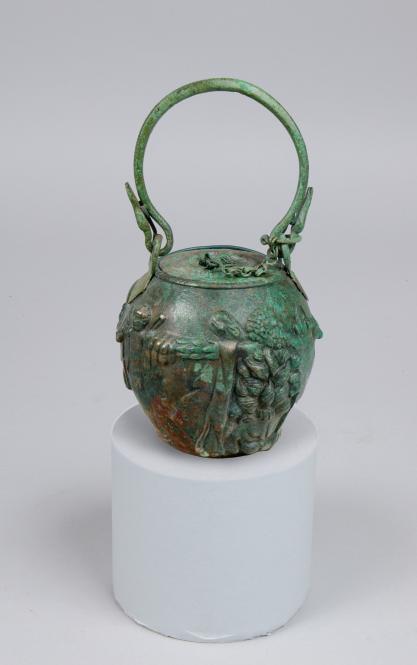
Bronze balsamarium decorated with lion-skins and herms
Measurements
H. without handle: 3 in. (7.6 cm)
Creation Date
late 1st–early 2nd century A.D.
Credit Line
Gift of John J. Medveckis in honor of Emily Rafferty and in celebration of the Museum's 150th Anniversary, 2021
Museum Contact
provenance.research@metmuseum.org
Culture
Country of Origin
Object Type
Materials / Techniques
Object URL
https://www.metmuseum.org/art/collection/search/257867
Museum's Definition of Antiquity
Created before the fall of the Roman Empire (476 AD)
Provenance Information
By the mid-1960s said to be in the collection of Kenneth John Hewett (1914-1994), London; 1995 – 2004, private collection; June 9, 2004, acquired by John Medveckis, purchased through Sotheby’s, New York (lot 49); 2004 – 2021, collection of John Medveckis, Philadelphia; acquired in 2021, gift of John Medveckis.
Exhibition Information
None
Publication Information
Sotheby's, New York. 2004. Egyptian, Classical, and Western Asiatic Antiquities. lot 49.
Section of the AAMD Guidelines relied upon for the exception to 1970
Gift or bequest expected or on loan prior to 2008
Explain why the object fits the exception set forth above
The balsamarium has been on loan and on display at The Metropolitan Museum of Art since 2007. Additionally, research has traced the object’s history back to the mid-1960s, when it is said to have been in the collection of Kenneth John Hewett (1914-1994). Numerous bronze balsamaria of comparable shape and technique have been found in Roman Gaul (present-day France), and it is thought that many were produced there. The closest comparison for iconography comes from San Giorgio, Trentino, in northern Italy (Claudia Braun, 2001, Römische Bronzebalsamarien mit Reliefdekor, p. 130 and pl. 47, cat. 43, Trento, Ufficio Beni Archeologici, acc. no. A.s.G. 113). However, the origin of ancient metalwork is difficult to trace, and bronze balsamaria have also been found in other areas of the Roman Empire, especially Germany, Romania, and Bulgaria.

2020.372.1-.144

Object Title
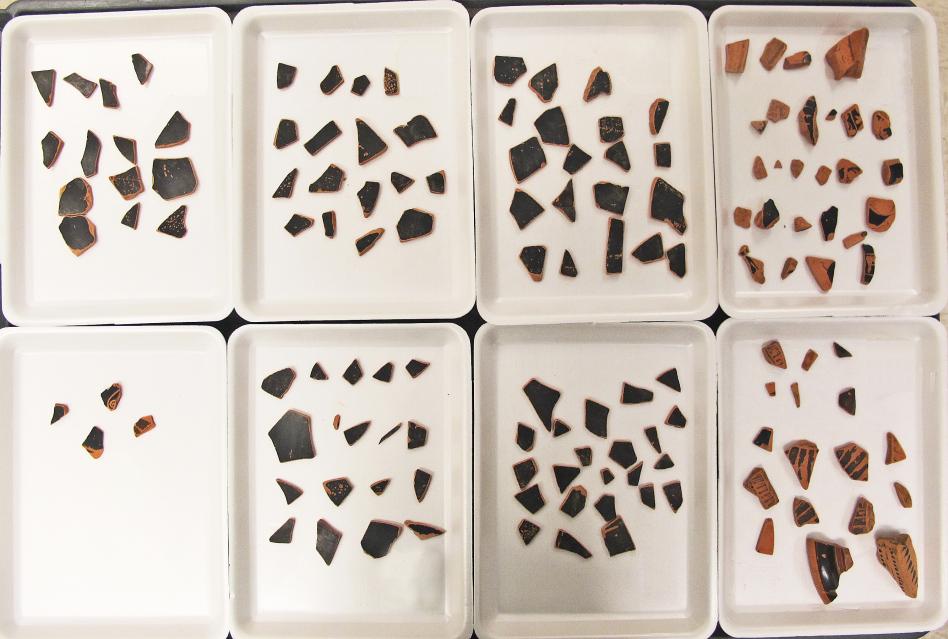
Terracotta fragments of a psykter-column-krater joining 1986.11.12 attributed to the Troilos Painter
Measurements
144 fragments of various size and shape
Creation Date
ca. 480-470 B.C.
Credit Line
Gift of R. Blatter, 2020
Museum Contact
provenance.research@metmuseum.org
Culture
Country of Origin
Object Type
Materials / Techniques
Object URL
https://www.metmuseum.org/art/collection/search/638272
Museum's Definition of Antiquity
Created before the fall of the Roman Empire (476 AD)
Provenance Information
[By March 1982, with Sandro Cimicchi, Basel, Switzerland]; early 1980s,
acquired by Rolf Blatter, gift from Sandro Cimicchi; early 1980s – 2015, collection of
Rolf Blatter, Bolligen, Switzerland; 2015-2020, by descent to his wife, Elsbeth Blatter;
2014-2020, on loan to the MMA; 2020, acquired by the Metropolitan Museum of Art,
gift of Elsbeth Blatter.
Exhibition Information
None
Publication Information
M. Padgett, "A Unique Vase in The Metropolitan Museum of Art," in A.J. Clark and J. Gaunt eds., Essays in Honor of Dietrich von Bothmer (Amsterdam, 2002), p. 249, f. 1 and p. 256, fn. 27
Section of the AAMD Guidelines relied upon for the exception to 1970
Cumulative facts and circumstances
Explain why the object fits the exception set forth above
The fragments join the Psykter Column- Krater, 1986.11.12 and, when possible, an effort will be made to incorporate them into the vase. The fragments were published in 2002. They have been on loan to the Museum since 2014, but have not been displayed as they have no figural decoration; as a loan they have been published on the Museum’s website.

2018.913.4

Object Title
Bone plaque with Female Dancer
Measurements
6 5/8 × 1 11/16 × 13/16 in. (16.8 × 4.3 × 2 cm)
Creation Date
4th–6th century
Credit Line
Gift of Dr. Marilyn Jenkins-Madina in loving memory of her husband, professor Maan Z. Madina, 2018
Culture
Country of Origin
Object Type
Materials / Techniques
Object URL
https://www.metmuseum.org/search-results#!/search?q=2018.913.4
Provenance Information
Charles Dikran Kelekian (d. 1982), New York; by descent to Nanette Kelekian, New York (sold 1986); [Sotheby’s, New York, May 1986 (sale no. 5464), lot no. 223/7]; sold to Ma’n Z. Madina and Marilyn Jenkins-Madina, New York (1986–2018); gift from Marilyn Jenkins-Madina to The Metropolitan Museum of Art, 2018.
Exhibition Information
None.
Publication Information
Sotheby’s, New York, May 1986 (sale no. 5464), lot no. 223/7.
Section of the AAMD Guidelines relied upon for the exception to 1970
Cumulative facts and circumstances
Explain why the object fits the exception set forth above
This work was in the collection of the dealer Charles Dikran Kelekian (active 1919-1982). This work was published in 1986 when it was sold by his daughter, Nanette Kelekian, at auction at Sotheby’s New York to Maan Z. Madina and Lyn Jenkins-Madina. The work has been in the New York collection of the Madinas for over 30 years. The Maenad is a rare late antique example of a female mythological figure on bone. An adaption of work attributed to Kallimachos (ca. 410-400 B.C.E.), this iconographical Maenad type is an important aspect of the Dioyonsiac motif in late antiquity and fits with other plaques in the Museum’s collection.


Subscribe to The Metropolitan Museum of Art