Home

TR.572.2011

Object Title
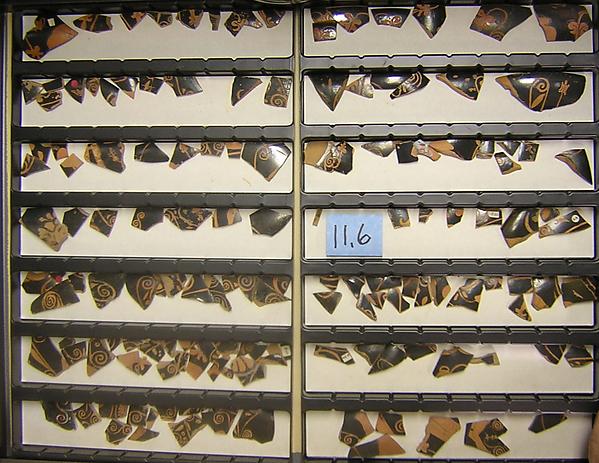
Group of approximately 10,000 predominantly Greek Vase Fragments
Measurements
The fragments vary considerably in size but a considerable number fits within a range of 4 to 6 inches. Many more fragments are smaller rather than larger.
Creation Date
ca. 6th-4th Century B.C.
Credit Line
Gift of Dietrich von Bothmer, Distinguished Research Curator, Greek and Roman Art, 2011
Culture
Country of Origin
Materials / Techniques
Object URL
http://www.metmuseum.org/collection/the-collection-online/search/701075
Provenance Information
Dietrich von Bothmer was a long-time curator and scholar of Greek & Roman Art at the Museum, from 1946 until his death in 2009. Throughout his career at the Museum, he acquired Attic vase fragments which came to form a study collection. For some of the fragments, the Museum knows the date and dealer for Dr. von Bothmer’s acquisition. For others, there is no acquisition information. The collection has not yet been catalogued, however the Museum is committed to cataloguing, photographing and publishing it electronically. Once the fragments are catalogued, any known provenance will be published on the Museum’s web site.
Exhibition Information
None.
Publication Information
Most of the pieces are unpublished. The exceptions appear in Sir John Beazley’s compendia of Attic vase-painting: Attic Black-figure Vase-painters (1956), Attic Red-figure Vase-painters (2nd edition, 1963), and Paralipomena (1971). Many of the fragments by Douris are included in Diana Buitron’s monograph on the painter (Mainz, 1995). Fragments by Makron are included in Norbert Kunisch’s monograph (Mainz, 1997). Isolated works are published elsewhere.
Section of the AAMD Guidelines relied upon for the exception to 1970
Cumulative facts and circumstances
Explain why the object fits the exception set forth above
The study collection assembled by Dr. von Bothmer represents over fifty years of study and expertise, and it complements the Museum’s distinguished collection of prehistoric, Greek, Etruscan, and Roman pottery. Dr. von Bothmer identified and grouped the fragments according to well-defined art historical criteria – shape, date, painter, sometimes potter, subject matter. The degree of refinement in the classification is considerable.

Though the material consists primarily of small pieces, its artistic interest resides, to a considerable degree, in the artists who are represented, including Onesimos, Epiktetos, Douris, Makron, the Brygos Painter, the Berlin Painter, the Villa Giulia Painter, and other well-known names. Still other fragments are noteworthy for details of shape or execution.

The Bothmer Fragment Collection presents a very extensive and significant range of opportunities for study among scholars world-wide, notably those expert in Greek vase-painting. In addition, it makes possible joins with pieces in other museums, particularly those with holdings acquired during the nineteenth century from the Campana Collection.

In the spirit of cooperation between the Museum and Italy, the Ministry for Cultural Heritage and Activities of the Italian Republic consented to the Museum accepting this bequest as a resource for research, publication, and display. In its agreement with the Ministry, the Museum agreed to strive to facilitate the recomposition of original objects by donating joining fragments in the Bothmer Fragment Collection to other institutions, or, where appropriate, requesting donations to the Museum, in order to augment fragments in the Bothmer collection.
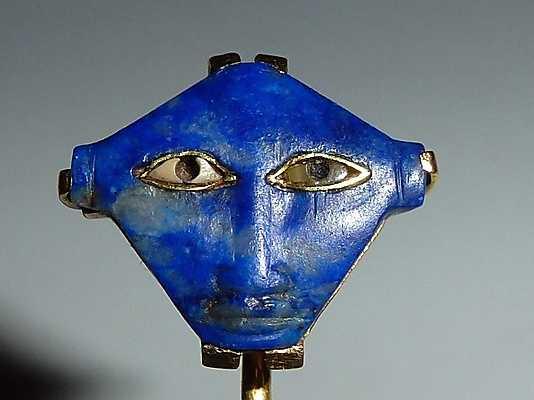
2012.178

Object Title
Face of the goddess Hathor
Measurements
Height: 12 mm
Creation Date
Middle Kingdom or later, ca. 1981-1070 B.C.
Credit Line
Purchase, Lila Acheson Wallace Gift, 2012
Culture
Country of Origin
Object Type
Object URL
http://www.metmuseum.org/Collections/search-the-collections/100050465
Provenance Information
Acquired by Konstantinos Notaras, London, at Portobello Road market, London, ca. 1969-1970. Consigned by Mr. Notaras to Bonhams, London, April 28, 2010, lot 20. Sold to Rhea Gallery, Zurich. Sold by Rhea Gallery, Zurich, to the Museum.
Exhibition Information
The work was exhibited in connection with the Bonhams auction.
Publication Information
Bonhams catalogue, London, April 28, 2010, lot 20.
Section of the AAMD Guidelines relied upon for the exception to 1970
Informed judgement that works were outside of the country of modern discovery before 1970
Explain why the object fits the exception set forth above
The work has a provenance established to ca. 1969-1970, when it was purchased in a London street market, Portobello Road, but the Metropolitan Museum has been unable to ascertain the exact date of that purchase. The work is mounted as a European tie-pin in a setting of 9 carat gold specifically designed to hold it. The style dates the mounting to a period pre ca. 1920; the pin is contained in a fitted box of the same date embossed with the name of an English jewelry retailer. The inlay was sold at public auction in 2010 so mounted and boxed, and is published with an illustration in the auction catalogue. Precious-stone inlays of this size, quality, type and date are extremely rare. The piece both broadens the range and deepens a constructional understanding of the Museum’s existing collection of largely intact Egyptian Middle Kingdom jewelry.

2010.166

Object Title
Monstrous male figure
Measurements
Height 4 in. (10.1 cm)
Creation Date
Late 3rd-early 2nd millennium B.C.
Credit Line
Purchase, 2009 Benefit Fund and Friends of Inanna Gifts; Gift of Noriyoshi Horiuchi, 2010
Country of Origin
Object Type
Object URL
http://www.metmuseum.org/Collections/search-the-collections/30007326
Provenance Information
The work was reportedly found in the early 1960’s with five similar works near Faza, 75 kilometers southeast of Shiraz in the province of Fars in Iran. According to Roman Ghirshman, who published the work in 1963, the work was once in the Azizbeghlou collection in Tehran, Iran, but was sold before 1963. In 1966, the work was exhibited at the Musée Rath in Geneva, Switzerland and the catalogue accompanying the exhibition noted that the work was in a private collection. The Metropolitan Museum believes, but does not have independent confirmation, that the private collection was that of Charles Gillet, who died in 1966, or his partner, Marion Schuster, both of Lausanne, Switzerland. Marion Schuster apparently inherited all or most of Charles Gillet’s collection upon his death. When Marion Schuster died, one of her daughters, Mathilde de Goldschmidt Rothschild, who lived in Europe, inherited the work. On July 10, 1989, the work was sold at a Sotheby’s auction in London, Antiquities from the Collection of the Late Madame Marion Schuster, Lausanne and by Descent the Property of Madame Mathilde de Goldschmidt Rothschild, as lot 59. In 1992, the work was sold by Robin Symes to Bodo Schöps, who, in 2004, transferred ownership to the Exartis Foundation. The Exartis Foundation then transferred ownership to Mrs. Hiroko Horiuchi who, in 2010, transferred ownership to Mr. Noriyoshi Horiuchi, from whom The Metropolitan Museum of Art acquired the work.
Exhibition Information
In 1966, the work was exhibited at the Musée Rath in Geneva, Switzerland and was also exhibited in connection with the Sotheby’s auction in 1989. The work has been on loan to The Metropolitan Museum of Art since 1999 and on display in the Museum’s Ancient Near East galleries since that time.
Publication Information
The work was first published in 1963 in Ghirshman, Roman, “Notes Iraniennes XII, Statuettes Archaïques du Fars (Iran).” Artibus Asiae 26, pp. 151-160. In 1966, the work was published in the catalogue accompanying Musée Rath exhibition. The work was published again in 1968 in Nagel, Wolfram, “Westmakkanische Rundplastik.” Berliner Jahrbuch für Vor- und Frügeschichte 8, pp.104-19. The work was also published in the Sotheby’s auction catalogue in 1989.
Section of the AAMD Guidelines relied upon for the exception to 1970
Informed judgement that works were outside of the country of modern discovery before 1970
Explain why the object fits the exception set forth above
The work has provenance established to the 1960’s. Although the Metropolitan Museum has been unable to confirm when the work left Iran on a permanent basis, the Metropolitan Museum suspects that the work was permanently outside Iran and in a Swiss private collection by 1966 since all parties associated with the work since 1966 were Swiss and lived in Switzerland or elsewhere in Europe. The work was published in 1963, 1966, 1968 and 1989, when it was sold at public auction. The work was on public display at the Musée Rath in Geneva in 1966, and has been on display at The Metropolitan Museum of Art since 1999. The work is one of six such sculptures known to exist and fulfills a crucial function in The Metropolitan Museum of Art’s collection by allowing the Museum to document an area of the ancient world that became known to archaeologists only a few decades ago.

2011.582

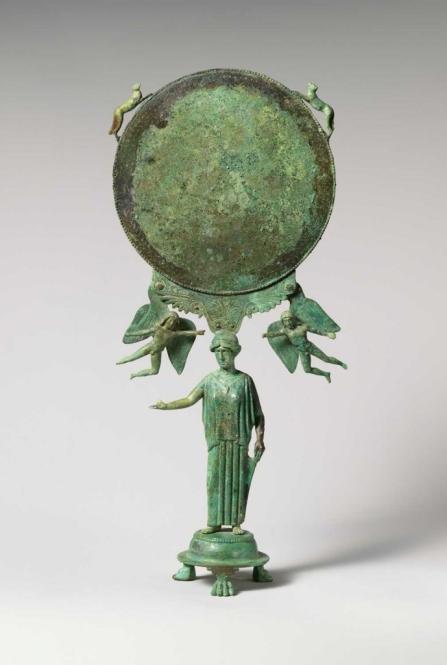
Object Title
Caryatid mirror
Measurements
H. 12 5/8 in., Diam. of disk 5 3/8 in.
Creation Date
mid-5th century B.C.
Credit Line
Gift of the family of Thomas A. Spears, in his memory, 2011
Culture
Country of Origin
Object Type
Materials / Techniques
Object URL
http://www.metmuseum.org/Collections/search-the-collections/130017476
Provenance Information
[Prior to 1990, reportedly with Heidi Vollmoeller, Galerie Heidi Vollmoeller, Zurich, Switzerland]; purchased by Athanasios Ghertsos, Greek Consul in Zurich, from Galerie Heidi Vollmoeller; ca. 1990, purchased by Frieda Tchacos Nussberger from Athanasios Ghertsos; [ca. 1990-1993, with Frieda Tchacos Nussberger, Gallerie Nefer, Zurich]; 1993, purchased by Thomas A. and Colette Spears from Frieda Tchacos Nussberger; 1993-2011, collection of Thomas A. and Colette Spears, New York; from 1999, on loan to the Metropolitan Museum of Art; acquired in 2011, gift of the family of Thomas A. Spears.
Exhibition Information
The work has been on loan to The Metropolitan Museum of Art since 1999 and on display since 2000.
Publication Information
Hemingway, Seán A. and Dr. Joan R. Mertens. 2012. "Recent Acquisitions, A Selection: 2010-2012." The Metropolitan Museum of Art Bulletin, 70(2): p. 10.
Section of the AAMD Guidelines relied upon for the exception to 1970
Cumulative facts and circumstances
Explain why the object fits the exception set forth above
This mirror has provenance established to before 1990. It has been loan since 1999 and on display in the Greek galleries since 2000. Bronze caryatid mirrors occupy a special place in Greek art on a small scale because they are often very fine pieces of three-dimensional sculpture that can be related to monumental stone counterparts. The Spears example is a major addition to the Greek and Roman Department’s collection of Greek bronzes, and specifically of Archaic and Classical caryatid mirrors.

2011.394

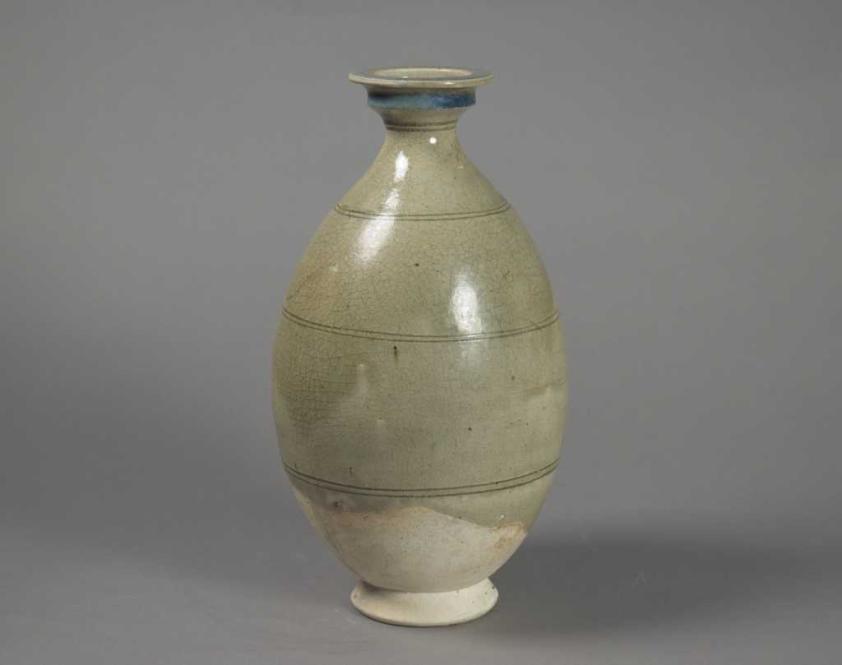
Object Title
Bottle
Measurements
H. 11 ¼ in. (28.6 cm); Diam. 6 in. (15.2 cm); Diam. of rim 2 7/8 in. (7.3cm); Diam. of foot 3 1/8 in. (7.9cm)
Creation Date
Late 6th-early 7th century
Credit Line
Purchase, Barbara and William Karatz Gift, 2011
Culture
Country of Origin
Object Type
Materials / Techniques
Object URL
http://www.metmuseum.org/Collections/search-the-collections/60051127
Provenance Information
Acquired by Robert Ellsworth in Hong Kong in 1987; sold by Robert Ellsworth to The Metropolitan Museum of Art through Kaikodo LLC.
Exhibition Information
None.
Publication Information
None.
Section of the AAMD Guidelines relied upon for the exception to 1970
Cumulative facts and circumstances
Explain why the object fits the exception set forth above
The work has provenance established to 1987. The work is an important addition to The Metropolitan Museum of Art’s collection because it is the first example of a celadon with a translucent glaze produced in north (as opposed to south) China from this period.

2011.499

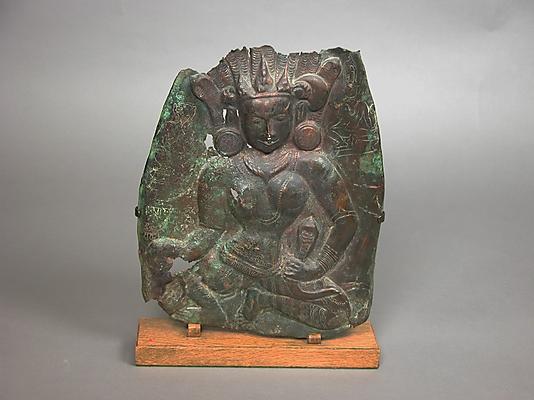
Object Title
The Hindu Goddess Manasa Plaque
Measurements
H. 11 in. (28 cm)
Creation Date
11th century, Late Pala period
Credit Line
Purchase, Frederick J. C. and Marie Claude Butler Gift and Gift of Mrs. W. J. Calhoun, by exchange, 2011
Country of Origin
Object Type
Materials / Techniques
Object URL
http://www.metmuseum.org/Collections/search-the-collections/60051132
Provenance Information
Acquired by Simon Digby (b. 1932 – d. 2010) before 1985; Digby collection sold after Digby’s death by John Siudmak, London.
Exhibition Information
None.
Publication Information
John Siudmak Asian Art. Indian and Himalayan Sculpture and Thankhas from the Collection of the Late Simon Digby, New York, March 2011, no. 7 (sale catalogue).
Section of the AAMD Guidelines relied upon for the exception to 1970
Cumulative facts and circumstances
Explain why the object fits the exception set forth above
The work has provenance established to 1985. Simon Digby, who was born in India to English parents, was a former curator of the Ashmolean Museum and later an independent scholar. John Siudmak has confirmed that he mounted this work for Simon Digby shortly before Simon Digby moved to Jersey in 1985. The work is exceptionally rare and would add considerably to the Museum’s collection because it represents a deity rarely seen in museum collections. Very few medieval stone images of Manasa are recorded and this is the only known repousee metal example.

2011.501

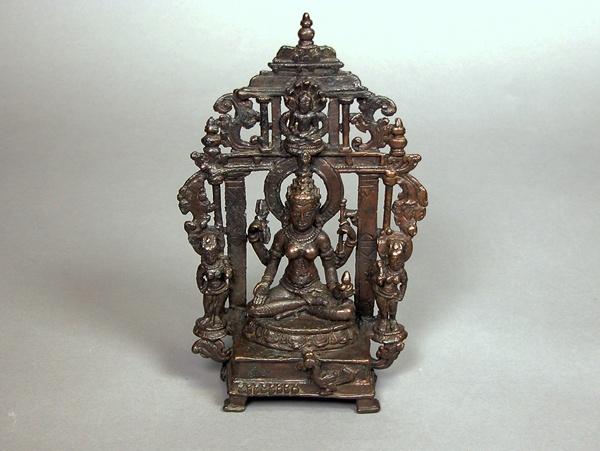
Object Title
Jain Goddess Padmavati
Measurements
H. 9 ½ in. (24 cm)
Creation Date
ca. 10th century
Credit Line
Purchase, Vijay K. Anand, M.D., Nanda Anand, Maya Anand, and Rohit Anand, 2011
Culture
Country of Origin
Object Type
Materials / Techniques
Object URL
http://www.metmuseum.org/Collections/search-the-collections/60051141
Provenance Information
Acquired by Simon Digby (b. 1932 – d. 2010) prior to 1985; Digby collection sold after Digby’s death by John Siudmak, London.
Exhibition Information
None.
Publication Information
John Siudmak Asian Art. Indian and Himalayan Sculpture and Thankhas from the Collection of the Late Simon Digby, New York, March 2011, no. 8 (sale catalogue).
Section of the AAMD Guidelines relied upon for the exception to 1970
Cumulative facts and circumstances
Explain why the object fits the exception set forth above
The work has provenance established to 1985. Simon Digby, who was born in India to English parents, was a former curator of the Ashmolean Museum and later an independent scholar. John Siudmak has confirmed that he saw this work in Simon Digby’s collection in the United Kingdom in 1985. Early medieval bronzes of Jain deities - this is a ca. 10th century work - are extremely rare and this work is the first Jain image of a female deity in The Metropolitan Museum of Art’s collection.

2008.296

Object Title
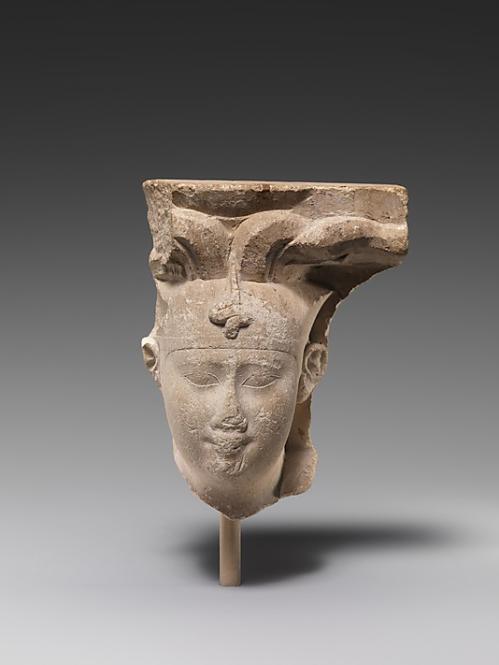
Royal head sculptor's model/votive
Measurements
4 in. (10.2 cm)
Creation Date
400–200 B.C.
Credit Line
Purchase, Anne W. and David T. Mininberg Gift and Ludlow Bull Fund, 2008
Culture
Country of Origin
Object Type
Materials / Techniques
Object URL
http://www.metmuseum.org/Works_of_Art/collection_database/egyptian_art/royal_head_sculptor_s_modelvotive//objectview.aspx?OID=100036883&collID=10&dd1=10
Provenance Information
Formerly French private collection, acquired in France ca. 1970. Purchased by The Metropolitan Museum of Art from Charles Ede Ltd., London.
Exhibition Information
None.
Publication Information
None.
Section of the AAMD Guidelines relied upon for the exception to 1970
Cumulative facts and circumstances
Explain why the object fits the exception set forth above
Although the work has provenance established to ca. 1970, The Metropolitan Museum of Art has been unable to substantiate the precise date of acquisition because the former owner is now deceased. This delicately beautiful work is an important addition to the strength of The Metropolitan Museum of Art's collection because it displays two strong indicators (the downward hanging snake, and the partial indication of a feather crown and sun disk) of a religious function for this type of work.

2010.453

Object Title
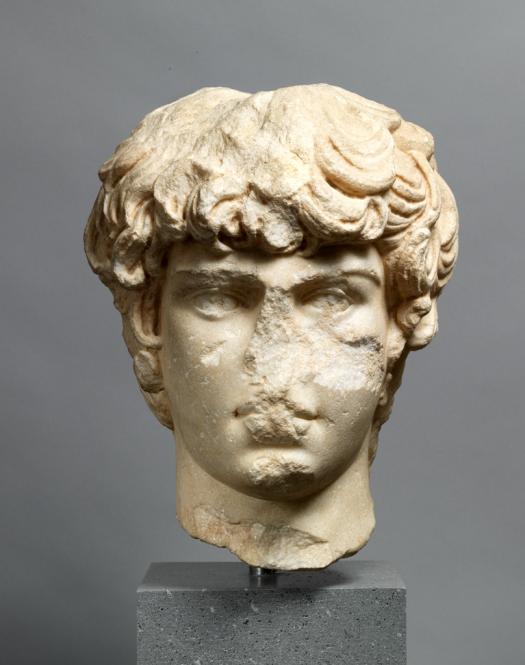
Head of Antinoos
Measurements
H. 35 cm
Creation Date
ca. A.D. 130-138
Credit Line
Gift of Jonathan Kagan, 2010
Museum Contact
provenance.research@metmuseum.org
Culture
Country of Origin
Object Type
Materials / Techniques
Object URL
https://www.metmuseum.org/art/collection/search/257825
Museum's Definition of Antiquity
Created before the fall of the Roman Empire (476 CE)
Provenance Information
Purchased in London in the middle of 1984 from a private collector, now deceased, by Jean-Louis Domercq, Gallerie du Sycomore, Paris. Purchased by Morris Pinto, Paris, in the spring of 1988 from Domercq. Sold at auction by Sotheby’s New York on June 23, 1989, lot 185. Acquired by Mr. Jonathan Kagan, New York, from Michael Ward, New York, in 1995.
Exhibition Information
The work has been on display in The Metropolitan Museum of Art’s Roman court since 2007. The work was also exhibited in connection with the Sotheby’s auction in 1989.
Publication Information
The work has been published in Sotheby’s New York Antiquities Auction, 23 June 1989, (New York 1989) lot 185; and in Hugo Meyer, Antinoos. Die archaeologischen Denkmaler unter Einbeziehung des numismatischen und epigraphischen Materials sowie der literarischen Nachrichten. Ein Beitrag zur Kunst- und Kulturgeschichte der hadrianisch-fruhantoninischer Zeit (Munich 1991) no. 72, pp. 93-94 illustrated.
Section of the AAMD Guidelines relied upon for the exception to 1970
Cumulative facts and circumstances
Explain why the object fits the exception set forth above
This work has provenance established to at least 1984 and has been exhibited publicly since 2007. It is included in the standard catalogue of the known portraits of Antinoos (Meyer 1991). Although fragmentary, its large-scale and high quality make it a desirable portrait of the emperor Hadrian’s handsome young favorite who drowned mysteriously in the Nile in A.D. 130 and became the object of a cult.

2001.443

Object Title
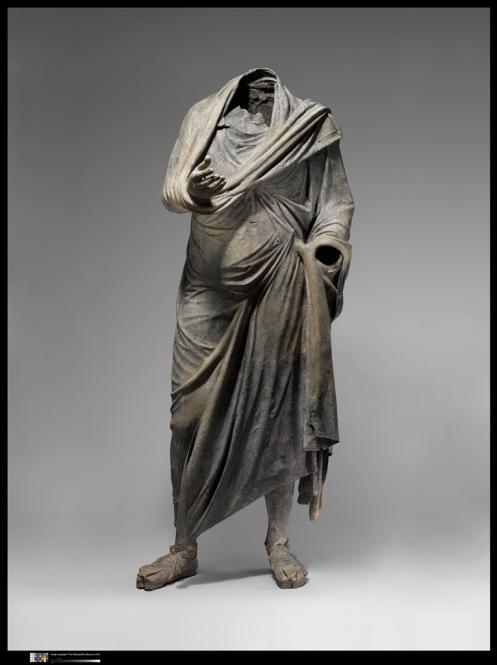
Bronze Statue of a Man
Measurements
H. 73 in. (185.4 cm)
Creation Date
ca. mid-2nd to 1st century B.C.
Credit Line
Gift of Renée E. and Robert A. Belfer, 2001
Culture
Country of Origin
Object Type
Materials / Techniques
Object URL
http://www.metmuseum.org/Works_of_Art/collection_database/greek_and_roman_art/bronze_statue_of_a_man//objectview.aspx?OID=130018120&collID=13&dd1=13
Provenance Information
Reported to be the property of Herr A. Weber of Eulenbruch, near Cologne, Germany, from the late 1970’s. Sold by Phoenix Ancient Art, New York, to Mr. and Mrs. Robert Belfer, New York, in 2001. Partial gift of Robert and Renée Belfer to the Museum in 2001, remainder given in 2010.
Exhibition Information
The work has been on display in The Metropolitan Museum of Art’s Roman court since 2007.
Publication Information
The work was published in 2007 in C.A. Picón, J.R. Mertens, E.J. Milleker, C.S. Lightfoot, and S. Hemingway, Art of the Classical World in the Metropolitan Museum of Art: Greece, Cyprus, Etruria, Rome (New Haven 2007), pp. 184-185, 447, no. 212.

Metropolitan Museum of Art. 2012. The Metropolitan Museum of Art Guide. New York: The Metropolitan Museum of Art, p. 75.
Section of the AAMD Guidelines relied upon for the exception to 1970
Partial interest received prior to 2008
Explain why the object fits the exception set forth above
The work was accepted as a partial gift in 2001 and has been exhibited publicly since 2007. Such over life-size bronze statues are extremely rare, especially ones of the quality of this piece. It represents a major class of Hellenistic honorific statuary not otherwise represented in the Museum’s collection.
Subscribe to The Metropolitan Museum of Art