Home

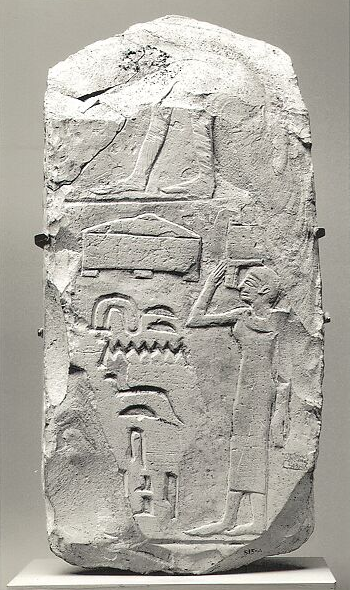
L.1992.25

Object Title
Relief depicting a female offering bearer and with inscription referring her as treasurer of a female's funerary estate
Measurements
carved surface H. 24.5 cm x W. 14.5 cm (9 5/8 x 5 11/16 in.)
Creation Date
ca. 2323–2040 BCE
Credit Line
On loan from a private collection
Museum Contact
provenance.research@metmuseum.org
Culture
Country of Origin
Object Type
Materials / Techniques
Object URL
https://www.metmuseum.org/art/collection/search/551044
Museum's Definition of Antiquity
Created before 400 CE
Provenance Information
Purchased by Louis S. Toth (1902-1979), Queens, NY, Plainview, NY, Hollywood, FL, by 1979; By descent to Agnes Toth, 1979; Sold though [Harmer Rooke Galleries, New York]; Purchased by [Thomas V. Tallarico, Springfield, Massachusetts], by September 1984; [Harmer Rooke Galleries, New York], by January 1986; Purchased by Private Collection, 1986; Loaned to The Metropolitan Museum of Art, 1992.
Exhibition Information
On loan to The Metropolitan Museum of Art since 1992
Publication Information
Harmer Rooke Galleries, Egyptian Art and Classical Antiquities from the Collection of Mr. and Mrs. Thomas V. Tallarico, January 1986, p. 10 no. E36 with illustration.
Section of the AAMD Guidelines relied upon for the exception to 1970
Gift or bequest expected or on loan prior to 2008
Explain why the object fits the exception set forth above
This work has been on loan to The Metropolitan Museum of Art since 1992.

2002.025

Object Title
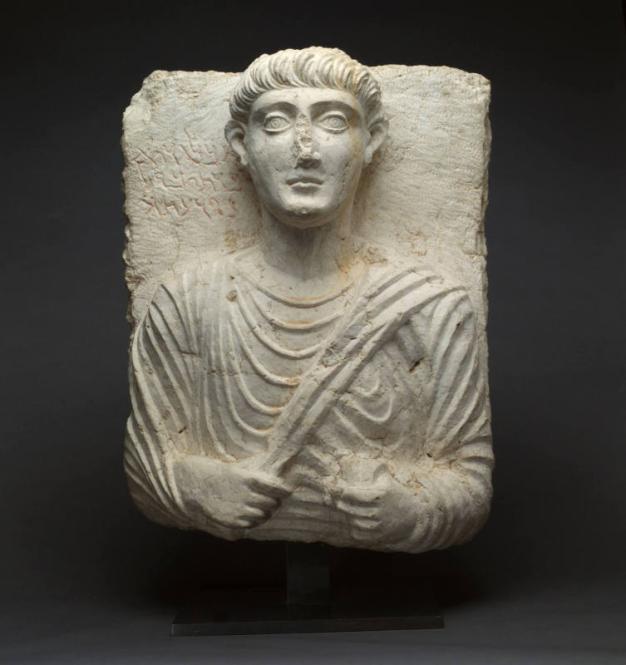
Partial funeral relief of a man
Measurements
10 3/4 × 12 × 7 3/4 inches (27.3 × 30.5 × 19.7 cm)
Creation Date
Ca. 2nd - 3rd centuries CE
Credit Line
Acquired through the generosity of Richard F. Tucker, Class of 1950, and Genevieve M. Tucker
Museum Contact
museum@cornell.edu
Culture
Country of Origin
Object Type
Materials / Techniques
Object URL
https://emuseum.cornell.edu/objects/37843/palmyrene-bust?ctx=e905b96394c1ec1d265b7cebf8fdf74afa449db9&idx=0
Museum's Definition of Antiquity
Created before 542 CE. (Source: Sylvain Destephen. 542. La fin de l’antquité. Paris: PUF, 2025.)
Provenance Information
-1931 Émile-Pierre Bertone (1867-1931), Paris [1]; 1931- private collection, France (sold through Hôtel des Ventes de Neuilly-sur-Seine, 14 Dec. 1931, cat. no. 681, illus.) [2]. 2002 collection of Herbert F. Johnson Museum of Art, Cornell University (sold through Sotheby’s, New York, Antiquities and Islamic Art auction, June 13, 2002, sale NO7812, lot. no. 0020)

N.B. Provenance is based on research into historic information and documentation. Such research is ongoing, and records may be revised or updated from time to time. Complete provenance is the exception, not the rule.

[1] – [2] Sotheby’s New York. “Antiquities and Islamic Art.” June 13, 2002, sale NO7812 [an auction cat.]; p. 18, lot no. 0020, illus. p. 19.
Exhibition Information
On view, Johnson Museum of Art 2024-present.
Publication Information
Charles Clermont-Ganneau, Recueil d'archéologie orientale, vol. 5, Paris, 1902, p. 41.


Mark Lidzbarski, Ephermeris für semitische Epigraphik, vol. 1, Giessen, 1902, p. 347.


Répertoire d'épigraphie sémitique, vol. 1, 1905, p. 216, no. 266.


CIS (Corpus Inscriptionum Semiticarum) II, section 3, part 2 (text=1947; plates=1954), p. 446f, no. 4529, pl. 46.


Delbert R. Hillers and Eleonora Cussini, Palmyrene Aramaic Texts, Baltimore, 1995, p. 146, no. PAT. 0890.


Antiquities and Islamic Art Auction, 13 June 2002, sale NO7812 [an auction cat.] (New York: Sotheby's, 2002); disc. p. 18, illus. p. 19, lot. no. 0020.


Jean-Baptiste Chabot, Journal Asiatique, series 9, vol. 17, November-December 1901, p. 430-431, no. 52.
Section of the AAMD Guidelines relied upon for the exception to 1970
Informed judgement that works were outside of the country of modern discovery before 1970
Explain why the object fits the exception set forth above
The bust originates from the city of Palmyra circa 2nd-3rd century AD. Provenance documentation shows that the bust was owned by Émile-Pierre Bertone (1867-1931) from France, necessitating that the bust was outside its country of modern discovery of Syria before 1970.

72.021

Object Title
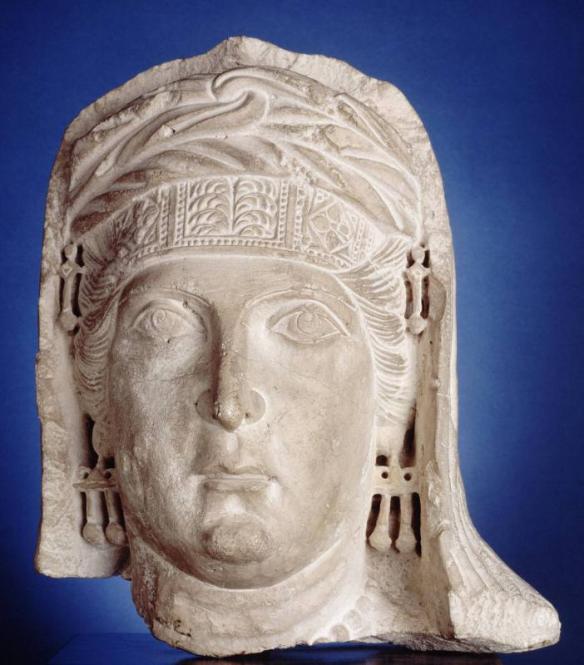
Palmyrene partial funerary relief of a female head
Measurements
Height: 11 3/4 inches (29.8 cm)
Creation Date
ca. 150-200 CE
Credit Line
Harold L. Bache, Class of 1916, Memorial Endowment Fund
Museum Contact
museum@cornell.edu
Culture
Country of Origin
Object Type
Materials / Techniques
Object URL
https://emuseum.cornell.edu/objects/8954/palmyrene-head?ctx=ed7e4142c7b1153d15f22fd583633d06cba7ca80&idx=0
Museum's Definition of Antiquity
Created before 542 CE. (Source: Sylvain Destephen. 542. La fin de l’antquité. Paris: PUF, 2025.)
Provenance Information
Palmyra, Syria (unknown); Michael Hall Fine Arts Inc. NYC, (?-1972) [1]; Purchased, A.D. White Museum of Art (1972-1974) [1]; transferred to the Herbert F. Johnson Museum of Art, Ithaca, (1974-present).


[1] It was most likely removed outside Syria before 1970, but we cannot confirm that based on the provenance information we have. The original art collector in NYC is deceased.


[2] Value upon receipt in 1972: $8500


The museum has chosen to post this work, acquired early in our collection’s creation, in hopes that other museums and scholars are able to learn from it. We are constantly working to improve our records of these early antiquities acquisitions, so please contact us if you have additional information.
Exhibition Information
On view, JMA 2021-Present
Publication Information
Herbert F. Johnson Museum of Art, A Handbook of the Collection. (Ithaca, N.Y.: Cornell University, 1998); ref. p. 100, color illus. p. 100.


Cornell University. A Guide to the Classical Collections of Cornell University. (Ithaca, NY: Cornell University, 2003) pg. 43.
Section of the AAMD Guidelines relied upon for the exception to 1970
Cumulative facts and circumstances
Explain why the object fits the exception set forth above
Cum. Facts./None. This partial relief was out of the country of origin by 1971, after both the 1970 UNESCO convention and the 1963 Syrian Antiquities law granting the government ownership of all antiquities. This relief, turned into a bust for sale once it was removed from its context, was most likely not in compliance with either of these recommendations/laws. However, the Herbert F. Johnson Museum of Art prioritizes transparency with provenance and posts this object with the aforementioned understanding of its history, and a dedication to continued research on these unprovenanced artifacts. Please reach out to museum@cornell.edu if you have any further information about this statue.

64.0001

Object Title
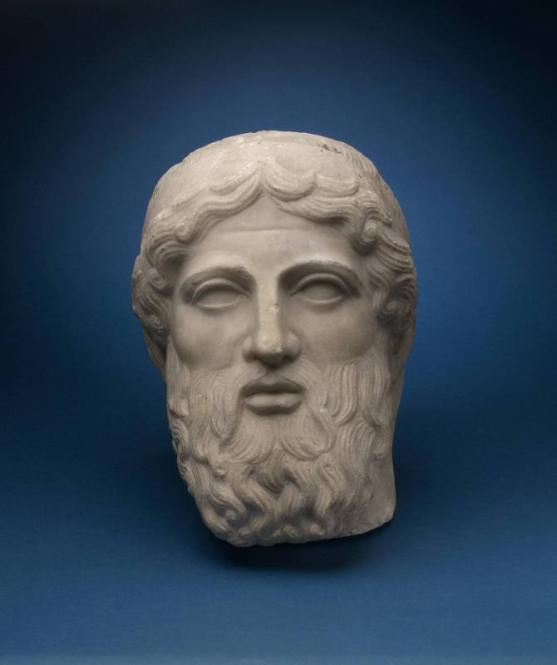
Head of Zeus
Measurements
14in (35.6cm)
Creation Date
1-2nd CE
Credit Line
Acquired through Museum Associates Purchase Fund
Museum Contact
museum@cornell.edu
Culture
Country of Origin
Object Type
Materials / Techniques
Object URL
https://emuseum.cornell.edu/objects/5627/head-of-zeus?ctx=11b74668acc6c0d3e42bbd121be7e057fd8f541b&idx=0
Museum's Definition of Antiquity
Created before 542 CE. (Source: Sylvain Destephen. 542. La fin de l’antquité. Paris: PUF, 2025.)
Provenance Information
The museum has chosen to post this work, acquired early in our collection’s creation, in hopes that other museums and scholars are able to learn from it. We are constantly working to improve our records of these early antiquities acquisitions, so please contact us if you have additional information.

ca. 1954-1964, collection of Royal Athena Galleries, Manhattan, NY [1], 1964-1974 purchased
by Andrew Dickson White Museum of Art; 1974-present, transferred to Herbert F. Johnson
Museum of Art, Cornell University, Ithaca, NY.

[1] Royal Athena Galleries, closed, is now owned by Hixenbaugh Ancient Art. Through
communication with Hixenbaugh’s staff, they have no records of RAG’s acquisitions and sales.
However, the website claims they started collecting and distributing ancient art in 1954,
establishing a terminus post quem for the head’s entrance into RAG’s collection. The head’s
provenance prior to 1954 is unknown, casting doubts on its authenticity as a whole.
Exhibition Information
On view, 2025, Herbert F. Johnson Museum of Art
Publication Information
None known.
Section of the AAMD Guidelines relied upon for the exception to 1970
Informed judgement that works were outside of the country of modern discovery before 1970
Explain why the object fits the exception set forth above
Entered museum's collection in 1964.

56.510

Object Title
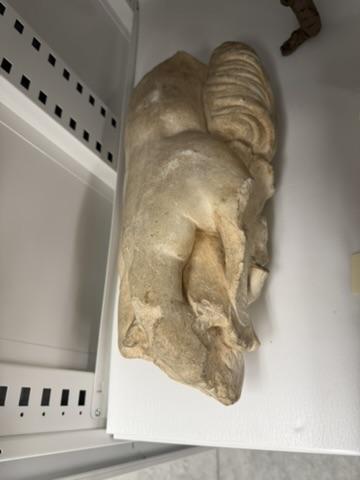
Hand of Zeus (fragment)
Measurements
16 x 7 in. (40.6 x 17.8cm)
Creation Date
ca. 4th-3rd BCE
Credit Line
Gift of Norbert Schimmel
Museum Contact
museum@cornell.edu
Culture
Country of Origin
Object Type
Materials / Techniques
Object URL
https://emuseum.cornell.edu/objects/925/hand-of-zeus-fragment?ctx=7a017579beadad79ce56ee1923575b37056c0ae1&idx=0
Museum's Definition of Antiquity
Created before 542 CE. (Source: Sylvain Destephen. 542. La fin de l’antquité. Paris: PUF, 2025.)
Provenance Information
The museum has chosen to post this work, acquired early in our collection’s creation, in hopes that other museums and scholars are able to learn from it. We are constantly working to improve our records of these early antiquities acquisitions, so please contact us if you have additional information.

-1956 collection of Norbert Schimmel [1]; 1956-1973 given to Andrew Dickson White Museum of Art; 1974-present, transferred to Herbert F. Johnson Museum of Art, Cornell University, Ithaca NY

[1] Norbert Schimmel (1904-1990) According to the Metropolitan Museum of Art’s records, Schimmel collected antiquities for most of his life starting in the 1930s. He likely acquired this piece between 1930 and 1956. It is important to note that Schimmel’s collections have been repatriated in the past to their countries of origin because of his lack of due diligence in ensuring their ethical departure from the country or providing documentation. However, by broad standards of the time and our commitment to restitution where possible, since the objects were out of the country of origin by 1970, they are legally able to stay in the US.
Exhibition Information
On view, Herbert F. Johnson Museum of Art, 2023; 2025
Publication Information
None known
Section of the AAMD Guidelines relied upon for the exception to 1970
Informed judgement that works were outside of the country of modern discovery before 1970
Explain why the object fits the exception set forth above
This object falls under three exceptions: informed judgement that it was outside of the country of origin prior to 1970, gift or bequest prior to 2008, and cumulative facts. Norbert Schimmel gave the vessel to the JMA in 1956, who likely collected it between 1930 and 1956. Mr. Schimmel has no identifiable connections to Nazi-era looting or looting of Greek sites, but has had several objects from his collections at other museums restituted do to their connections to illicit antiquities dealers and departure from the country of origin after 1970. However, by broad standards of the time and our commitment to restitution where possible, since the objects were out of the country of origin by 1970, they are legally able to stay in the US.

74.074.031

Object Title
Head of a boy
Measurements
11 ½ in (29.2 cm)
Creation Date
500-400 BCE
Credit Line
Transferred from University Collections
Museum Contact
museum@cornell.edu
Culture
Country of Origin
Object Type
Materials / Techniques
Object URL
https://emuseum.cornell.edu/objects/37890/head-of-a-boy?ctx=37c73f94ace342020f8a76564ba1203394d1bc72&idx=1
Museum's Definition of Antiquity
Created before 542 CE. (Source: Sylvain Destephen. 542. La fin de l’antquité. Paris: PUF, 2025.)
Provenance Information
The museum has chosen to post this work, acquired early in our collection’s creation, in hopes that other museums and scholars are able to learn from it. We are constantly working to improve our records of these early antiquities acquisitions, so please contact us if you have additional information. –1974, Cornell University collections, History of Art department; 1974-present, Transferred to Herbert F. Johnson Museum of Art.
Exhibition Information
On view, Herbert F. Johnson Museum of Art, May 2026-present
Publication Information
None known
Section of the AAMD Guidelines relied upon for the exception to 1970
Cumulative facts and circumstances
Explain why the object fits the exception set forth above
Cum. Facts. The bust was transferred from University Collections, specifically the History of Art department. It was likely donated from a professor’s personal collection or otherwise acquired by an old employee. Other Etruscan objects in the collection came to Cornell in the 19th and early 20th centuries, predating 1970.

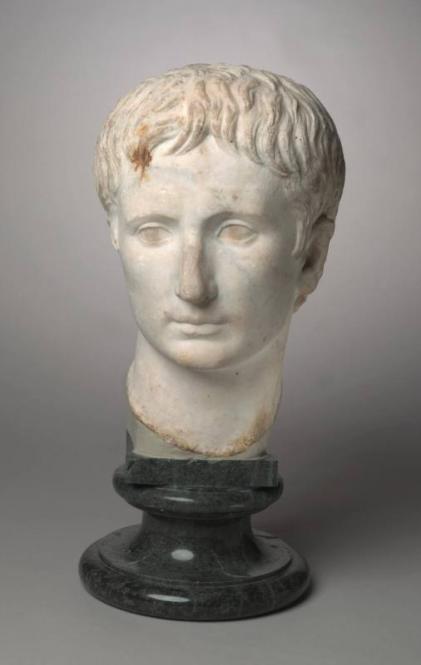
68.277

Object Title
Head of Caesar Augustus
Measurements
21 1/2 in (54.6cm)
Creation Date
1-50 CE
Credit Line
Transferred from University Collections
Museum Contact
museum@cornell.edu
Culture
Country of Origin
Object Type
Materials / Techniques
Object URL
https://emuseum.cornell.edu/objects/7854/head-of-caesar-augustus?ctx=2e7b3a7aa4cbc22feb0ba90f4c02537904e20be4&idx=0
Museum's Definition of Antiquity
Created before 542 CE. (Source: Sylvain Destephen. 542. La fin de l’antquité. Paris: PUF, 2025.)
Provenance Information
The museum has chosen to post this work, acquired early in our collection’s creation, in hopes that other museums and scholars are able to learn from it. We are constantly working to improve our records of these early antiquities acquisitions, so please contact us if you have additional information. -1968 collection of the University Art Museum, Cornell University, Ithaca, NY [1]; 1968-1973 collection of Andrew Dickson White Museum of Art (1953-1973); 1974-present, transferred to Herbert F. Johnson Museum of Art, Cornell University, Ithaca NY

[1] Probably given to the University before 1953, but no record.
Exhibition Information
On View, Herbert F. Johnson Museum of Art, 2023-present.

“Wonder and Wakefulness: the nature of pliny the elder,” Herbert F. Johnson Museum of Art, Cornell University, Ithaca, NY, January 21-June 11, 2023.

Extended loan, Schweinfurth Memorial Art Center, Auburn NY, August 1981.

“I, Claudia: Women in Ancient Rome” Yale University Art Gallery, New Haven, CT September 6-December 1, 1996; San Antonio Museum of Art, San Antonio TX, January 3-March 9, 1997; North Carolina Museum of Art, Raleigh, NC April 6-June 15, 1997
Publication Information
Herbert F. Johnson Museum of Art. Handbook of the Collections (Ithaca, N.Y.: Office of University Publications, 1981); ref. p. 11, b&w illus. p. 13, cat no. 6.

Cornell University. A Guide to the Classical Collections of Cornell University. (Ithaca, NY: Cornell University, 2003) pg. 25.

“Roman Art, Romulus to Constantine 6th edition” Nancy and Andrew Ramage 2015, 9, 4, Laurence King Publishing (978-205-9885-2) 3.21
Section of the AAMD Guidelines relied upon for the exception to 1970
Informed judgement that works were outside of the country of modern discovery before 1970
Explain why the object fits the exception set forth above
The university records show that it was at Cornell by 1953. There are no records of its acquisition, provenience, or donor.

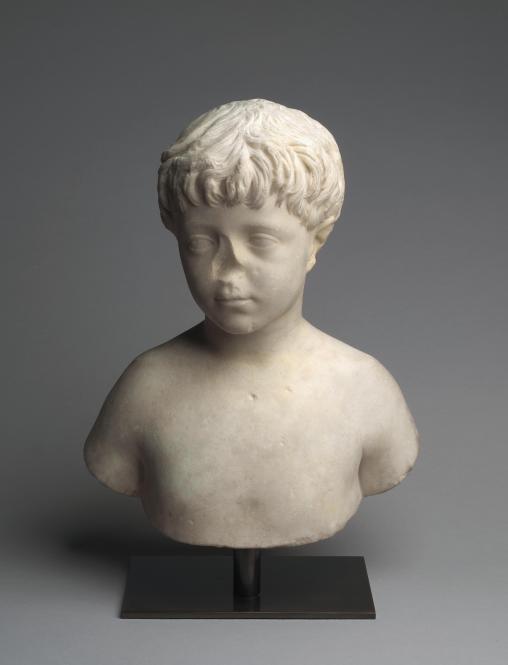
2003.016

Object Title
Bust of a boy
Measurements
Height: 14 15/16 inches (37.9 cm)
Creation Date
ca. 140 A.D.
Credit Line
Acquired through the generosity of Susan E. Lynch in honor of Elizabeth Trapnell Rawlings and Hunter R. Rawlings III, with additional support from the Ernest I. White, Class of 1893, Endowment Fund, and the Herbert F. Johnson, Class of 1922, Endowment
Museum Contact
museum@cornell.edu
Culture
Object Type
Materials / Techniques
Object URL
https://emuseum.cornell.edu/objects/38299/bust-of-a-boy?ctx=f86043b837be629d64079437bcfb7734df0b9cf3&idx=0
Museum's Definition of Antiquity
Created before 542 CE | Since the Roman empire persisted in Constantinople after 476, plague and political changes in 541–542 CE are cited as a more accurate transition from antiquity. (Sylvain Destephen. 542. La fin de l’antiquité. Paris, 2025.)
Provenance Information
Collection of Jules, Cardinal Mazarin (1602-1661) [1]. said to be in England in the late 18th century [2]. by 1872 collection of the Earl of Lonsdale, Lowther Castle, Penrith, Cumbria, England [3]; 1872-1944 collection of the Earls of Lonsdale (by descent) [4]; 1944-1947 estate of Hugh Cecil Lowther, 5th Earl of Lonsdale; [5] (1947 sold at Lowther Castle auction by estate of Hugh Cecil Lowther) [6]. -2003 collection of Charles Ede Limited, London [7]; 2003 collection of Herbert F. Johnson Museum of Art, Cornell University (sold through Charles Ede Limited, at The European Fine Art Fair (TEFAF), Maastricht) [8]

N.B. The provenance information listed here is taken directly from the object file, and is in the process of being confirmed.

[1] inventory number “132” carved in the back of the sculpture, which corresponds to two different inventories of Mazarin’s collection dated 1653 and 1661 respectively, with matching descriptions. See Michaelis, Adolf, and C. A. M. Fennell. Ancient Marbles in Great Britain. (Cambridge: At the University Press, 1882), 43-45, 667. [http://ebooks.library.ualberta.ca/local/ancientmarblesin00michuoft]

[2] According to Souren Melikian, “Safe Harbor” in Art & Auction (June 2003); p. 56: “The sculpture had arrived in England in the late 18th century and had been bought by the Earl of Lonsdale. It made a brief market appearance in April 1947 as part of the sale conducted as Lowther Castle in Penrith, Cumbria.”

[3] The date of acquisition by the Earls of Lonsdale is unclear because of apparent confusion between two William Lowthers, the 1st and 2nd Earls of Lonsdale, respectively, and the latter of whom died in 1872. As it was purchased by one of them, the death date of the second is used, until further information is obtained.

Prior to acquisition of the object, research was done by Herbert F. Johnson Museum of Art staff to determine which Earl purchased the bust, as Melikian notes only “the Earl of Lonsdale”, and an object factsheet from Charles Ede Limited, undated, states: “Ex. Collection The Earl of Lonsdale, Lowther Castle, sold as lot 549 in the sale of 15th April 1947.”

An internal memo summarizing the research, titled “The Earls of Lonsdale”, undated, it is noted that “the ‘Bust of Young Boy,’ 140 AD was probably acquired by an earlier earl [sic] (perhaps William Lowther, 2nd Earl of Lonsdale).” The dates given for him are 1757-1844, and the 3rd Earl of Lonsdale is identified as William Lowther (1787-1872).

However, according to the Oxford Dictionary of National Biography, William Lowther (1757-1844) was the 1st Earl of Lonsdale, and William Lowther (1787-1872) was the 2nd Earl of Lonsdale. [http://www.oxforddnb.com/view/article/17113?docPos=27], accessed 12-Dec-2013.

[4]-[7] Object factsheet from Charles Ede Limited, undated. Although this factsheet indicates the bust was sold on “15th April 1947” at the auction at Lowther Castle, according to a search of the auction catalogues through the Metropolitan Museum of Art’s Watsonline, the estate sale was held between April 29, 1947-May 1, 1947. Review of the catalogue(s) to confirm the correct date will be done. [http://http://library.metmuseum.org/], search terms “Lowther Castle”), run 12-Dec-2013.

[8] Invoice from Charles Ede Limited to Herbert F. Johnson Museum of Art, 13-May-2003.
Exhibition Information
None
Publication Information
Weideger, Paula, Will Bennett, Diana Cawdell, Gareth Harris, Celebrating the Best: Twenty Five Years of TEFAF Maastricht, ed. Will Bennett (Netherlands: TEFAF, 2012), p. 148.

European Fine Art Fair, TEFAF Maastricht, 2003: 14-23 March 2003, MECC Maastricht, the Netherlands (Netherlands: The Foundation, 2003); ref. p. 349, color illus. p. 349.

Souren Melikian, Safe Harbor, in Art & Auction (June 2003); disc. p. 52, 56, color illus. p. 52.

Linda Fuchs, The Antonine Boy Bust in the Herbert F. Johnson Museum of Art, Ithaca, New York (Ithaca: unpublished manuscript).

Herbert F. Johnson Museum of Art, Annual Report 2002-2003 (Ithaca: Cornell University, 2003); disc. p. 7-8, ref. p. 2, color illus. cover page.
Section of the AAMD Guidelines relied upon for the exception to 1970
Informed judgement that works were outside of the country of modern discovery before 1970
Explain why the object fits the exception set forth above
The bust was reportedly in the collection of Jules, Cardinal Mazarin until his death in 1661. It was then reported to be in England by the late 18th century where it remained until the Johnson Museum’s purchase in 2003.

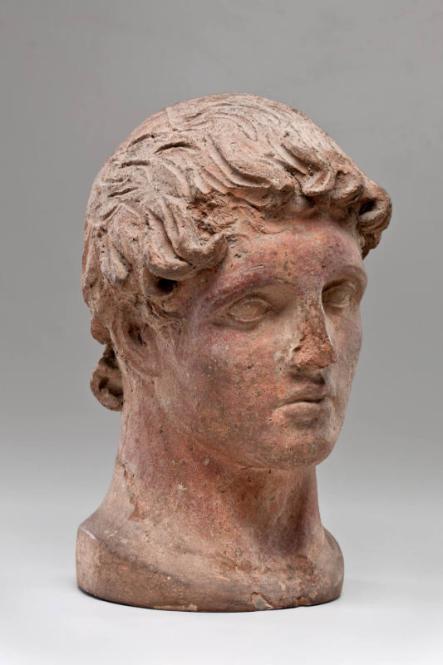
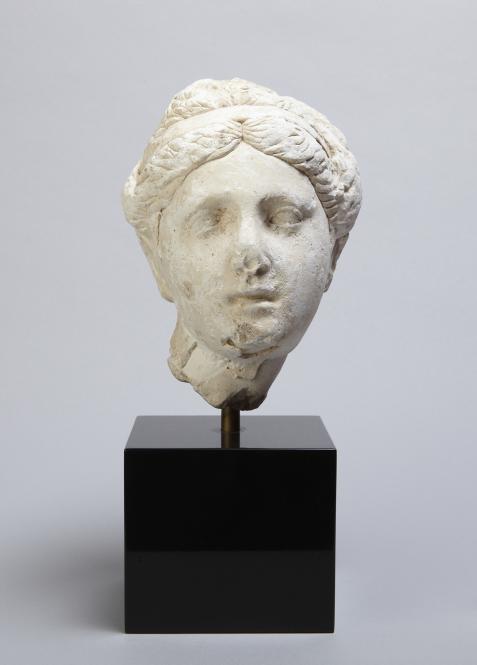
2016-1388

Object Title
Female head
Measurements
h. 16.2 cm., w. 10.2 cm., d. 15.1 cm. (6 3/8 x 4 x 5 15/16 in.)
Creation Date
2nd century CE
Credit Line
Bequest of Gillett G. Griffin
Museum Contact
MaryKate Cleary, Curator of Provenance, marykate.cleary@princeton.edu
Culture
Country of Origin
Object Type
Materials / Techniques
Object URL
https://artmuseum.princeton.edu/art/collections/objects/27590
Museum's Definition of Antiquity
In accordance with the Definition of "In Antiquity" guidance as provided by the AAMD Task Force on Archaeological Material and Ancient Art.
Provenance Information
Acquired by Gillett G. Griffin (1928-2016), Princeton, NJ, by 1989 [1]; bequest to the Princeton University Art Museum, 2016.
[1] This item was loaned by Gillett G. Griffin to the Princeton University Art Museum in 1989.
Exhibition Information
October 2025, Princeton University Art Museum - Inaugural Exhibition.
Publication Information
none
Section of the AAMD Guidelines relied upon for the exception to 1970
Gift or bequest expected or on loan prior to 2008
Explain why the object fits the exception set forth above
The Legally Binding Pledge to Gift Certain Works of Art to the Princeton University Art Museum was signed by Gillett G. Griffin on March 19, 2007, prior to the issuance AAMD's 2008 Guidelines on the Acquisition of Archaeological Material and Ancient Art.

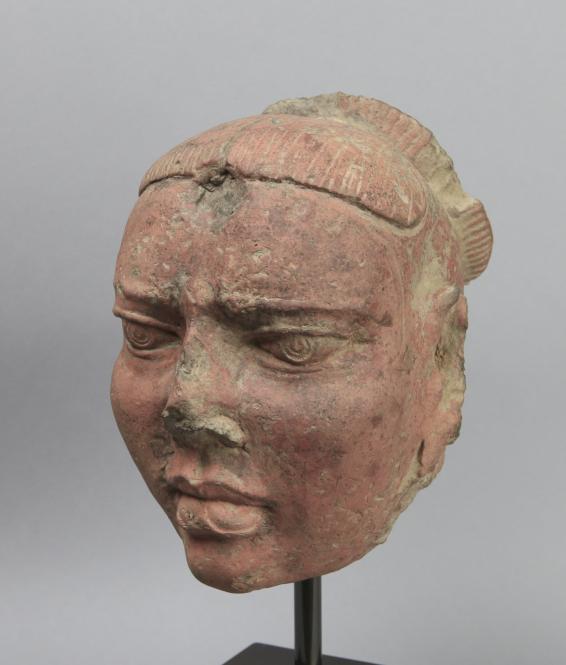
2016-648

Object Title
Portrait head of a Queen
Measurements
18 × 13.5 × 16.1 cm (7 1/16 × 5 5/16 × 6 5/16 in.) base: 10.2 × 11.6 × 11.6 cm (4 × 4 9/16 × 4 9/16 in.)
Creation Date
2nd century BCE
Credit Line
Bequest of Gillett G. Griffin
Museum Contact
MaryKate Cleary, Curator of Provenance, marykate.cleary@princeton.edu
Culture
Country of Origin
Object Type
Materials / Techniques
Object URL
https://artmuseum.princeton.edu/art/collections/objects/25743
Museum's Definition of Antiquity
In accordance with the Definition of "In Antiquity" guidance as provided by the AAMD Task Force on Archaeological Material and Ancient Art.
Provenance Information
Acquired by Gillett G. Griffin (1928-2016), Princeton, NJ, by 1986 [1]; bequest to the Princeton University Art Museum, 2016.
[1] This item was loaned by Gillett G. Griffin to the Princeton University Art Museum in 1986 and 1988.
Exhibition Information
October 2025, Princeton University Art Museum - Inaugural Exhibition.
Publication Information
none
Section of the AAMD Guidelines relied upon for the exception to 1970
Gift or bequest expected or on loan prior to 2008
Explain why the object fits the exception set forth above
The Legally Binding Pledge to Gift Certain Works of Art to the Princeton University Art Museum was signed by Gillett G. Griffin on March 19, 2007, prior to the issuance AAMD's 2008 Guidelines on the Acquisition of Archaeological Material and Ancient Art.
Subscribe to Sculpture