Home

25.262

Object Title
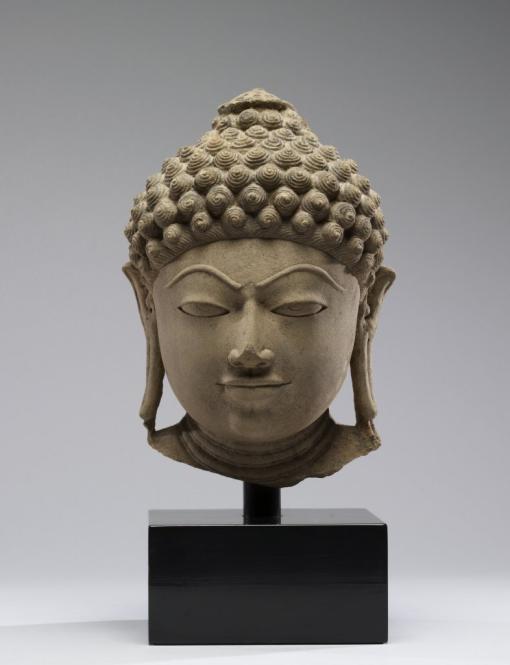
Head of a Jina
Measurements
H: 8 1/2 in. (21.59 cm)
Creation Date
10th-11th century
Credit Line
Gift of John and Berthe Ford, 2009
Culture
Country of Origin
Object Type
Materials / Techniques
Object URL
http://art.thewalters.org/viewwoa.aspx?id=78472
Provenance Information
John and Berthe Ford [date and mode of acquisition unknown]; Walters Art Museum, 2009, by gift.
Exhibition Information
No known exhibitions.
Publication Information
No known publications.
Section of the AAMD Guidelines relied upon for the exception to 1970
Gift or bequest expected or on loan prior to 2008
Explain why the object fits the exception set forth above
A Memorandum of Understanding between the Walters Art Museum and John and Berthe Ford about this gift was signed September 1997.
25.261

Object Title
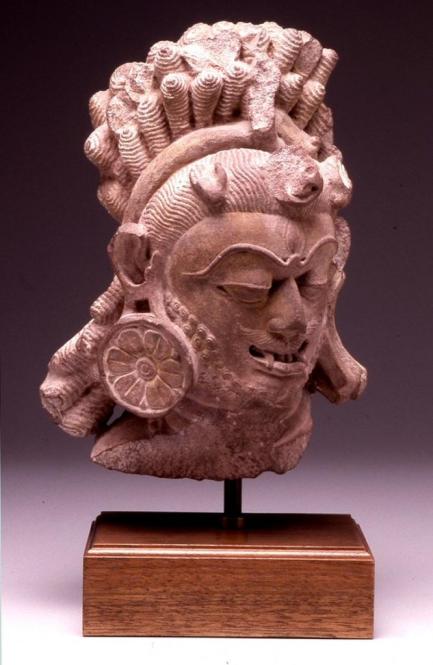
Head of Bhairava
Measurements
H: 8 3/4 x W: 6 x D: 6 in. (22.2 x 15.2 x 15.2 cm)
Creation Date
11th century
Credit Line
Gift of John and Berthe Ford, 2009
Culture
Country of Origin
Object Type
Materials / Techniques
Object URL
http://art.thewalters.org/viewwoa.aspx?id=12541
Provenance Information
John and Berthe Ford, Baltimore [date and mode of acquisition unknown]; Walters Art Museum, 2009, by gift.
Exhibition Information
Desire and Devotion: Art from India, Nepal, and Tibet in the John and Berthe Ford Collection. The Walters Art Museum, Baltimore; Santa Barbara Museum of Art; The Albuquerque Museum of Art & History; Birmingham Museum of Art; Hong Kong Museum of Art, 2001-2004.
Publication Information
Pal, Pratapaditya. Desire and Devotion : Art From India, Nepal, and Tibet in the John and Berthe Ford Collection. Baltimore, Md. : Walters Art Museum ; London : Philip Wilson. 2001.
Section of the AAMD Guidelines relied upon for the exception to 1970
Gift or bequest expected or on loan prior to 2008
Explain why the object fits the exception set forth above
A Memorandum of Understanding between the Walters Art Museum and John and Berthe Ford about this gift was signed September 1997.
25.260

Object Title
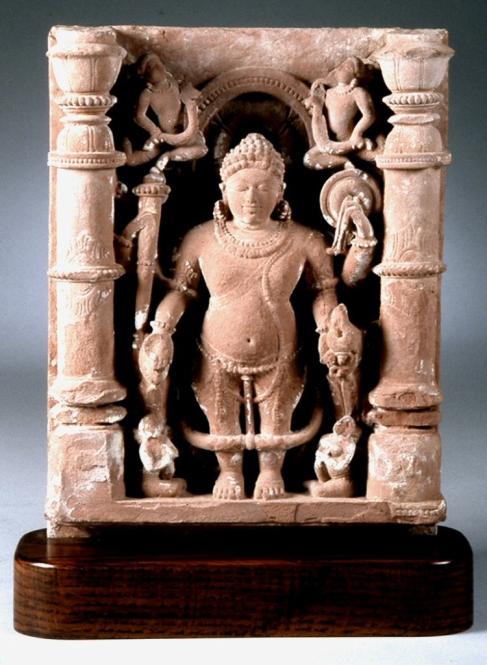
Vamana
Measurements
17 x 13 x 4 in. (43.2 x 33 x 10.2 cm)
Creation Date
10th century
Credit Line
Gift of John and Berthe Ford, 2008
Culture
Country of Origin
Object Type
Materials / Techniques
Object URL
http://art.thewalters.org/viewwoa.aspx?id=19102
Provenance Information
Jaipaul Gallery, Philadelphia [date and mode of acquisition unknown]; John and Berthe Ford, Baltimore, June 13, 1976, by purchase; Walters Art Museum, 2008, by gift.
Exhibition Information
No known exhibitions.
Publication Information
Pal, Pratapaditya. Desire and Devotion : Art From India, Nepal, and Tibet in the John and Berthe Ford Collection. Baltimore, Md. : Walters Art Museum ; London : Philip Wilson. 2001.
Section of the AAMD Guidelines relied upon for the exception to 1970
Gift or bequest expected or on loan prior to 2008
Explain why the object fits the exception set forth above
A Memorandum of Understanding between the Walters Art Museum and John and Berthe Ford about this gift was signed September 1997.
2009.543

Object Title
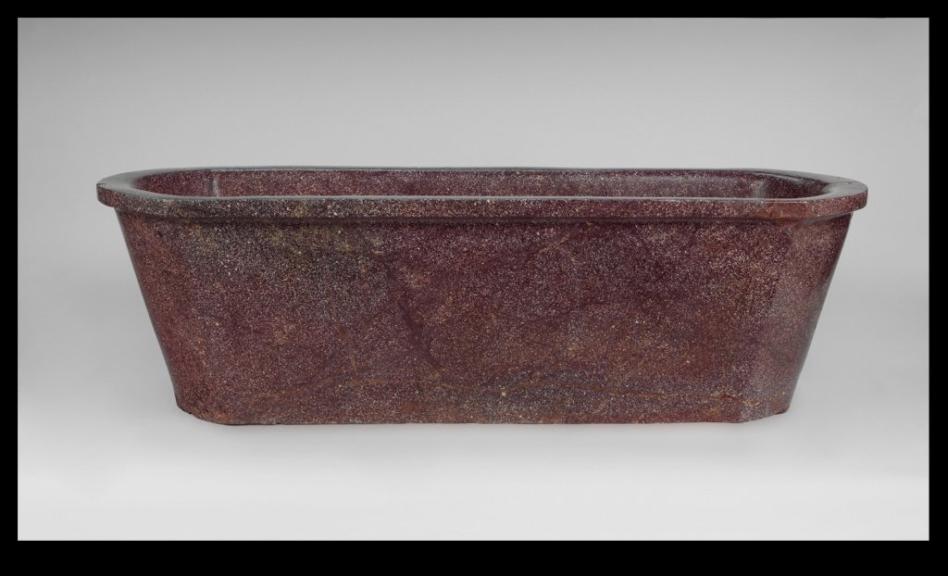
Porphyry basin
Measurements
Height 27 1/2 in. (69.9 cm); length 72 1/8 in. (183.2 cm); width 19 in. (48.3 cm)
Creation Date
2nd-3rd century A.D.
Credit Line
Gift of Lewis M. Dubroff, on the occasion of the reinstallation of the Greek and Roman galleries, 2009
Culture
Country of Origin
Object Type
Materials / Techniques
Object URL
http://www.metmuseum.org/Works_of_Art/collection_database/greek_and_roman_art/porphyry_basin//objectview.aspx?OID=130016927&collID=13&dd1=13
Provenance Information
Sold at auction by Sotheby's New York, December 17, 1992, lot 153, consigned by Barbara Piasecka Johnson; acquired by Lewis M. Dubroff, Manlius, New York. The work has been on loan to The Metropolitan Museum of Art from Mr. Dubroff since 1993. Mr. Dubroff donated the work to The Metropolitan Museum of Art in 2009.
Exhibition Information
The work was on display in The Metropolitan Museum of Art’s Roman gallery from 1994 until 2001 and, following the renovation of those galleries, the work has been on display in The Metropolitan Museum of Art’s new Roman court since 2007.
Publication Information
The work was published in the Sotheby’s auction catalogue in 1992.

Malgouyres, Philippe and Clément Blanc-Riehl. 2003. Porphyre. La pierre pourpre des Ptolémées aux Bonaparte. Paris: Réunion des musées nationaux-Grand Palais, p. 89, fig. 41.

Lightfoot, Christopher S. 2007. "Recent Acquisitions, A Selection: 2006–2007." The Metropolitan Museum of Art Bulletin, 65(2): p. 9.

Del Bufalo, Dario. 2012. Porphyry. Red Imperial Porphyry. Power and Religion. Turin: Umberto Allemandi & C, no. L19, p. 166.
Section of the AAMD Guidelines relied upon for the exception to 1970
Cumulative facts and circumstances
Explain why the object fits the exception set forth above
This work has provenance established to at least 1992 when the work was published and offered for sale at public auction, and the work was published again in 2003. The work has been exhibited publicly from 1994 to 2001 and from 2007 to the present date. The work is a rare example of Roman porphyry sculpture that has escaped reuse or confinement in a medieval building and would add significantly to The Metropolitan Museum of Art’s collection.

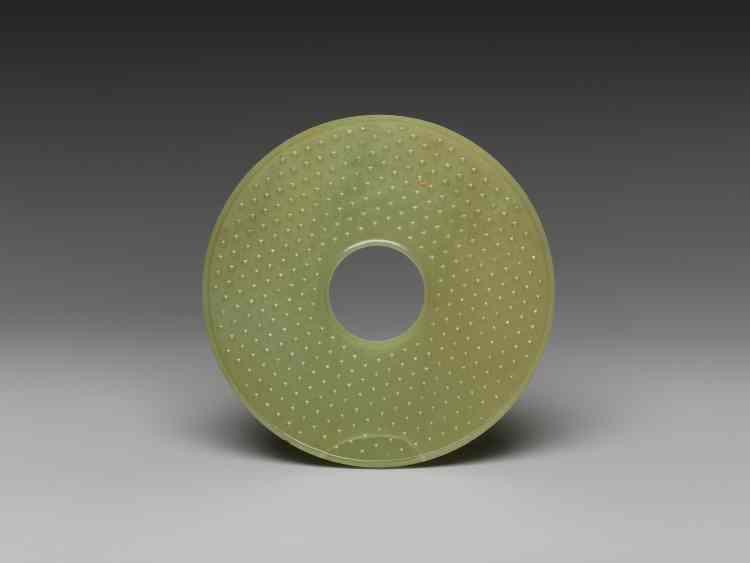
2008.287

Object Title
Disc (bi)
Measurements
Diameter: 5 ¾ in. (14.6 cm)
Creation Date
Eastern Zhou Western Han Dynasty, 3rd – 2nd Century B.C.
Credit Line
Purchase, Sir Joseph Hotung Gift, 2008
Culture
Country of Origin
Object Type
Materials / Techniques
Object URL
http://www.metmuseum.org/works_of_art/collection_database/all/disc_bi/objectview.aspx?collID=6&OID=60048824
Provenance Information
Purchased by The Metropolitan Museum of Art at Christie’s, New York, on March 19, 2008, lot 481. Payment for this work was made after The Metropolitan Museum of Art adopted the Report of the AAMD Task Force on the Acquisition of Archaeological Materials and Ancient Art (2008). The Christie’s sales catalogue stated that the consignors, the McPhersons, acquired the work in the 1980s. The work was offered for sale at Sotheby’s, New York, on June 12, 1984, as lot 34, but did not sell. The McPhersons may have acquired it from Sotheby’s after that sale.

Exhibition Information
The work was exhibited in connection with the Christie’s and Sotheby’s auctions.
Publication Information
The work was published in the Christie’s and Sotheby’s auction catalogues.
Section of the AAMD Guidelines relied upon for the exception to 1970
Cumulative facts and circumstances
Explain why the object fits the exception set forth above
This work has provenance established to at least 1984 when the work was published and offered for sale at public auction. This work fills a major gap in The Metropolitan Museum of Art’s comprehensive collection of Asian art because the Museum has no other bi of this type from the 3rd century B.C. in its collection and because of the work’s excellent quality and condition.

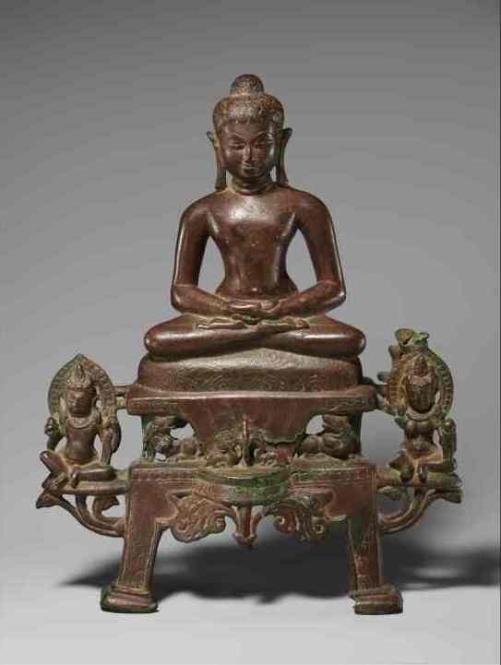
2008.279

Object Title
Enthroned Jina, Probably Neminatha
Measurements
H. 13 3/4 in. (34.9 cm); W. 11 1/4 in. (28.6 cm); D. 3 1/2 in. (8.9 cm)
Creation Date
ca. 7th century A.D.
Credit Line
Purchase, several members of The Chairman’s Council Gifts and Josephine Jackson Foundation Gift, 2008
Country of Origin
Object Type
Materials / Techniques
Object URL
http://www.metmuseum.org/works_of_art/collection_database/all/enthroned_jina_possibly_neminatha/objectview.aspx?collID=6&OID=60048796
Provenance Information
Purchased from Spink & Son, London, by The Jina Collection, United States, before 1994. Purchased by The Metropolitan Museum of Art from Carlton Rochell, Ltd., New York, in 2008.
Exhibition Information
The work was on loan to, and exhibited at, the Smithsonian's Freer Gallery of Art and Arthur M. Sackler Gallery from 1994 to 2000 with interruption to feature in the touring exhibition, The Peaceful Liberators: Jain Art from India, which was exhibited at the Los Angeles County Museum of Art from November 6, 1994 to January 22 1995, the Kimbell Art Museum from March 5 to May 28, 1995, the New Orleans Museum of Art from July 15 to September 17, 1995 and the Victoria and Albert Museum, November 2, 1995 to January 21, 1996.
Publication Information
The work was published in Octagon by Spink & Son, London, in 1982. The work was published in the catalogue for the Peaceful Liberators exhibition: Pal, P. (ed.), The Peaceful Liberators: Jain Art from India, New York: Thames and Hudson, 1994, pg. 142. The work was published in Peter Marks Gallery, The Jina Collection, 2001, New York, fig. 2.
Section of the AAMD Guidelines relied upon for the exception to 1970
Cumulative facts and circumstances
Explain why the object fits the exception set forth above
This work has provenance established to at least 1982. The work has been exhibited widely and published three times. The work extends the chronology of early medieval Jain art that The Metropolitan Museum of Art can present by several centuries with an example of exceptional aesthetic standard.

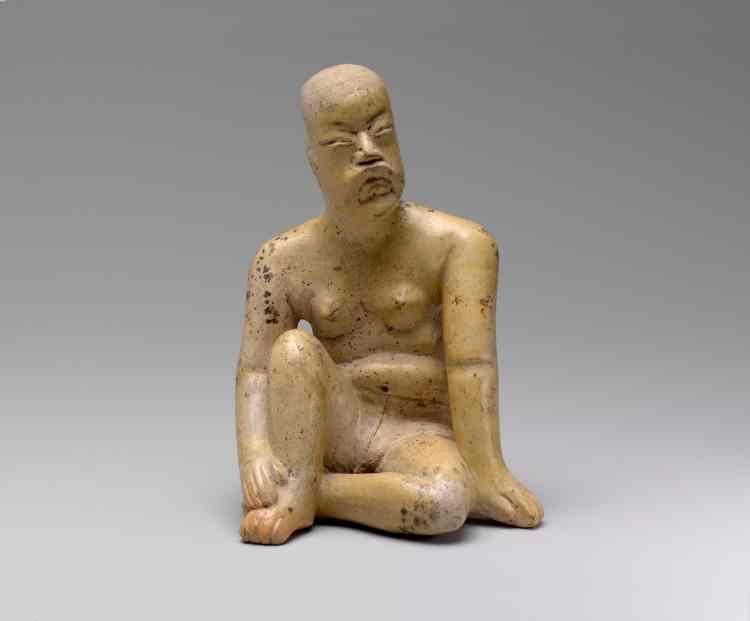
2008.637

Object Title
Seated figure
Measurements
H. 5 7/8 x W.3 ¼ x D. 3 3/8 in. (14.9 x 8.3 x 8.6 cm)
Creation Date
12th-9th century B.C.
Credit Line
Gift of Mr. and Mrs. Charles Diker, 2008
Culture
Country of Origin
Object Type
Materials / Techniques
Object URL
http://www.metmuseum.org/works_of_art/collection_database/all/seated_figure/objectview.aspx?collID=5&OID=50014739
Provenance Information
Edward H. Merrin Gallery, New York, before 1972; Mr. and Mrs. Charles Diker, New York, 1972-2008.
Exhibition Information
None.
Publication Information
Berjonneau, Gerald, Emile Deletaille and Jean-Louis Sonnery, Rediscovered Masterpieces of Mesoamerica: Mexico-Guatemala-Honduras, Editions Arts, 135, Boulogne, France, 1985, page 56, fig. 55.
Section of the AAMD Guidelines relied upon for the exception to 1970
Cumulative facts and circumstances
Explain why the object fits the exception set forth above
This work has provenance established to at least 1972. It was published in 1985. The Metropolitan Museum of Art owns only one smaller three-dimensional ceramic figure of a comparable type.

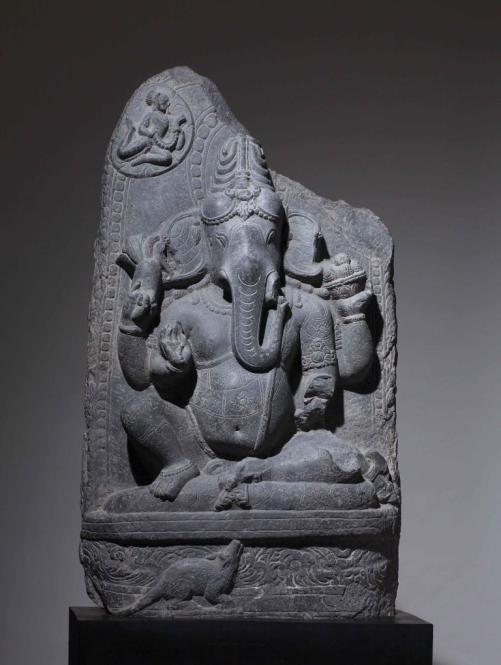
2008.66

Object Title
Ganesha, Lord of Obstacles
Measurements
35 3/4 in x 18 in x 6 inches
Creation Date
11th century, Pala period (mid-8th – 12th century)
Credit Line
Museum Purchase: Funds provided by exchange through gifts of Mr. and Mrs. Hugh McCall
Culture
Country of Origin
Object Type
Materials / Techniques
Object URL
http://pamcollections.org/detail.php?t=objects&type=all&f=&s=Ganesha&record=0
Provenance Information
Christie’s Rockefeller Center, Sale #2024, 16 September 2008, Lot 377.
Sotheby’s New York, 23 March 2000, Lot 139
Efforts to trace provenance prior to the Sotheby's sale of March 2000 have been unsuccessful.

Exhibition Information
Portland Art Museum, February 2009 to May 2010; September 2011 through the present.
Publication Information
Auction catalogue, Sotheby’s New York, 23 March 2000, Lot 139
Auction catalogue, Christie’s Rockefeller Center, Sale #2024, 16 September 2008, Lot 377.
Ganesha: A New Elephant for Portland (Exhibition brochure, Portland Art Museum, February 2009)
Section of the AAMD Guidelines relied upon for the exception to 1970
Cumulative facts and circumstances
Explain why the object fits the exception set forth above
In the past, South Asian art had not been an area of collecting focus in Portland, but today the region is home to a large, vibrant, and highly educated South Asian population. The Museum's commitment under Director Brian Ferriso to "bringing the world to Portland" and strong expressions of interest from the local community led to a search for a significant historical work of South Asian art, No choice could have been more appropriate than an icon of Ganesha, a deity widely worshiped throughout the subcontinent. As the "Remover of Obstacles" who is invoked at the outset of any major enterprise, Ganesha perfectly symbolizes a new commitment to South Asian art.
The Ganesha stele, as an outstanding example of stone sculpture of the Pala period, has become the core object in Museum narratives about Hindu art and culture. Large enough to visually anchor a gallery, it is also intimate and approachable.
As a stele, the sculpture has always been a free-standing object, rather than a fragment of an architectural monument.
The sculpture comes from the northeastern part of the subcontinent--the region that now corresponds to Bangladesh or the Indian states of Bihar and West Bengal. This entire area came under the control of Muslim invaders at the end of the thirteenth century, which resulted in the widespread destruction of Buddhist and Hindu religious monuments. Over the subsequent centuries, the remaining Pala period brick temples were dismantled as the building materials were repurposed by the local population. It is highly likely, therefore, that the Ganesha fell out of active worship by the fourteenth century.
Subscribe to Sculptures