Home

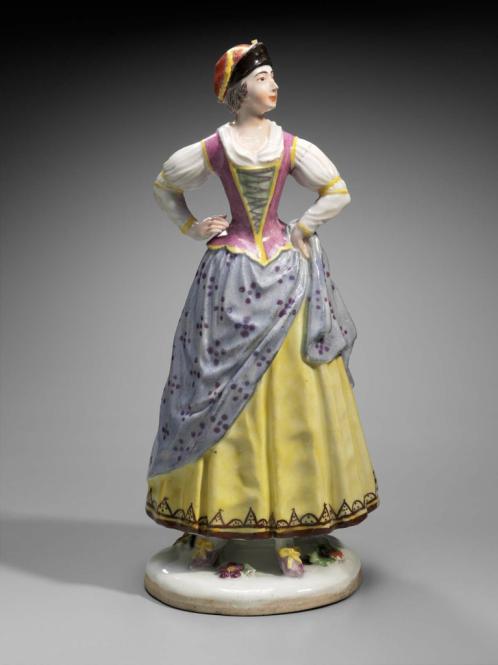
2017.80

Creator
Made by Fürstenberg Manufactory (Germany), Modeled by Simon Feilner (1726–1798)
Object Title
Figure of Ragonda
Measurements
20.6 cm (8 1/8 in.)
Credit Line
Kiyi and Edward M. Pflueger Collection. Bequest of Edward M. Pflueger and Gift of Kiyi Powers Pflueger, from the Estate of Emma Lazarus Budge
Creation Date
about 1754
Object Type
Object URL
http://www.mfa.org/collections/object/figure-of-ragonda-466197

Claim Resolution

Resolution
Agreement reached, museum retained work
Resolution Date
March 1, 2017
Details of Resolution
In March 2017, the Museum of Fine Arts reached an agreement with the Estate of Emma Budge, allowing the Museum to retain seven pieces of 18th century German porcelain that were sold in Berlin in 1937.

The commedia dell’arte figures, made by the porcelain manufactories Höchst, Fürstenburg, and Fulda, all belonged to Emma Lazarus Budge (1852 – 1937), who built a large collection of decorative arts in her home in Hamburg. Upon her death in 1937, she left the disposition of her art collection to her estate executors, specifying that she did not wish the collection to be sold within National Socialist Germany. Mrs. Budge and all of her estate executors were Jewish.

Nevertheless, on October 4-6, 1937, a large portion of Emma Budge’s art collection was auctioned in Berlin. The proceeds from the sale were very probably credited to the account of the Budge estate at M. M. Warburg Bank in Hamburg. The settlement of the estate, however, was delayed until 1939. In the meantime, Warburg Bank was Aryanized, or sold to non-Jewish owners. Several of Mrs. Budge’s estate executors were dismissed from their roles. Many of her heirs, who were Jewish, fled Germany. Those who remained were subject to persecution. The estate funds that were ultimately disbursed were placed into tightly-controlled, blocked accounts to which the heirs did not have full access. Thus, as the direct result of Nazi persecution, the proceeds from the sale were never realized.

The seven pieces of porcelain at the MFA were purchased at the 1937 auction by Otto and Magdalena Blohm, likewise porcelain collectors from Hamburg, and probably acquaintances of Emma Budge. Mrs. Blohm moved to New York after World War II, bringing the porcelain collection with her. Edward and Kiyi Pflueger acquired the figures from the Blohm collection and bequeathed them to the MFA in 2006.
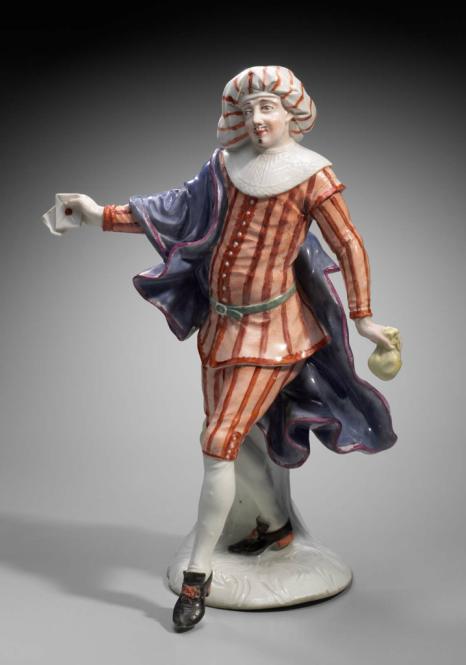
2017.79

Creator
Fürstenberg Manufactory (Germany), Modeled by Simon Feilner (1726–1798)
Object Title
Figure of Scaramouche
Measurements
21 cm (8 1/4 in.) h.
Credit Line
Kiyi and Edward M. Pflueger Collection. Bequest of Edward M. Pflueger and Gift of Kiyi Powers Pflueger, from the Estate of Emma Lazarus Budge
Creation Date
about 1754
Object Type
Object URL
http://www.mfa.org/collections/object/figure-of-scaramouche-466194

Claim Resolution

Resolution
Agreement reached, museum retained work
Resolution Date
March 1, 2017
Details of Resolution
In March 2017, the Museum of Fine Arts reached an agreement with the Estate of Emma Budge, allowing the Museum to retain seven pieces of 18th century German porcelain that were sold in Berlin in 1937.

The commedia dell’arte figures, made by the porcelain manufactories Höchst, Fürstenburg, and Fulda, all belonged to Emma Lazarus Budge (1852 – 1937), who built a large collection of decorative arts in her home in Hamburg. Upon her death in 1937, she left the disposition of her art collection to her estate executors, specifying that she did not wish the collection to be sold within National Socialist Germany. Mrs. Budge and all of her estate executors were Jewish.

Nevertheless, on October 4-6, 1937, a large portion of Emma Budge’s art collection was auctioned in Berlin. The proceeds from the sale were very probably credited to the account of the Budge estate at M. M. Warburg Bank in Hamburg. The settlement of the estate, however, was delayed until 1939. In the meantime, Warburg Bank was Aryanized, or sold to non-Jewish owners. Several of Mrs. Budge’s estate executors were dismissed from their roles. Many of her heirs, who were Jewish, fled Germany. Those who remained were subject to persecution. The estate funds that were ultimately disbursed were placed into tightly-controlled, blocked accounts to which the heirs did not have full access. Thus, as the direct result of Nazi persecution, the proceeds from the sale were never realized.

The seven pieces of porcelain at the MFA were purchased at the 1937 auction by Otto and Magdalena Blohm, likewise porcelain collectors from Hamburg, and probably acquaintances of Emma Budge. Mrs. Blohm moved to New York after World War II, bringing the porcelain collection with her. Edward and Kiyi Pflueger acquired the figures from the Blohm collection and bequeathed them to the MFA in 2006.
2017.78

Creator
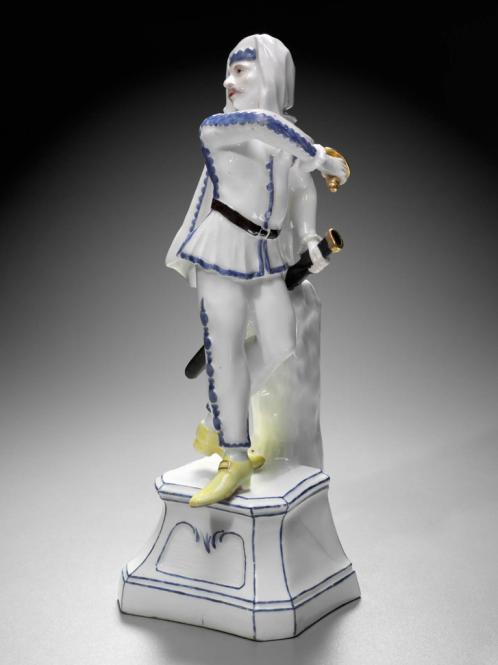
Höchst Manufactory, Germany
Object Title
Figure of Il Capitano
Measurements
20.3 cm (8 in.) h.
Credit Line
Kiyi and Edward M. Pflueger Collection. Bequest of Edward M. Pflueger and Gift of Kiyi Powers Pflueger, from the Estate of Emma Lazarus Budge
Creation Date
about 1752
Object Type
Object URL
http://www.mfa.org/collections/object/figure-of-il-capitano-466178

Claim Resolution

Resolution
Agreement reached, museum retained work
Resolution Date
March 1, 2017
Details of Resolution
In March 2017, the Museum of Fine Arts reached an agreement with the Estate of Emma Budge, allowing the Museum to retain seven pieces of 18th century German porcelain that were sold in Berlin in 1937.

The commedia dell’arte figures, made by the porcelain manufactories Höchst, Fürstenburg, and Fulda, all belonged to Emma Lazarus Budge (1852 – 1937), who built a large collection of decorative arts in her home in Hamburg. Upon her death in 1937, she left the disposition of her art collection to her estate executors, specifying that she did not wish the collection to be sold within National Socialist Germany. Mrs. Budge and all of her estate executors were Jewish.

Nevertheless, on October 4-6, 1937, a large portion of Emma Budge’s art collection was auctioned in Berlin. The proceeds from the sale were very probably credited to the account of the Budge estate at M. M. Warburg Bank in Hamburg. The settlement of the estate, however, was delayed until 1939. In the meantime, Warburg Bank was Aryanized, or sold to non-Jewish owners. Several of Mrs. Budge’s estate executors were dismissed from their roles. Many of her heirs, who were Jewish, fled Germany. Those who remained were subject to persecution. The estate funds that were ultimately disbursed were placed into tightly-controlled, blocked accounts to which the heirs did not have full access. Thus, as the direct result of Nazi persecution, the proceeds from the sale were never realized.

The seven pieces of porcelain at the MFA were purchased at the 1937 auction by Otto and Magdalena Blohm, likewise porcelain collectors from Hamburg, and probably acquaintances of Emma Budge. Mrs. Blohm moved to New York after World War II, bringing the porcelain collection with her. Edward and Kiyi Pflueger acquired the figures from the Blohm collection and bequeathed them to the MFA in 2006.
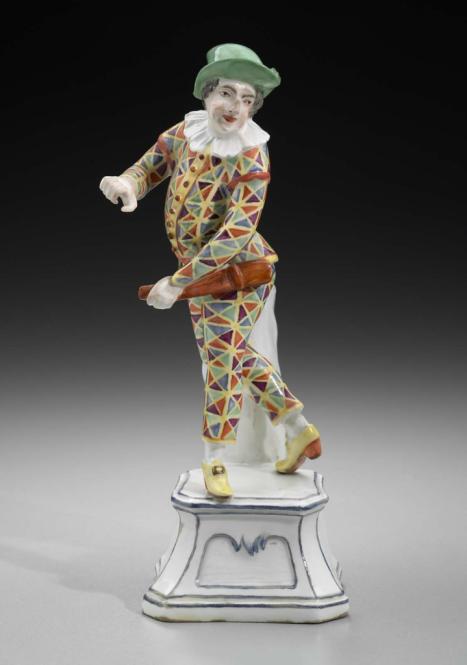
2017.77

Creator
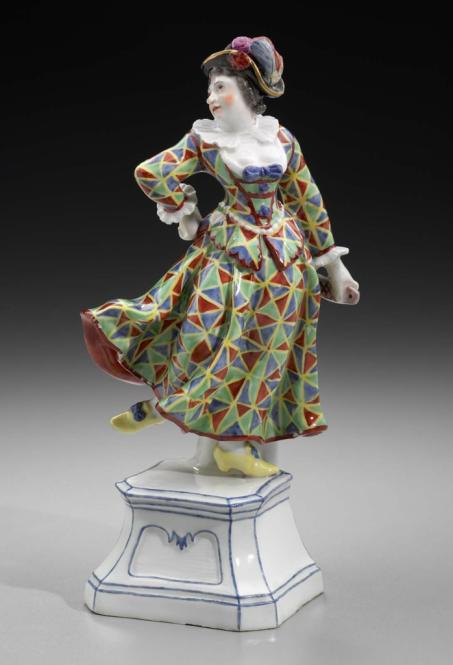
Höchst Manufactory, Germany
Object Title
Figure of Harlequine
Measurements
21 cm (8 1/4 in.) h.
Credit Line
Kiyi and Edward M. Pflueger Collection. Bequest of Edward M. Pflueger and Gift of Kiyi Powers Pflueger, from the Estate of Emma Lazarus Budge
Creation Date
about 1752
Object Type
Object URL
http://www.mfa.org/collections/object/figure-of-harlequine-466174

Claim Resolution

Resolution
Agreement reached, museum retained work
Resolution Date
March 1, 2017
Details of Resolution
In March 2017, the Museum of Fine Arts reached an agreement with the Estate of Emma Budge, allowing the Museum to retain seven pieces of 18th century German porcelain that were sold in Berlin in 1937.

The commedia dell’arte figures, made by the porcelain manufactories Höchst, Fürstenburg, and Fulda, all belonged to Emma Lazarus Budge (1852 – 1937), who built a large collection of decorative arts in her home in Hamburg. Upon her death in 1937, she left the disposition of her art collection to her estate executors, specifying that she did not wish the collection to be sold within National Socialist Germany. Mrs. Budge and all of her estate executors were Jewish.

Nevertheless, on October 4-6, 1937, a large portion of Emma Budge’s art collection was auctioned in Berlin. The proceeds from the sale were very probably credited to the account of the Budge estate at M. M. Warburg Bank in Hamburg. The settlement of the estate, however, was delayed until 1939. In the meantime, Warburg Bank was Aryanized, or sold to non-Jewish owners. Several of Mrs. Budge’s estate executors were dismissed from their roles. Many of her heirs, who were Jewish, fled Germany. Those who remained were subject to persecution. The estate funds that were ultimately disbursed were placed into tightly-controlled, blocked accounts to which the heirs did not have full access. Thus, as the direct result of Nazi persecution, the proceeds from the sale were never realized.

The seven pieces of porcelain at the MFA were purchased at the 1937 auction by Otto and Magdalena Blohm, likewise porcelain collectors from Hamburg, and probably acquaintances of Emma Budge. Mrs. Blohm moved to New York after World War II, bringing the porcelain collection with her. Edward and Kiyi Pflueger acquired the figures from the Blohm collection and bequeathed them to the MFA in 2006.

2017.76

Creator
Höchst Manufactory, Germany
Object Title
Figure of Harlequin
Measurements
Höchst Manufactory, Germany
Credit Line
Kiyi and Edward M. Pflueger Collection. Bequest of Edward M. Pflueger and Gift of Kiyi Powers Pflueger, from the Estate of Emma Lazarus Budge
Creation Date
about 1752
Object Type
Object URL
http://www.mfa.org/collections/object/figure-of-harlequin-466173

Claim Resolution

Resolution
Agreement reached, museum retained work
Resolution Date
March 1, 2017
Details of Resolution
In March 2017, the Museum of Fine Arts reached an agreement with the Estate of Emma Budge, allowing the Museum to retain seven pieces of 18th century German porcelain that were sold in Berlin in 1937.

The commedia dell’arte figures, made by the porcelain manufactories Höchst, Fürstenburg, and Fulda, all belonged to Emma Lazarus Budge (1852 – 1937), who built a large collection of decorative arts in her home in Hamburg. Upon her death in 1937, she left the disposition of her art collection to her estate executors, specifying that she did not wish the collection to be sold within National Socialist Germany. Mrs. Budge and all of her estate executors were Jewish.

Nevertheless, on October 4-6, 1937, a large portion of Emma Budge’s art collection was auctioned in Berlin. The proceeds from the sale were very probably credited to the account of the Budge estate at M. M. Warburg Bank in Hamburg. The settlement of the estate, however, was delayed until 1939. In the meantime, Warburg Bank was Aryanized, or sold to non-Jewish owners. Several of Mrs. Budge’s estate executors were dismissed from their roles. Many of her heirs, who were Jewish, fled Germany. Those who remained were subject to persecution. The estate funds that were ultimately disbursed were placed into tightly-controlled, blocked accounts to which the heirs did not have full access. Thus, as the direct result of Nazi persecution, the proceeds from the sale were never realized.

The seven pieces of porcelain at the MFA were purchased at the 1937 auction by Otto and Magdalena Blohm, likewise porcelain collectors from Hamburg, and probably acquaintances of Emma Budge. Mrs. Blohm moved to New York after World War II, bringing the porcelain collection with her. Edward and Kiyi Pflueger acquired the figures from the Blohm collection and bequeathed them to the MFA in 2006.

2007.8897

Object Title
Vessel
Measurements
H: 17.5" (44.5 cm); Diam: 8.5" (21.6 cm)
Creation Date
Tang Dynasty, 7th century
Credit Line
Gift of Dr. Michael Sze
Museum Contact
provenance@denverartmuseum.org
Culture
Country of Origin
Materials / Techniques
Museum's Definition of Antiquity
End of Tang Dynasty (907 CE)
Provenance Information
At least 2007, Dr. Michael Sze, United States; 2007, DAM collection, gift of Dr. Sze.
Exhibition Information
N/A
Publication Information
N/A
Section of the AAMD Guidelines relied upon for the exception to 1970
Gift or bequest expected or on loan prior to 2008
Explain why the object fits the exception set forth above
Though the vessel was not formally accessioned until 2016, the object was initially given to the DAM in 2007, before the 2008 AAMD guidelines went into place.

2014.024.022

Object Title
Spouted globular jug with handle
Measurements
H. 7 7/8 × dia. 6 11/16 in. (20 × 17 cm)
Creation Date
1000-600 BC
Credit Line
Gift of the Arthur M. Sackler Foundation
Culture
Country of Origin
Object URL
http://emuseum.cornell.edu/view/objects/asitem/items$0040:47473
Provenance Information
by 1970 collection of Farhadi & Anavian, New York; 1970-1987 collection of Arthur M. Sackler Collections, New York (purchased by Arthur M. Sackler from Farhadi & Anavian); 1987-1997 estate of Arthur M. Sackler; 1997 collection of Else Sackler (d. 2000), New York, NY (purchased from estate of Arthur M. Sackler); 1997-2014 collection of the Arthur M. Sackler Foundation, New York, NY (gift of Else Sackler); 2014 collection of Herbert F. Johnson Museum of Art, Cornell University, Ithaca, NY (gift of The Arthur M. Sackler Foundation)
Exhibition Information
The Lowe Art Museum, University of Miami, Miami, Florida, Ancient Iranian Ceramics from The Arthur M. Sackler Collections, October 9, 1987 - January 31, 1988

Museum of New Mexico, Museum of Fine Arts ,Santa Fe, New Mexico, Wit And Wine: A New Look at Ancient Iranian Ceramics from the Arthur M. Sackler Foundation, February 19–September 6, 1999; The Yager Museum, Hartwick College, Oneonta, New York, September 24, 1999–June 2, 2000; Krannert Art Museum, University of Illinois at Urbana-Champaign, Champaign, Illinois, July 14–December 17, 2000; Palmer Museum of Art, The Pennsylvania State University, University Park, Pennsylvania, June 12–August 12, 2001; Brooklyn Museum of Art, Brooklyn, New York, September 7–December 30, 2001; Frank H. McClung Museum, The University of Tennessee, Knoxville, Tennessee, February 22–May 19, 2002; Museum of Art and Archaeology, University of Missouri-Columbia, Columbia, Missouri, August 10–December 22, 2002; Holter Museum of Art, Helena, Montana, January 24–April 27, 2003; COPIA: The American Center for Wine, Food & the Arts, Napa, California, May 22–September 1, 2003; University of Wyoming Art Museum, Laramie, Wyoming, October 18–December 23, 2003; Dennos Museum Center, Northwestern Michigan College, Traverse City, Michigan, March 20–September 5, 2004; Ceramics Research Center, Arizona State University Art Museum, Tempe, Arizona, October 16, 2004–January 8, 2005; The Berkshire Museum, Pittsfield, Massachusetts, May 14–October 30, 2005
Publication Information
Trudy S. Kawami. Ancient Iranian Ceramics from the Arthur M. Sackler Collections. (New York, N.Y.: The Arthur M. Sackler Foundation, 1992); cat. no. 45, p. 126-127.

Wit and Wine: A New Look at Ancient Iranian Ceramics from the Arthur M. Sackler Foundation. University of Missouri-Columbia Museum of Art and Archeology, 2002. http://arthurmsacklerfdn.org/pdf/wit-wine/WitWine-UniversityofMissouri-2002.pdf (pg. 18).
Section of the AAMD Guidelines relied upon for the exception to 1970
Cumulative facts and circumstances
Explain why the object fits the exception set forth above
Part of a larger gift from the Arthur M. Sackler Foundation that, according to correspondence and documentation on file, was acquired by Dr. Sackler from Farhadi & Anavian, New York, in 1970.

2014.024.021

Object Title
Brown-colored vessel with beak spout
Measurements
7 1/16 × 15 3/4 × 8 1/4 in. (18 × 40 × 21 cm)
Creation Date
1050-800 BC
Credit Line
Gift of the Arthur M. Sackler Foundation
Culture
Country of Origin
Object URL
http://emuseum.cornell.edu/view/objects/asitem/items$0040:47472
Provenance Information
by 1970 collection of Farhadi & Anavian, New York; 1970-1987 collection of Arthur M. Sackler Collections, New York (purchased by Arthur M. Sackler from Farhadi & Anavian); 1987-1997 estate of Arthur M. Sackler; 1997 collection of Else Sackler (d. 2000), New York, NY (purchased from estate of Arthur M. Sackler); 1997-2014 collection of the Arthur M. Sackler Foundation, New York, NY (gift of Else Sackler); 2014 collection of Herbert F. Johnson Museum of Art, Cornell University, Ithaca, NY (gift of The Arthur M. Sackler Foundation)
Exhibition Information
The Lowe Art Museum, University of Miami, Miami, Florida, Ancient Iranian Ceramics from The Arthur M. Sackler Collections, October 9, 1987 - January 31, 1988

Museum of New Mexico, Museum of Fine Arts ,Santa Fe, New Mexico, Wit And Wine: A New Look at Ancient Iranian Ceramics from the Arthur M. Sackler Foundation, February 19–September 6, 1999; The Yager Museum, Hartwick College, Oneonta, New York, September 24, 1999–June 2, 2000; Krannert Art Museum, University of Illinois at Urbana-Champaign, Champaign, Illinois, July 14–December 17, 2000; Palmer Museum of Art, The Pennsylvania State University, University Park, Pennsylvania, June 12–August 12, 2001; Brooklyn Museum of Art, Brooklyn, New York, September 7–December 30, 2001; Frank H. McClung Museum, The University of Tennessee, Knoxville, Tennessee, February 22–May 19, 2002; Museum of Art and Archaeology, University of Missouri-Columbia, Columbia, Missouri, August 10–December 22, 2002; Holter Museum of Art, Helena, Montana, January 24–April 27, 2003; COPIA: The American Center for Wine, Food & the Arts, Napa, California, May 22–September 1, 2003; University of Wyoming Art Museum, Laramie, Wyoming, October 18–December 23, 2003; Dennos Museum Center, Northwestern Michigan College, Traverse City, Michigan, March 20–September 5, 2004; Ceramics Research Center, Arizona State University Art Museum, Tempe, Arizona, October 16, 2004–January 8, 2005; The Berkshire Museum, Pittsfield, Massachusetts, May 14–October 30, 2005
Publication Information
Trudy S. Kawami. Ancient Iranian Ceramics from the Arthur M. Sackler Collections [an exh. brochure]. (New York, N.Y.: The Arthur M. Sackler Foundation, October 1987); fig. 4.

Trudy S. Kawami. Ancient Iranian Ceramics from the Arthur M. Sackler Collections. (New York, N.Y.: The Arthur M. Sackler Foundation, 1992); cat. no. 34, p. 102-103.

Wit and Wine: A New Look at Ancient Iranian Ceramics from the Arthur M. Sackler Foundation. University of Missouri-Columbia Museum of Art and Archeology, 2002. http://arthurmsacklerfdn.org/pdf/wit-wine/WitWine-UniversityofMissouri-2002.pdf (pg. 22).
Section of the AAMD Guidelines relied upon for the exception to 1970
Cumulative facts and circumstances
Explain why the object fits the exception set forth above
Part of a larger gift from the Arthur M. Sackler Foundation that, according to correspondence and documentation on file, was acquired by Dr. Sackler from Farhadi & Anavian, New York, in 1970.

2014.024.020

Object Title
Vessel in the form of a recumbent pack camel
Measurements
8 1/4 × 11 × 7 7/8 in. (21 × 28 × 20 cm)
Creation Date
250 BC-AD 224
Credit Line
Gift of the Arthur M. Sackler Foundation
Culture
Country of Origin
Object URL
http://emuseum.cornell.edu/view/objects/asitem/items$0040:47471
Provenance Information
by 1970 collection of Farhadi & Anavian, New York; 1970-1987 collection of Arthur M. Sackler Collections, New York (purchased by Arthur M. Sackler from Farhadi & Anavian); 1987-1997 estate of Arthur M. Sackler; 1997 collection of Else Sackler (d. 2000), New York, NY (purchased from estate of Arthur M. Sackler); 1997-2014 collection of the Arthur M. Sackler Foundation, New York, NY (gift of Else Sackler); 2014 collection of Herbert F. Johnson Museum of Art, Cornell University, Ithaca, NY (gift of The Arthur M. Sackler Foundation)
Exhibition Information
The Lowe Art Museum, University of Miami, Miami, Florida, Ancient Iranian Ceramics from The Arthur M. Sackler Collections, October 9, 1987 - January 31, 1988

Museum of New Mexico, Museum of Fine Arts ,Santa Fe, New Mexico, Wit And Wine: A New Look at Ancient Iranian Ceramics from the Arthur M. Sackler Foundation, February 19–September 6, 1999; The Yager Museum, Hartwick College, Oneonta, New York, September 24, 1999–June 2, 2000; Krannert Art Museum, University of Illinois at Urbana-Champaign, Champaign, Illinois, July 14–December 17, 2000; Palmer Museum of Art, The Pennsylvania State University, University Park, Pennsylvania, June 12–August 12, 2001; Brooklyn Museum of Art, Brooklyn, New York, September 7–December 30, 2001; Frank H. McClung Museum, The University of Tennessee, Knoxville, Tennessee, February 22–May 19, 2002; Museum of Art and Archaeology, University of Missouri-Columbia, Columbia, Missouri, August 10–December 22, 2002; Holter Museum of Art, Helena, Montana, January 24–April 27, 2003; COPIA: The American Center for Wine, Food & the Arts, Napa, California, May 22–September 1, 2003; University of Wyoming Art Museum, Laramie, Wyoming, October 18–December 23, 2003; Dennos Museum Center, Northwestern Michigan College, Traverse City, Michigan, March 20–September 5, 2004; Ceramics Research Center, Arizona State University Art Museum, Tempe, Arizona, October 16, 2004–January 8, 2005; The Berkshire Museum, Pittsfield, Massachusetts, May 14–October 30, 2005
Publication Information
Leslie Judd Ahlander. "Ceramics at the Lowe Range from Simple to Stylized," in The Miami News (Friday, November 13, 1987); p. 8C (illustrated).

Trudy S. Kawami. Ancient Iranian Ceramics from the Arthur M. Sackler Collections [an exh. brochure]. (New York, N.Y.: The Arthur M. Sackler Foundation, 1987); fig. 17.

Trudy S. Kawami. Ancient Iranian Ceramics from the Arthur M. Sackler Collections. (New York, N.Y.: The Arthur M. Sackler Foundation, 1992); cat. no. 82, p. 202-203.

D. Wood. "Wit and Wine: A New Look at Ancient Iranian Ceramics" in Ceramics Monthly, (February, 2005);p. 14-16 (illustrated).

Wit and Wine: A New Look at Ancient Iranian Ceramics from the Arthur M. Sackler Foundation. Frank H. McClung Museum, The University of Tennessee, Knoxville, 2002 Tennesseehttp://mcclungmuseum.utk.edu/files/2013/03/WitWineExhibit_TeachersGuide.pdf (pg. 14).

Wit and Wine: A New Look at Ancient Iranian Ceramics from the Arthur M. Sackler Foundation. University of Missouri-Columbia Museum of Art and Archeology, 2002. http://arthurmsacklerfdn.org/pdf/wit-wine/WitWine-UniversityofMissouri-2002.pdf (pg. 25).
Section of the AAMD Guidelines relied upon for the exception to 1970
Cumulative facts and circumstances
Explain why the object fits the exception set forth above
Part of a larger gift from the Arthur M. Sackler Foundation that, according to correspondence and documentation on file, was acquired by Dr. Sackler from Farhadi & Anavian, New York, in 1970

2014.024.019

Object Title
Footed bowl with painted decoration
Measurements
H. 9 15/16 × dia. 10 1/16 in. (25.2 × 25.6 cm)
Creation Date
5000-3500 BC
Credit Line
Gift of the Arthur M. Sackler Foundation
Culture
Country of Origin
Object URL
http://emuseum.cornell.edu/view/objects/asitem/items$0040:47470
Provenance Information
by 1970 collection of Farhadi & Anavian, New York; 1970-1987 collection of Arthur M. Sackler Collections, New York (purchased by Arthur M. Sackler from Farhadi & Anavian); 1987-1997 estate of Arthur M. Sackler; 1997 collection of Else Sackler (d. 2000), New York, NY (purchased from estate of Arthur M. Sackler); 1997-2014 collection of the Arthur M. Sackler Foundation, New York, NY (gift of Else Sackler); 2014 collection of Herbert F. Johnson Museum of Art, Cornell University, Ithaca, NY (gift of The Arthur M. Sackler Foundation)
Exhibition Information
The Lowe Art Museum, University of Miami, Miami, Florida, Ancient Iranian Ceramics from The Arthur M. Sackler Collections, October 9, 1987 - January 31, 1988

Museum of New Mexico, Museum of Fine Arts ,Santa Fe, New Mexico, Wit And Wine: A New Look at Ancient Iranian Ceramics from the Arthur M. Sackler Foundation, February 19–September 6, 1999; The Yager Museum, Hartwick College, Oneonta, New York, September 24, 1999–June 2, 2000; Krannert Art Museum, University of Illinois at Urbana-Champaign, Champaign, Illinois, July 14–December 17, 2000; Palmer Museum of Art, The Pennsylvania State University, University Park, Pennsylvania, June 12–August 12, 2001; Brooklyn Museum of Art, Brooklyn, New York, September 7–December 30, 2001; Frank H. McClung Museum, The University of Tennessee, Knoxville, Tennessee, February 22–May 19, 2002; Museum of Art and Archaeology, University of Missouri-Columbia, Columbia, Missouri, August 10–December 22, 2002; Holter Museum of Art, Helena, Montana, January 24–April 27, 2003; COPIA: The American Center for Wine, Food & the Arts, Napa, California, May 22–September 1, 2003; University of Wyoming Art Museum, Laramie, Wyoming, October 18–December 23, 2003; Dennos Museum Center, Northwestern Michigan College, Traverse City, Michigan, March 20–September 5, 2004; Ceramics Research Center, Arizona State University Art Museum, Tempe, Arizona, October 16, 2004–January 8, 2005; The Berkshire Museum, Pittsfield, Massachusetts, May 14–October 30, 2005
Publication Information
Lois Katz, "The Arthur M. Sackler Collections" in STUDIO (Dr. Arthur M. Sackler Special Issue), Volume 200, Supplement 1 (1987); p. 53, fig. 27 (illustrated).

Trudy S. Kawami, Ancient Iranian Ceramics From The Arthur M. Sackler Collections [an exh. brochure]. (New York: The Arthur M. Sackler Foundation, 1987); fig. 1.

Trudy S. Kawami. Ancient Iranian Ceramics from the Arthur M. Sackler Collections. (New York, N.Y.: The Arthur M. Sackler Foundation, 1992); cat. no. 1, p. 36-7.

Maureen Mackey. Ceramics Timeline. (M.A. Thesis, Art Education, The University of Arizona, 1994). [page number not noted on Catalog report]

Maureen Mackey. A Global Art Timeline: Ceramic Innovations. (Worcester, MA: Davis Publications, Inc., 1996). [page number not noted on Catalog report]

Wit and Wine: A New Look at Ancient Iranian Ceramics from the Arthur M. Sackler Foundation. University of Missouri-Columbia Museum of Art and Archeology, 2002. http://arthurmsacklerfdn.org/pdf/wit-wine/WitWine-UniversityofMissouri-2002.pdf (pg. 23).
Section of the AAMD Guidelines relied upon for the exception to 1970
Cumulative facts and circumstances
Explain why the object fits the exception set forth above
Part of a larger gift from the Arthur M. Sackler Foundation that, according to correspondence and documentation on file, was acquired by Dr. Sackler from Farhadi & Anavian, New York, in 1970.
Subscribe to Ceramics