Home

2018.657

Object Title
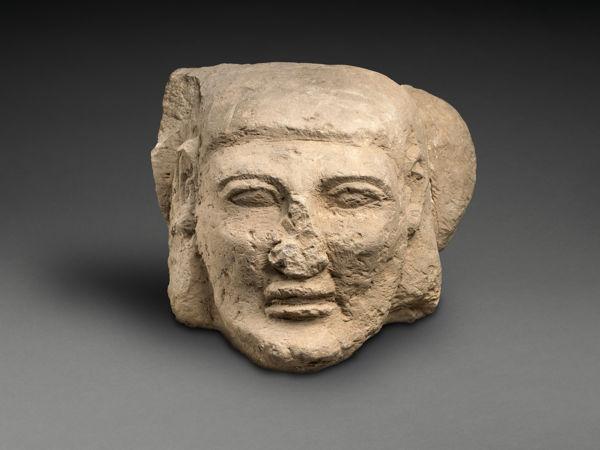
Monumental Head of a Foreigner
Measurements
H. 33 × W. 44 × D. 49.5 cm, 146.1 kg (13 × 17 5/16 × 19 1/2 in., 322 lb.)
Creation Date
ca. 1295–1070 B.C.
Credit Line
Gift of Lewis and Elaine Dubroff, in celebration of the Museum's 150th Anniversary, 2017
Culture
Country of Origin
Object Type
Materials / Techniques
Object URL
https://www.metmuseum.org/art/collection/search/767641
Provenance Information
By 1967, Collection of Vincent Diniacopolous, Montreal (supported by undated photograph in family archive); Diniacopolous family, Montreal, by descent, 1967-1999; their sale, Sotheby’s, June 6, 1999; purchased at Sotheby’s by Elaine and Lewis M. Dubroff; Collection of Elaine and Lewis M. Dubroff, 1999-2017; Gift of Elaine and Lewis M. Dubroff to The Metropolitan Museum of Art, 2017.
Exhibition Information
None.
Publication Information
Sotheby’s New York, June 5, 1999, p. 24 (no. 38), “A Monumental Limestone Head of a Vanquished Foreigner.”

Section of the AAMD Guidelines relied upon for the exception to 1970
Informed judgement that works were outside of the country of modern discovery before 1970
Explain why the object fits the exception set forth above
This work has provenance confirmed to 1999 when it was sold at auction by Sotheby’s as a work from a private North American collector. The Metropolitan Museum of Art has provenance information back to the early 1960s that is supported by circumstantial evidence. Vincent Diniacopolous (1886-1967) was a Canadian dealer, who was first established shops in Cairo, Paris, and Southern France in 1922 before moving to Montreal in 1951. An early photograph in the family’s archive, now in Concordia University in Canada, suggests that the piece was on the art market as early as 1910s or 1920s, when Diniacopolous was in Egypt. He stopped acquiring pieces already in the early 1960s, due to a serious health problem, and the collection remained in his family following his death in 1967. This imposing head is a collection-changing addition to the Museum’s holdings because it is an architectural element of monumental size from a Ramesside building. During the Ramesside Period (ca. 1295-1070 B.C.), Egypt’s kings concentrated on the construction of public structures and the control of their empire, and our collection does not appropriately reflect this important time.
 

2018.3.1

Object Title
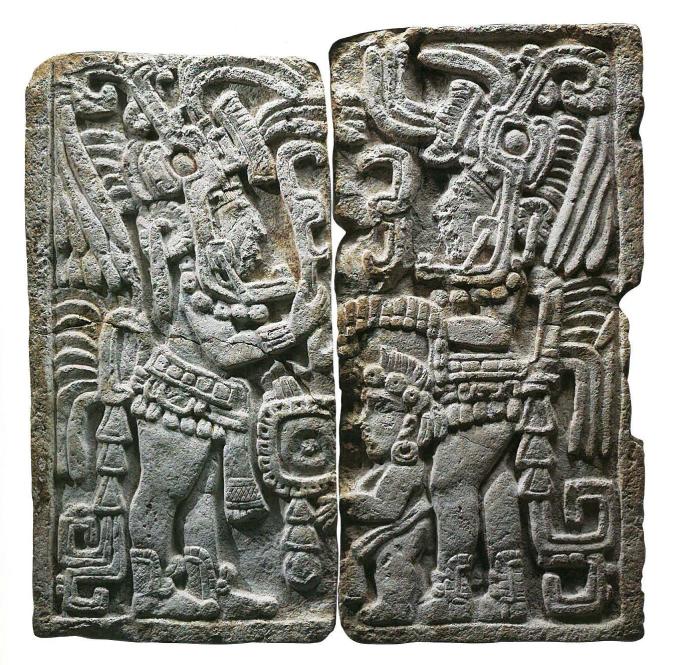
Relief panels (door reveals)
Measurements
45 x 45 in. overall
Creation Date
ca. AD 550-950
Credit Line
Gift in honor of Assen Nicolov
Culture
Country of Origin
Object Type
Materials / Techniques
Object URL
http://art.seattleartmuseum.org/objects/47103/relief-panels-door-reveals?ctx=5ca067b6-51da-4037-b71a-157dfc0f094a&idx=0
Provenance Information
[David Stuart Gallery, Los Angeles, California], by the late 1950s; private collection, Los Angeles, California, by 1980; [Sotheby’s, New York, Pre-Columbian Art, Nov. 25, 1996, sale no. 6921, lot no. 187, reproduced]; by private sale through Sotheby’s to Assen and Christine Nicolov, Seattle, Washington, Dec. 15, 1997
Exhibition Information
None known
Publication Information
Karl Herbert Mayer, Maya Monuments: Sculptures of Unknown Provenance in the United States, Ramona, 1980, pp.37-38; illustrated in Mayer, Maya Monuments, Supplement I, Berlin, 1987, pl. 34.
Section of the AAMD Guidelines relied upon for the exception to 1970
Informed judgement that works were outside of the country of modern discovery before 1970
Explain why the object fits the exception set forth above
Based on the results of provenance research, this Maya panel in two sections was outside its probable country of modern discovery (Mexico) by the late 1950s. Per the provenance published in Karl Herbert Mayer’s Maya Monuments, the panels were in the possession of David Stuart Gallery, Los Angeles, California, by the late 1950s. This fact is corroborated by the provenance included in the auction catalogue for Sotheby’s Pre-Columbian Art auction (sale no. 6921) on November 25, 1996: “Primus/Stuart Gallery, Los Angeles, acquired in the late 1950s.” The piece was published twice by Karl Herbert Mayer (1980, 1987). The panels cleared a search conducted by the Art Loss Register. SAM’s Pre-Columbian collection has very few works of scale, and this monumental piece would add a unique example of architectural art and offer an opportunity to present important themes of Maya iconography.

2015.595

Object Title
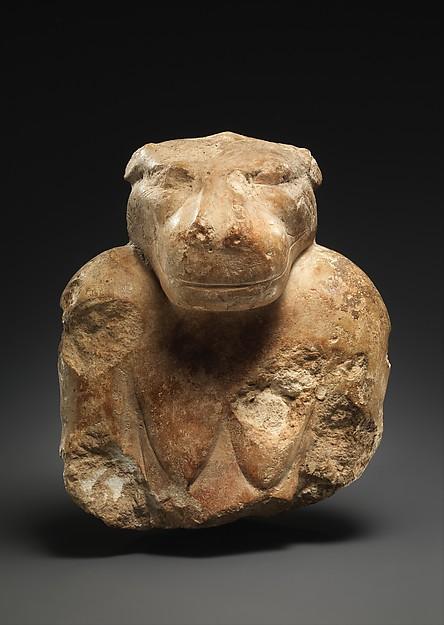
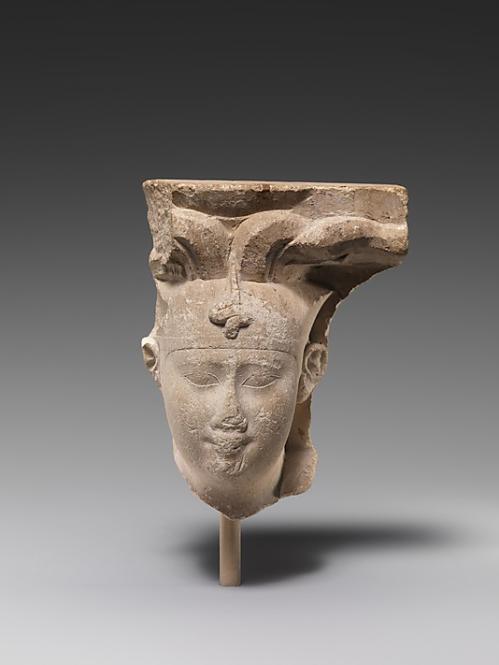
Upper Part of a Hippo Goddess
Measurements
H. 16.5 cm (6 1/2 in.); W. 12.9 cm (5 1/16 in.); D. 11.5 cm (4 1/2 in.)
Creation Date
2649–2528 BC
Credit Line
Purchase, Mr. and Mrs. John A. Moran Gift, 2015
Culture
Country of Origin
Object Type
Materials / Techniques
Object URL
http://www.metmuseum.org/art/collection/search/694156
Provenance Information
Purchased from Lucien Viola of the Galerie l'Ibis, who acquired the piece with many others from the Egyptian antiquities inventory of Ernst Kofler. Kofler was a dealer, prinicpally of Egyptian art in the 1950's and 1960's, that Viola had known for many years in Cairo. Documentation dating to 1989 from Kofler states that he had owned for 20 years the group of antiquities, of which the hippo goddess was one, consigned to Viola for sale in 1987.
Exhibition Information
This work was exhibited in connection with the 2014 Brussels Ancient Art Fair
Publication Information
Christies London sale catalogue, April 12, 2000, lot 79, “A Rare Limestone Upper Part of a Statue of Taweret (Tueris).” The work was published (with photograph) in connection with the 2014 Brussels Ancient Art Fair. The work was also published as the signature image for the Galerie L’Ibis online catalog in 2014 and 2015.
Section of the AAMD Guidelines relied upon for the exception to 1970
Informed judgement that works were outside of the country of modern discovery before 1970
Explain why the object fits the exception set forth above
The Metropolitan Museum of Art has provenance information back to the early 1960s that is supported by circumstantial evidence. Ernst Kofler was a Swiss dealer who acquired works in Egypt through his friend, Maguid Sameda, in the 1950s and 1960s. After Mr. Sameda died in the late 1960s, Mr. Kofler stopped collecting Egyptian objects. In 1987, Lucien Viola met and later married Mr. Kofler’s granddaughter. Mr. Kofler transferred Egyptian objects, including this statuette, to Mr. Viola for sale during the late 1980’s. Mr. Kofler signed a certification dated February 25, 1983, declaring that all of the Egyptian reliefs and statues he gave to Mr. Viola for sale had been with Mr. Kofler “for over 20 years in Lausanne, Switzerland.” In 1987, this work was listed in a shipping invoice before its transfer from Mr. Kofler to Mr. Viola Currently this statue is understood to be the earliest known three dimensional representation of a composite deity, a concept that was quintessentially Egyptian for its pantheon. This rare statue depicts an early hippo goddess where human, hippopotamus, crocodile and feline characteristics are combined into a single deity.

2016.700

Object Title
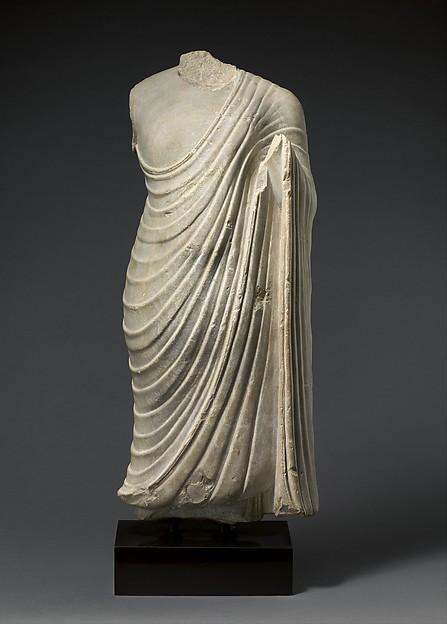
Buddha
Measurements
H. 30 in. (76.2 cm); W. 11 in. (27.9 cm); D. 4 1/2 in. (11.4 cm)
Creation Date
Ikshvaku period (ca. 225–ca. 320), 3rd century
Credit Line
Purchase, The Vincent Astor Foundation Gift, Brooke Russell Astor Bequest, The Miriam and Ira D. Wallach Foundation Fund; Fernando Family Trust Gift, in honor of Dr. Quintus and Mrs. Wimala Fernando; Vijay K. Anand, M.D., Nanda Anand, Maya Anand, and Rohi
Culture
Country of Origin
Object Type
Materials / Techniques
Object URL
http://www.metmuseum.org/art/collection/search/38237
Provenance Information
Purchased from David Tremayne Ltd, London, by Jeffrey B. Soref on February 13, 1987; Collection of Jeffrey B. Soref from 1987 through 2016; Purchased from Jeff Soref by The Metropolitan Museum of Art in 2016.
Exhibition Information
The work has been on loan to and on display at The Metropolitan Museum of Art since 1994.
Publication Information
None
Section of the AAMD Guidelines relied upon for the exception to 1970
Gift or bequest expected or on loan prior to 2008
Explain why the object fits the exception set forth above
Explain why the object fits the exception set forth above: The work has been on loan to and displayed at the Metropolitan Museum for 22 years (1994-2016). This work is a keystone work, linking the figurative tradition of Andhra to the traditions practiced in India’s north and north-west.
 

2016.121

Object Title
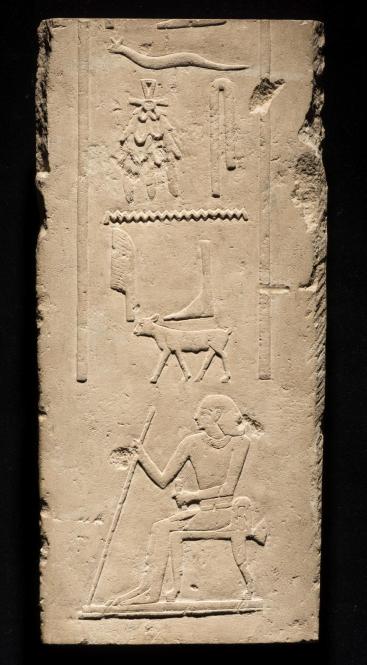
Relief from the Tomb of a Nobleman
Measurements
46.5 x 20.5 x 2.5 cm (18 5/16 x 8 1/16 x 1 in.)
Creation Date
2140–1991 B.C.
Credit Line
Gift of Davis and Carol Noble in honor of Rita E. Freed
Culture
Country of Origin
Object Type
Materials / Techniques
Object URL
http://www.mfa.org/collections/object/relief-from-the-tomb-of-a-nobleman-436510
Provenance Information
May 19-June 4, 1976, anonymous sale, Koller, Zurich, lot 2358, to a private collector, Switzerland; sold by this private collector to Oliver Forge, London; sold by Oliver Forge to Royal-Athena Galleries, New York, 2003, sold by Royal-Athena to Davis and Carol Noble, Marblehead, MA; 2004, promised gift of Davis and Carol Noble to the MFA; 2016, gift of Davis and Carol Noble to the MFA. (Accession Date: April 27, 2016)
Exhibition Information
None known.
Publication Information
None known.
Section of the AAMD Guidelines relied upon for the exception to 1970
Gift or bequest expected or on loan prior to 2008
Explain why the object fits the exception set forth above
This relief was accepted as a promised gift in 2004, before AAMD guidelines required a documented provenance to 1970. It was outside of Egypt before 1983, when Egypt's Law of the Protection of Antiquities went into effect.

2013.047

Object Title
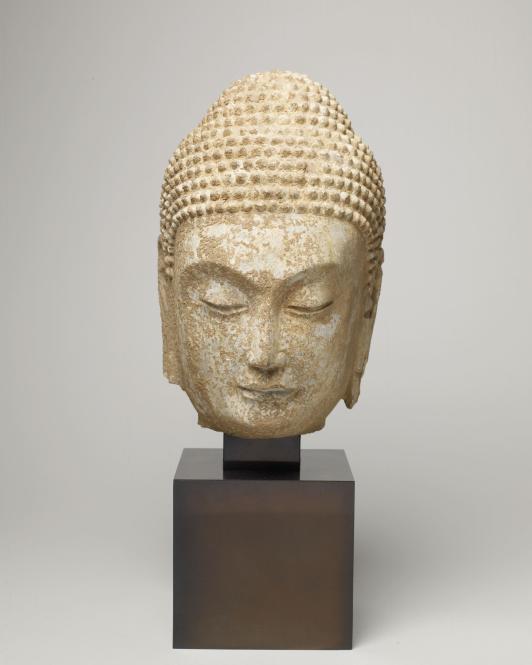
Buddha Head
Measurements
11 in. x 6 1/2 in. x 8 in.
Creation Date
550 - 577
Credit Line
The Lunder-Colville Chinese Art Collection
Culture
Country of Origin
Object Type
Materials / Techniques
Object URL
http://www.colby.edu/academics_cs/museum/search//Obj6362?sid=229&x=1003&port=255
Museum's Definition of Antiquity
550-577 C.E. Period of Division Northern Qi Dynasty
Provenance Information
Peter and Paula Lunder
Thomas Colville Fine Art, New Haven, CT
Exhibition Information
Spaces & Places: Chinese Art from the Lunder-Colville Collection and the Museum of Fine Arts, Boston. Colby College Museum of Art
Waterville, ME
July 13, 2013 - June 8, 2014


Publication Information
The Lunder Collection: A Gift of Art to Colby College, Colby College Museum of Art, Waterville Maine. 2013. p. 38
Section of the AAMD Guidelines relied upon for the exception to 1970
Gift or bequest expected or on loan prior to 2008
Explain why the object fits the exception set forth above
The donors pledged part of their collection, including this object, to the museum prior to 2008, as per correspondence dated April 11, 2007 on file.

2013.878

Object Title
Votive Figure
Measurements
33 cm (13 in.)
Creation Date
7th–6th century B.C.
Credit Line
Egyptian Curator’s Fund, Classical Curator’s Fund and funds by exchange from a Gift of Arthur H. Phillips, a Gift of Mr. and Mrs. William de Forest Thomson, General Funds, a Gift of Henry P. Kidder, and a Gift of Mrs. Walter Scott Fitz
Culture
Country of Origin
Object Type
Materials / Techniques
Object URL
http://www.mfa.org/collections/object/votive-figure-580226
Provenance Information
By 1975, Henri Smeets, Weert, The Netherlands; November 7, 1977, Smeets sale, Sotheby’s, London, lot 116. December 5, 2007, anonymous sale, Sotheby’s, New York, lot 47. By 2008, Rupert Wace Ancient Art, Ltd., London; 2013, sold by Rupert Wace to the MFA. (Accession Date: September 25, 2013)
Exhibition Information
The European Fine Art Fair, Maastricht, The Netherlands (2012).
Publication Information
Eric Godet et al., A Private Collection (Weert, The Netherlands, 1975), n. p., cat. 176 (“Worshipper”), ill.
Section of the AAMD Guidelines relied upon for the exception to 1970
Cumulative facts and circumstances
Explain why the object fits the exception set forth above
Prior to purchasing the figure, the MFA wrote to the Department of Antiquities in Cyprus, and received a response on May 31, 2013 stating that the office raised no objections to its acquisition.

While it is not documented where and when collector Henri Smeets acquired this particular piece, other objects in his collection were purchased on the European art market in the 1960s and early 1970s. He may well have acquired it at a similar time and place.

2005.7a-h

Object Title
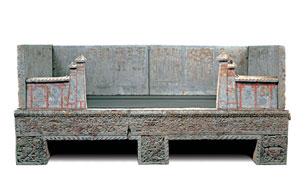
Funerary Couch
Measurements
36 3/4 inches H x 82 3/4" W x 39 3/8 inches D
Creation Date
early 6th century
Credit Line
Adolph D. and Wilkins C. Williams Fund
Museum Contact
Provenance@vmfa.museum
Country of Origin
Object Type
Materials / Techniques
Object URL
https://vmfa.museum/piction/6027262-109920464/
Museum's Definition of Antiquity
8th century
Provenance Information
Private collection in Taiwan held base of Funerary Couch prior to February 2004; Private collection in Hong Kong held panels of the Funerary Couch prior to February 2004; Gisele Croës, Arts d'Extreme-Orient gallery, Brussels, Belgium, February 2004; Danese, Gisele Croës’ temporary gallery in New York, NY, March 2004; Shipped to Virginia Museum of Fine Arts (VMFA), Richmond, Virginia, May 2004. VMFA purchased this work in May of 2005 in order to bring it into a publicly accessible collection.
Since 2010, the work has been highlighted in the Collections section of VMFA’s website. The work has been on display in VMFA’s East Asian Gallery


Exhibition Information
The work was exhibited in “Ritual Objects and Early Buddhist Art” , Gallery Danese, 41 E. 57th Street, New York, NY, March 22 – 31, 2004; it was published in the accompanying catalogue:
Publication Information
Ritual Objects and Early Buddhist Art, Gisele Croës, Arts d'Extreme-Orient, Brussels, pp. 23-55, ill. 25-55.
Section of the AAMD Guidelines relied upon for the exception to 1970
Cumulative facts and circumstances
Explain why the object fits the exception set forth above
This acquisition was made prior to the AAMD guidelines of 2008. In this case, VMFA decided to make an exception to the 1970 rule in order to bring this object into a free, publicly accessible, educational institution, where it could be studied, displayed, and publicized.

2008.296

Object Title
Royal head sculptor's model/votive
Measurements
4 in. (10.2 cm)
Creation Date
400–200 B.C.
Credit Line
Purchase, Anne W. and David T. Mininberg Gift and Ludlow Bull Fund, 2008
Culture
Country of Origin
Object Type
Materials / Techniques
Object URL
http://www.metmuseum.org/Works_of_Art/collection_database/egyptian_art/royal_head_sculptor_s_modelvotive//objectview.aspx?OID=100036883&collID=10&dd1=10
Provenance Information
Formerly French private collection, acquired in France ca. 1970. Purchased by The Metropolitan Museum of Art from Charles Ede Ltd., London.
Exhibition Information
None.
Publication Information
None.
Section of the AAMD Guidelines relied upon for the exception to 1970
Cumulative facts and circumstances
Explain why the object fits the exception set forth above
Although the work has provenance established to ca. 1970, The Metropolitan Museum of Art has been unable to substantiate the precise date of acquisition because the former owner is now deceased. This delicately beautiful work is an important addition to the strength of The Metropolitan Museum of Art's collection because it displays two strong indicators (the downward hanging snake, and the partial indication of a feather crown and sun disk) of a religious function for this type of work.

29.6

Object Title
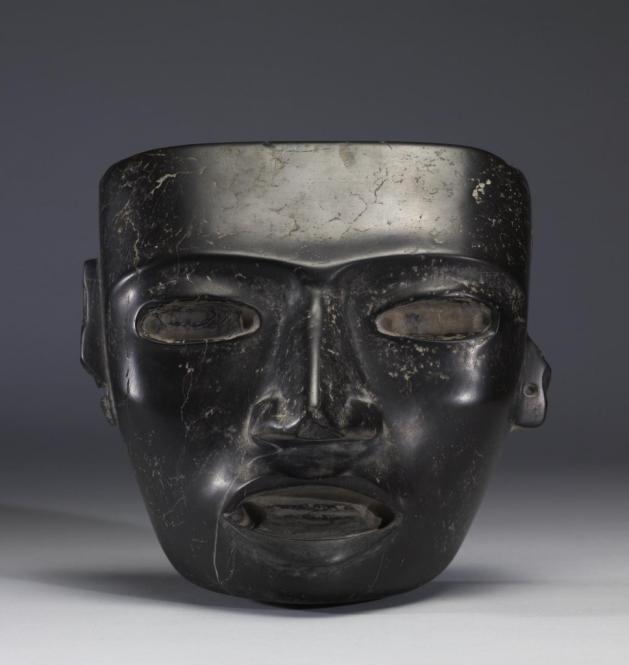
Face Plaque
Measurements
6 7/16 x 4 1/16 x 5 7/8 in. (16.3 x 10.3 x 15 cm)
Creation Date
AD 250-600
Credit Line
Gift of the Austen-Stokes Ancient Americas Foundation, 2008
Country of Origin
Object Type
Materials / Techniques
Object URL
http://art.thewalters.org/viewwoa.aspx?id=38218
Provenance Information
Museo Nacional de México [date and mode of acquisition unknown]; Austen-Stokes Ancient Americas Foundation [John Stokes as agent]; Walters Art Museum, 2008, by gift.
Exhibition Information
Art of the Ancient Americas. The Walters Art Museum, Baltimore. 2002-2010.
Publication Information
Batres, Leopoldo. Antigvedades Mejicanas Falsificadas; Falsificacion Y Falsificadores. Mexico: Imprenta De Fidencio S. Soria, 1910.
Section of the AAMD Guidelines relied upon for the exception to 1970
Gift or bequest expected or on loan prior to 2008
Explain why the object fits the exception set forth above
A Letter of Agreement dated October 2000 between John Stokes and the Walters Art Museum established the terms of the long-term loan of a number of objects including this object, which was given in 2008.
Subscribe to Limestone