Home

2012.479.7

Object Title
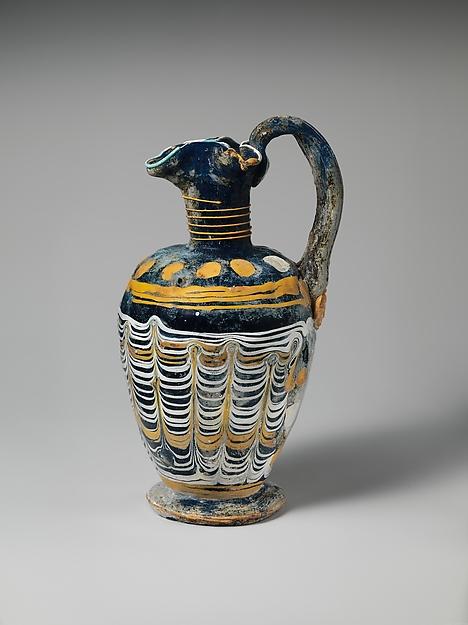
Glass oinochoe
Measurements
Other (H. w/ handles): 8 1/4 in. (20.9 cm) Height: 7 11/16 in. (19.6 cm) Diameter: 4 3/16 x 2 15/16 in. (10.7 x 7.4 cm) Other (length & width of rim): 1 7/8 x 2 9/16 in. (4.8 x 6.5 cm)
Creation Date
mid-4th–early 3rd century B.C.
Credit Line
Gift of Renée E. and Robert A. Belfer, 2012
Culture
Country of Origin
Object Type
Materials / Techniques
Object URL
http://www.metmuseum.org/collection/the-collection-online/search/257880
Provenance Information
1970s, European private collection; [until 1997, with Phoenix Ancient Art S.A., New York and Geneva, Switzerland]; 1997, purchased by Robert A. and Renee E. Belfer from Phoenix Ancient Art S.A.; 1997-2012, collection of Mr. and Mrs. Robert Belfer, New York; acquired in 2012, gift of Mr. and Mrs. Robert Belfer.
Exhibition Information
Exhibited beginning February 2010 in The Metropolitan Museum of Art Hellenistic Treasury, Gallery 163. Delivered to the Museum for study purposes in 2007.
Publication Information
Lightfoot, Christopher S. 2014. "Recent Acquisitions, A Selection: 2012-2014." The Metropolitan Museum of Art Bulletin, 72(2): p. 13.
Section of the AAMD Guidelines relied upon for the exception to 1970
Gift or bequest expected or on loan prior to 2008
Explain why the object fits the exception set forth above
This object has a provenance established to at least 1997 and has been on display at the Metropolitan Museum since 2010. This impressive jug is one of the largest core-formed vessels known and, apart from its size, it is set apart from the other oinochoai by its unusual decorative features – the circular blobs on the shoulder, the festoon pattern of the trails on the body, and the appliqué at the base of the handle.
2006.221

Object Title
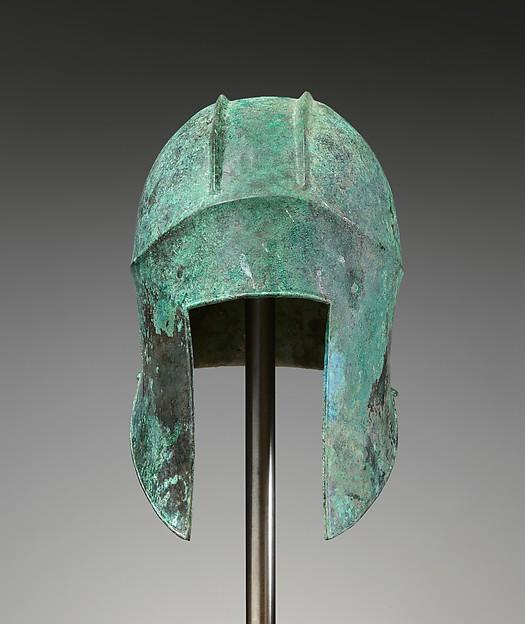
Bronze helmet of Illyrian type
Measurements
Height 26 cm (from cheek guard to crown)
Creation Date
5th or early 4th century B.C.
Credit Line
Gift of Martin E. Segal, 2006
Culture
Object Type
Materials / Techniques
Object URL
http://www.metmuseum.org/collection/the-collection-online/search/257808
Provenance Information
Formerly in the Kyros Melas Collection, London, England. With the Aridane Galleries since 1993; acquired by Martin Segal from the Ariadne Galleries in 2000; partial gift of Martin Segal to The Metropolitan Museum of Art in 2006, with the remaining portion given in 2012.
Exhibition Information
None.
Publication Information
None.
Section of the AAMD Guidelines relied upon for the exception to 1970
Partial interest received prior to 2008
Explain why the object fits the exception set forth above
This work has established provenance to at least 1993 and, prior to that date, was the in the Kyros Melas Collection. The work was accepted as a partial gift in 2006. This helmet is a welcome addition to The Metropolitan Museum of Art’s significant holdings of ancient Greek armor. It is a rare example of a subtype of the Illyrian helmet, of which only three other examples are known. One of these is in The Metropolitan Museum of Art’s collections (35.11.2).

2011.603.1-.27

Object Title
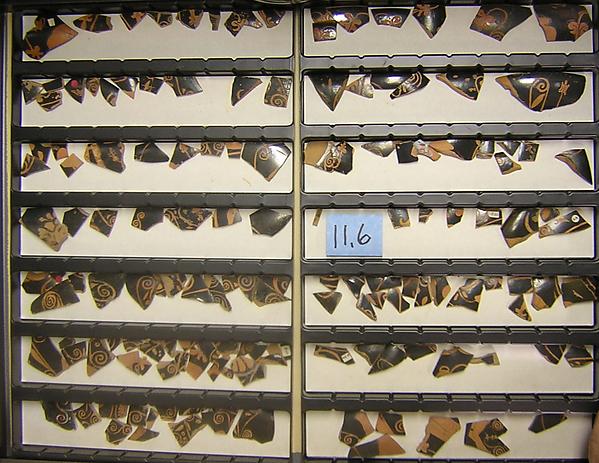
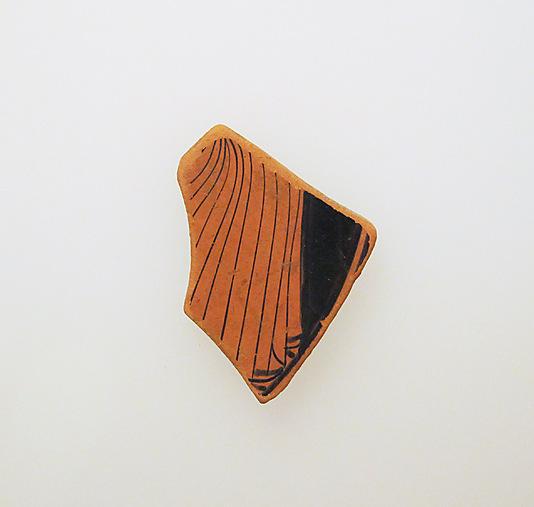
Vase fragments and groups of fragments
Measurements
between about 1”-6”
Creation Date
6th-5th century B.C.
Credit Line
Gift of the Honorable Iris Cornelia Love, 2011
Culture
Country of Origin
Materials / Techniques
Object URL
http://www.metmuseum.org/Collections/search-the-collections/130021024
Provenance Information
Iris C. Love, New York, by 1980. Iris Love has been collecting antiquities, particularly Greek vases and fragments, for many decades. Certain fragments are marked with dates ranging from 1969 to 1980.
Exhibition Information
None.
Publication Information
None.
Section of the AAMD Guidelines relied upon for the exception to 1970
Cumulative facts and circumstances
Explain why the object fits the exception set forth above
The 27 Greek vase fragments and groups of fragments acquired as a gift from Iris Love join or belong to the same vases as fragments acquired by the Metropolitan Museum through the large study collection donated by the late Dietrich von Bothmer (TR. 572.2011). The Ministry for Cultural Heritage and Activities of the Italian Republic consented to the Museum accepting the Bothmer gift as a resource for research, publication and display. A major consideration in the Museum’s acceptance of the Bothmer gift was to contribute to the reunification of pieces that belong together and had become dispersed. The gift from Iris Love is consistent with this purpose. As the material is accessioned, it will become available for study.

TR.572.2011

Object Title
Group of approximately 10,000 predominantly Greek Vase Fragments
Measurements
The fragments vary considerably in size but a considerable number fits within a range of 4 to 6 inches. Many more fragments are smaller rather than larger.
Creation Date
ca. 6th-4th Century B.C.
Credit Line
Gift of Dietrich von Bothmer, Distinguished Research Curator, Greek and Roman Art, 2011
Culture
Country of Origin
Materials / Techniques
Object URL
http://www.metmuseum.org/collection/the-collection-online/search/701075
Provenance Information
Dietrich von Bothmer was a long-time curator and scholar of Greek & Roman Art at the Museum, from 1946 until his death in 2009. Throughout his career at the Museum, he acquired Attic vase fragments which came to form a study collection. For some of the fragments, the Museum knows the date and dealer for Dr. von Bothmer’s acquisition. For others, there is no acquisition information. The collection has not yet been catalogued, however the Museum is committed to cataloguing, photographing and publishing it electronically. Once the fragments are catalogued, any known provenance will be published on the Museum’s web site.
Exhibition Information
None.
Publication Information
Most of the pieces are unpublished. The exceptions appear in Sir John Beazley’s compendia of Attic vase-painting: Attic Black-figure Vase-painters (1956), Attic Red-figure Vase-painters (2nd edition, 1963), and Paralipomena (1971). Many of the fragments by Douris are included in Diana Buitron’s monograph on the painter (Mainz, 1995). Fragments by Makron are included in Norbert Kunisch’s monograph (Mainz, 1997). Isolated works are published elsewhere.
Section of the AAMD Guidelines relied upon for the exception to 1970
Cumulative facts and circumstances
Explain why the object fits the exception set forth above
The study collection assembled by Dr. von Bothmer represents over fifty years of study and expertise, and it complements the Museum’s distinguished collection of prehistoric, Greek, Etruscan, and Roman pottery. Dr. von Bothmer identified and grouped the fragments according to well-defined art historical criteria – shape, date, painter, sometimes potter, subject matter. The degree of refinement in the classification is considerable.

Though the material consists primarily of small pieces, its artistic interest resides, to a considerable degree, in the artists who are represented, including Onesimos, Epiktetos, Douris, Makron, the Brygos Painter, the Berlin Painter, the Villa Giulia Painter, and other well-known names. Still other fragments are noteworthy for details of shape or execution.

The Bothmer Fragment Collection presents a very extensive and significant range of opportunities for study among scholars world-wide, notably those expert in Greek vase-painting. In addition, it makes possible joins with pieces in other museums, particularly those with holdings acquired during the nineteenth century from the Campana Collection.

In the spirit of cooperation between the Museum and Italy, the Ministry for Cultural Heritage and Activities of the Italian Republic consented to the Museum accepting this bequest as a resource for research, publication, and display. In its agreement with the Ministry, the Museum agreed to strive to facilitate the recomposition of original objects by donating joining fragments in the Bothmer Fragment Collection to other institutions, or, where appropriate, requesting donations to the Museum, in order to augment fragments in the Bothmer collection.

2010.38

Object Title
Hemiobol of Judaea with male head, struck under Yehexqio (Hezekiah)
Measurements
Diameter: 8 mm; weight: 0.24 gm.
Creation Date
Mid-4th century B.C.
Credit Line
Theodora Wilbour Fund in memory of Zoë Wilbour
Culture
Country of Origin
Object Type
Materials / Techniques
Object URL
http://www.mfa.org/collections/object/hemiobol-12-maah-of-judaea-with-male-head-struck-under-yehexqio-hezekiah-535465
Provenance Information
About 1990, purchased in Israel from a licensed dealer by Dr. Stephen N. Gerson, Lexington, MA; 2009, with Gemini, LLC; January 10, 2010, Gemini sale, auction 6, Waldorf Astoria Hotel, New York, lot 270, sold to the MFA. (Accession Date: February 24, 2010)
Exhibition Information
None known.
Publication Information
Y. Meshorer, Otsar Matbeot Ha-Yehudim [Hebrew] (1997), pl. 3.25; Y. Meshorer, A Treasury of Jewish Coins (2001), pl. 3.24.
Section of the AAMD Guidelines relied upon for the exception to 1970
Cumulative facts and circumstances
Explain why the object fits the exception set forth above
The date and circumstances of the coin’s discovery are not known. The coin was struck around the middle of the fourth century B.C., perhaps in the vicinity of Jerusalem, on the authority of Yehexqio (Hezekiah), a governor of Judaea under Persian rule. The coin was formerly in the collection of Dr. Stephen Gerson, who certifies that it was purchased by him from a licensed dealer in Israel and was exported in full compliance with Israeli law. The coin was published by Ya’akov Meshorer (1935-2004), Professor of Numismatics at Hebrew University, Chief Curator for Archaeology at the Israel Museum, and a member of Israel’s Archaeological Council (see Publication History below). Prior to acquiring the coin, the MFA conferred with the Numismatic Department of the Israel Antiquities Authority (IAA).

2008.1055

Object Title
Didrachm of Suessa Aurunca with rider and two horses
Measurements
Diameter: 22 mm.; weight: 7.17 gm.; die axis: 8
Creation Date
about 265 – 240 B.C.
Credit Line
Gift of Cornelius C. Vermeule III
Culture
Country of Origin
Object Type
Materials / Techniques
Object URL
http://www.mfa.org/collections/object/didrachm-of-suessa-aurunca-with-rider-and-two-horses-448170
Provenance Information
A.D.M. collection, Switzerland. May 12, 2004, anonymous sale (Auction 27), Numismatica Ars Classica, Zürich, Switzerland, lot 10, sold to Cornelius C. Vermeule, III (b. 1925 – d. 2008), Cambridge, MA [see note 1]; 2008, gift of Cornelius C. Vermeule III to the MFA. (Accession Date: October 22, 2008)

NOTES:
[1] Lent by Cornelius Vermeule to the MFA from 2004 until 2008 (loan no. L-T 326.2.2004).
Exhibition Information
“Games for the Gods: The Greek Athlete and the Olympic Spirit,” Museum of Fine Arts, Boston, July 21 – November 28, 2004.
Publication Information
None known.
Section of the AAMD Guidelines relied upon for the exception to 1970
Cumulative facts and circumstances
Explain why the object fits the exception set forth above
The date and circumstances of the coin’s discovery are not known; however, the coinage of Suessa Aurunca circulated locally, and this coin was probably found in the Campania region of Italy. Per the MFA’s 2006 agreement with the Italian Ministry of Culture, the Museum contacted Ministry representatives prior to acquiring the coin; the Ministry raised no objection to the acquisition.

2011.582

Object Title
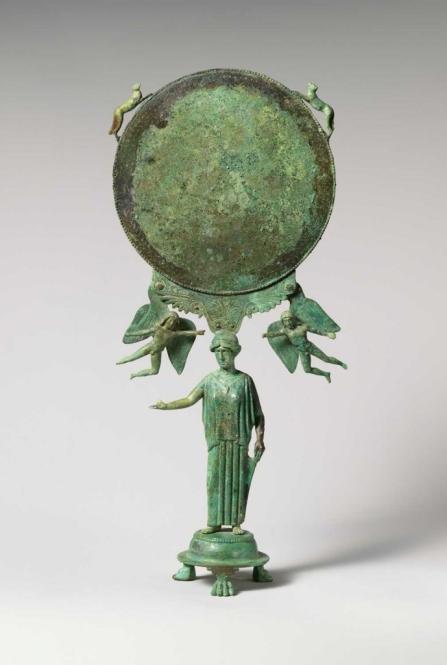
Caryatid mirror
Measurements
H. 12 5/8 in., Diam. of disk 5 3/8 in.
Creation Date
mid-5th century B.C.
Credit Line
Gift of the family of Thomas A. Spears, in his memory, 2011
Culture
Country of Origin
Object Type
Materials / Techniques
Object URL
http://www.metmuseum.org/Collections/search-the-collections/130017476
Provenance Information
[Prior to 1990, reportedly with Heidi Vollmoeller, Galerie Heidi Vollmoeller, Zurich, Switzerland]; purchased by Athanasios Ghertsos, Greek Consul in Zurich, from Galerie Heidi Vollmoeller; ca. 1990, purchased by Frieda Tchacos Nussberger from Athanasios Ghertsos; [ca. 1990-1993, with Frieda Tchacos Nussberger, Gallerie Nefer, Zurich]; 1993, purchased by Thomas A. and Colette Spears from Frieda Tchacos Nussberger; 1993-2011, collection of Thomas A. and Colette Spears, New York; from 1999, on loan to the Metropolitan Museum of Art; acquired in 2011, gift of the family of Thomas A. Spears.
Exhibition Information
The work has been on loan to The Metropolitan Museum of Art since 1999 and on display since 2000.
Publication Information
Hemingway, Seán A. and Dr. Joan R. Mertens. 2012. "Recent Acquisitions, A Selection: 2010-2012." The Metropolitan Museum of Art Bulletin, 70(2): p. 10.
Section of the AAMD Guidelines relied upon for the exception to 1970
Cumulative facts and circumstances
Explain why the object fits the exception set forth above
This mirror has provenance established to before 1990. It has been loan since 1999 and on display in the Greek galleries since 2000. Bronze caryatid mirrors occupy a special place in Greek art on a small scale because they are often very fine pieces of three-dimensional sculpture that can be related to monumental stone counterparts. The Spears example is a major addition to the Greek and Roman Department’s collection of Greek bronzes, and specifically of Archaic and Classical caryatid mirrors.

2011.40

Object Title
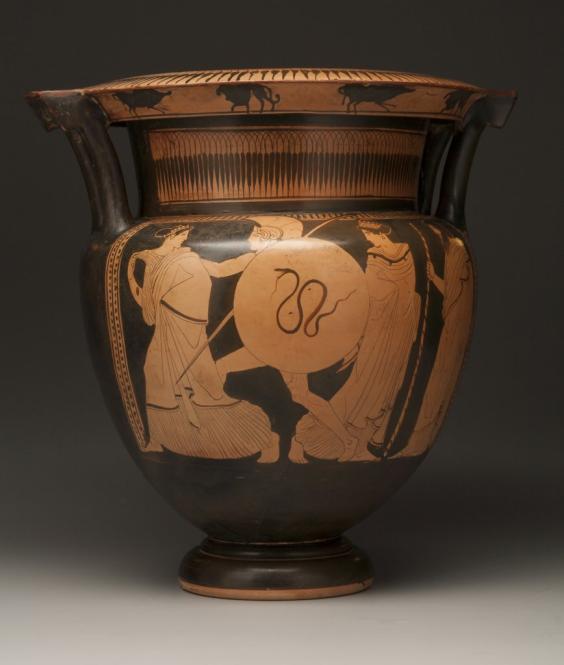
Red-figure column krater (attempted abduction of Helen by Theseus; three draped youths)
Measurements
16 1/4 x 16 1/2 x 14 in. (43.82 x 41.91 x 35.56 cm.)
Creation Date
c. 470-460 B.C.E.
Credit Line
Cecil and Ida Green Acquisition Fund
Culture
Country of Origin
Object Type
Materials / Techniques
Object URL
http://www.dm-art.org/
Provenance Information
French private collection (reputedly the Compte de Pourtales, 1863-1949); thence to Krimitsas Gallery, Paris; thence c. 1970s to private French collection (Michel Cohen); thence late 1970s to Galerie A La Reine Margot, Paris; thence September 2007 to Royal-Athena Galleries, New York City; thence to Dallas Museum of Art (accession date: December 29, 2011).

ADDITIONAL INFORMATION: As of February 4, 2008, this krater was not listed with the Art Loss Register.
Exhibition Information
DMA, December 2011 through the present.
Publication Information
N/A
Section of the AAMD Guidelines relied upon for the exception to 1970
Informed judgement that works were outside of the country of modern discovery before 1970
Explain why the object fits the exception set forth above
Although this work has provenance established to c. the 1970s and with good probability back to at least the 1940s, the DMA has been unable to substantiate details due to the death of several previous owners. The DMA does not have many red-figure vases, and only two others are Attic examples. This vase depicts a less-known episode in the early life of Helen (later Helen of Troy), which forms a very suitable inclusion among the prominence of female figures depicted in the DMA’s collection of ancient Mediterranean art.

2009.25.1

Object Title
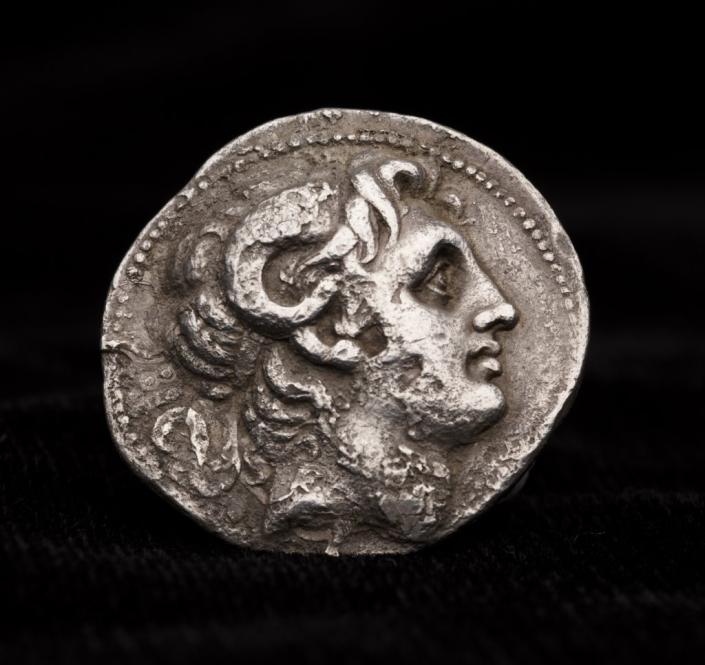
Coin of Lysimachos of Thrace (obverse: Alexander the Great as Zeus Ammon; reverse: seated Athena holding Nike)
Measurements
Diameter: 1 1/4 inches (3.175 cm.); Depth: 3/16 inch (.476 cm.)
Creation Date
c. 300 B.C.
Credit Line
Given in memory of Jerry L. Abramson by his estate
Culture
Object Type
Materials / Techniques
Object URL
http://www.dm-art.org/
Provenance Information
c. 1970s in the collection of Jerry L. Abramson, Dallas, Texas; lent to the Dallas Museum of Art since July 2005; given to DMA by Mr. Abramson's estate (accession date: January 30, 2009).
Exhibition Information
East Meets West, DMA, August 7 to November 27, 2005. DMA from July 2006 through the present.
Publication Information
N/A
Section of the AAMD Guidelines relied upon for the exception to 1970
Gift or bequest expected or on loan prior to 2008
Explain why the object fits the exception set forth above
This work was on long-term loan to the DMA beginning in July 2005, prior to its acquisition in 2009.The work has been publicly exhibited in 2005 and continuously since July 2006. Although the collector from whose estate the DMA acquired this work began collecting in the 1960s or '70s, the DMA has been unable to substantiate the precise date of acquisition because of the death of the former owner. The ancient Mediterranean engraved gemstones and intaglio rings, beads, amulets, and this coin, all given by this donor or his estate, complement the DMA's collection of ancient Etruscan, Greek, and Roman gold jewelry. This work is the only ancient Mediterranean coin in the DMA's collection.

2008.563 to 2008.619

Object Title
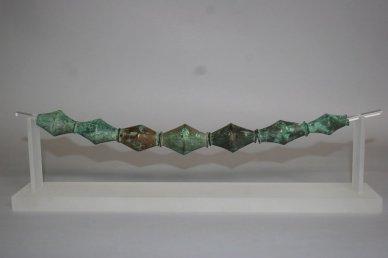
58 Votives
Measurements
Various
Creation Date
Eight works were made between 800-600 BC and the remainder were made between 700-599 BC
Credit Line
Gift of Mr. and Mrs. Walter Alexander
Culture
Country of Origin
Object Type
Materials / Techniques
Object URL
http://www.artic.edu/aic/collections/artwork/196446?search_id=12
Provenance Information
George Zakos of Basel, Switzerland since at least 1965 as reported by the owner of Ariadne Galleries to Mrs. Walter Alexander [email in curatorial file]; purchased by Ariadne Galleries of New York, New York in or around 1975; purchased by Mr. and Mrs. Walter Alexander of Geneva, Illinois in 1985; donated to the Art Institute of Chicago, Chicago, Illinois in 2008.
Exhibition Information
2008.563-569, 2008.598-2008.600, 2008.608 and 2008.615, the Art Institute of Chicago, Chicago, Illinois, October 3, 2008-November 30, 2010, November 11, 2012-present.
Publication Information
Art Institute of Chicago, Annual Report 2008-2009 (posted on AIC web site), pp. 19-20.
Section of the AAMD Guidelines relied upon for the exception to 1970
Informed judgement that works were outside of the country of modern discovery before 1970
Explain why the object fits the exception set forth above
This acquisition falls within two exceptions.

First, based on the results of provenance research, the Art Institute of Chicago can make an informed judgment that the object was outside its probable country of modern discovery before 1970. The collection of fifty-eight objects was purchased by Mr. and Mrs. Alexander in 1985 from Ariadne Galleries of New York, New York. According to Mrs. Walter Alexander, the owner of Ariadne Galleries reported to her that he purchased the entire collection from George Zakos of Basel, Switzerland, around 1975, and that it was his understanding that Mr. Zakos had owned the objects for at least ten years. The Art Institute of Chicago has been unable to confirm this information with Mr. Zakos, as he is now deceased.

Second, the collection was promised to the Art Institute of Chicago prior to 2008. On at least two occasions prior to 2005, Mr. and Mrs. Alexander communicated their intention to gift the entire collection to the Art Institute of Chicago to Karen Manchester, Chair and McIlvaine Curator of Ancient and Byzantine Art. These communications are documented in the curatorial files of the Art Institute of Chicago.

The acquisition of these objects furthers the representation of the artistic achievements of all civilizations in art museums because they are fine examples of cast bronze offerings from the Geometric Period.
Subscribe to Greek