Home

61.36.12

Creator
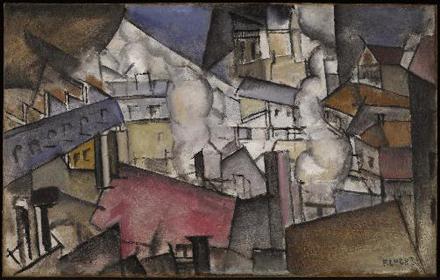
Fernand Léger
Object Title
Smoke over Rooftops
Measurements
23 3/4 x 37 3/4 in. (60.3 x 95.9 cm)
Credit Line
Bequest of Putnam Dana McMillan
Creation Date
1911
Object Type
Object URL
http://www.artsmia.org

Claim Resolution

Resolution
Work restituted to heirs or other representatives
Resolution Date
October 28, 2008

1973.196

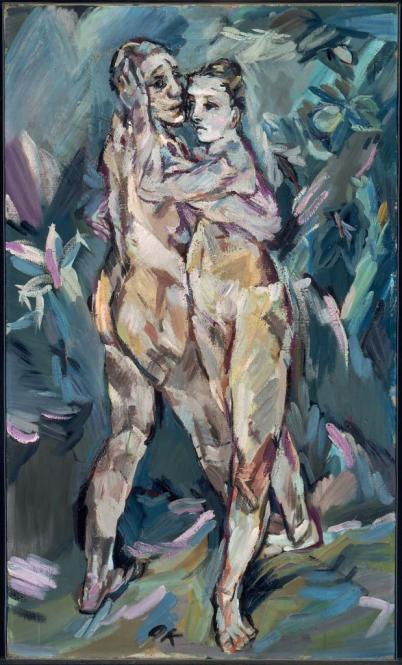
Creator
Oskar Kokoschka, Austrian, 1886–1980
Object Title
Two Nudes (Lovers)
Measurements
163.2 x 97.5 cm (64 1/4 x 38 3/8 in.)
Credit Line
Bequest of Sarah Reed Platt
Creation Date
1913
Object Type
Object URL
http://www.mfa.org/collections/object/two-nudes-lovers-34173

Claim Resolution

Resolution
Court rejected claim
Resolution Date
May 29, 2009
Details of Resolution
In March 2007, the Museum of Fine Arts received a restitution claim for Oskar Kokoschka’s Two Nudes (Lovers) (accession no. 1973.196). Claudia Seger-Thomschitz, represented as the sole and unrelated heir of the last surviving son of Oskar Reichel, the painting’s former owner, asserted that Reichel was forced to sell Two Nudes (Lovers) under duress in Nazi-occupied Austria in 1939; later, her counsel asserted that the painting had been confiscated from Reichel by the Nazis. Upon receipt of the claim, the MFA conducted a comprehensive investigation of the painting’s provenance and concluded that it has legal title to the work. The MFA shared with the claimant’s counsel the results of its research. When the claim was not withdrawn, the Museum filed suit in January 2008 to confirm its ownership of the painting. In May 2009, U.S. District Judge Rya Zobel ruled that the MFA is entitled to retain ownership of Two Nudes (Lovers); the First Circuit Court of Appeals upheld this decision in October 2010. A brief summary of the research is presented here.

Oskar Reichel (b. 1869 – d. 1943) of Vienna, who was Jewish, was a prominent collector of Austrian Expressionist art. He patronized contemporary artists, including Egon Schiele, Max Oppenheimer, and Oskar Kokoschka. Reichel actively bought and sold their work, playing an important role on the Viennese art market. He probably bought Two Nudes (Lovers) directly from Kokoschka around 1914 or 1915, shortly after it was painted.

By 1924, Reichel had developed a business relationship with Otto Kallir (b. 1894 - d. 1978), a Jewish art dealer who opened the Neue Galerie in Vienna in 1923. Reichel consigned Two Nudes (Lovers), along with other paintings by Kokoschka, for sale through Kallir in the 1920s and 1930s. In 1938, Kallir fled Vienna and turned the Neue Galerie over to his non-Jewish secretary. He opened a new gallery, the Galerie St. Etienne, in Paris. In February 1939, Reichel transferred ownership of five Kokoschka paintings—including Two Nudes (Lovers)—to Kallir, who exhibited them in his Paris gallery that spring. Later that year, Kallir emigrated to New York and opened a branch of the Galerie St. Etienne there. He exhibited Two Nudes (Lovers) frequently between 1940 and 1945, both in his New York gallery and in traveling exhibitions throughout the United States. From New York, Kallir sent money for the five Kokoschka paintings to Oskar Reichel’s two sons, Raimund and Hans, with whom he was in communication; they were living in South America and the United States, respectively.

Although Raimund and Hans had been able to leave Austria, Oskar Reichel and his wife Malvine remained in Vienna. Their home furnishings company was forcibly closed after the anti-Jewish riots of Kristallnacht in 1938, and in 1941 they were forced to sell their shares in a family-owned building, with the proceeds going into blocked accounts. Their oldest son, Max, who was mentally ill, was deported and killed. In 1943, Oskar passed away from natural causes and Malvine Reichel was sent to the Theresienstadt concentration camp. She survived and joined her son Hans in the United States after the war. Malvine Reichel made successful restitution claims for certain assets lost in Austria, including the property sold in 1941. She relinquished her claim to other assets, including the family home, which she had sold to acquaintances in 1938. Raimund Reichel applied for and received compensation from the Austrian authorities for damages due to Nazi persecution. In his application, he referred specifically to paintings by Anton Romako that his father had sold under duress. However, no claim was ever made for any of the five Kokoschka paintings, nor was any indication made that members of the Reichel family considered the 1939 transaction to be invalid.

In 1945, Kallir sold Two Nudes (Lovers) on the New York art market. Around 1948 it was acquired by Sarah Reed Blodgett (later Platt), who bequeathed it to the MFA in 1973. Since that time, the painting has been exhibited and published extensively. It is currently on view in the Rabb Gallery at the MFA.

1970.77

Creator
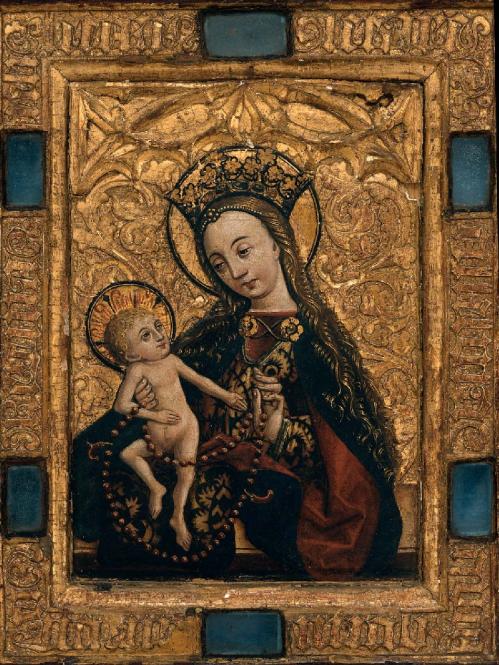
Unidentified artist, Polish
Object Title
Virgin and Child
Measurements
43.8 x 34.3 cm (17 1/4 x 13 1/2 in.)
Credit Line
M. Theresa B. Hopkins Fund
Creation Date
15th century
Object Type
Object URL
http://www.mfa.org/collections/object/virgin-and-child-34073

Claim Resolution

Resolution
Work restituted to heirs or other representatives
Resolution Date
November 18, 2004
Details of Resolution
On November 18, 2004, the MFA deaccessioned the panel painting Virgin and Child for restitution to its rightful owner, Mrs. Anna Konopka Unrug of Poland. This was in response to the restitution claim for the painting received from the Ministry of Foreign Affairs of the Republic of Poland on behalf of Mrs. Unrug.

The painting once formed the central panel of a triptych that belonged to Mrs. Unrug’s grandfather, Tadeusz Konopka (b. 1844 – d. 1903), and was passed by descent to his son, Józef (b. 1884 –d . 1940) of Jaroslaw and Warsaw. Józef was killed in 1940 after being taken hostage by the Red Army. The painting remained in his Warsaw apartment, where his wife Helena (b. 1899) and daughter Anna (b. 1921) lived, and was plundered during the Warsaw Uprising of 1944. It is not known when the triptych was separated; neither of the side panels has been located.

The MFA purchased the painting in 1970 from a dealer in Frankfurt, Germany, without knowledge of its wartime or immediate postwar provenance. At that time it was attributed to the Master of the Saint Barbara Altar, a Silesian painter active in the fifteenth century. Research by curatorial staff revealed that it had been in Tadeusz Konopka’s possession and remained in Poland during World War II. This information was made available on the MFA Web site, which enabled the claimant, through the Polish Ambassador, to locate the painting.

1992.163

Creator
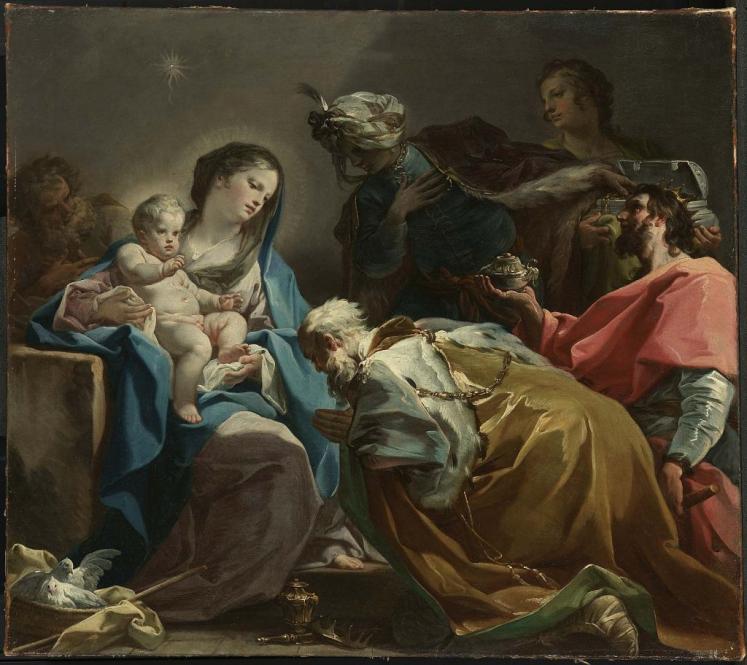
Corrado Giaquinto, Italian (Roman), 1703–1765
Object Title
Adoration of the Magi
Measurements
48.3 x 54.6 cm (19 x 21 1/2 in.)
Credit Line
Charles Potter Kling Fund and other funds, by exchange, from the Estate of Federico Gentili di Giuseppe
Creation Date
about 1725
Object Type
Object URL
http://www.mfa.org/collections/object/adoration-of-the-magi-35361

Claim Resolution

Resolution
Agreement reached, museum retained work
Resolution Date
October 19, 2000
Details of Resolution
On October 19, 2000 the MFA reached an agreement with the heirs of Federico Gentili di Giuseppe for a partial purchase and partial donation of the painting Adoration of the Magi, by Corrado Giaquinto (accession number 1992.163). Recognizing that the heirs of Mr. Gentili di Giuseppe were the rightful owners of the painting, this agreement enabled the MFA to acquire the Adoration from them and keep it on display in the galleries.

Its previous owner, Federico Gentili di Giuseppe, was a Jewish Italian businessman living in Paris. He died of natural causes in April of 1940, leaving his estate to his children. With the fall of France to Hitler in June of that year, his family fled the country. German law forbade the return of those who had left occupied territory, so his family was unable to assert its claim to the works of art. A surrogate administrator was appointed to manage the family’s affairs and the art collection was auctioned in Paris in 1941. While the estate received the revenue from the sale, the family lost its ownership of the paintings.

In 1997, Mr. Gentili di Giuseppe’s heirs brought legal action against the Musée du Louvre and the State of France to have the April 1941 sale declared null and void. On June 2, 1999, the Court of Appeals of Paris nullified the sale, determining that Mr. Gentili di Giuseppe’s family had been prevented from attending to the administration of the estate. Five paintings held by the Louvre were subsequently returned to the family. By February 1999 the heirs had begun pursuing individual claims regarding the other paintings in the 1941 auction and contacted the MFA about the Adoration of the Magi at that time.

The MFA had purchased the painting in April 1992 from Thomas Agnew & Sons Ltd., a distinguished firm of art dealers established in London in the early nineteenth century. The firm, in turn, had purchased the painting at Christie’s, Monaco, in June 1990. Because the MFA had purchased the painting before any claims were registered with the French government, the heirs affirmed that the Museum acquired the work in good faith, without knowledge that the 1941 sale was problematic.
Subscribe to Paintings