Home

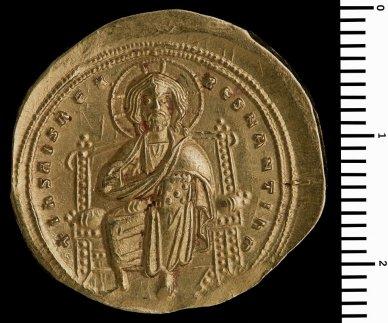
2011.1.16

Object Title
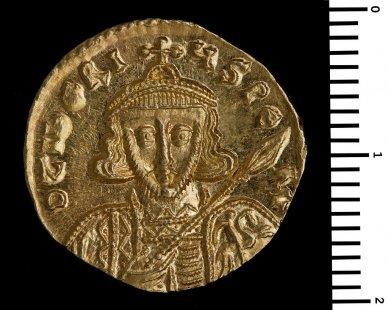
Solidus of Tiberius III
Measurements
4.31g
Creation Date
698-705
Credit Line
Harvard Art Museums/Arthur M. Sackler Museum, Gift of Wellington F. Scott, III, in memory of Jane Ayer Scott
Culture
Country of Origin
Object Type
Materials / Techniques
Object URL
http://www.harvardartmuseums.org/art/336399
Provenance Information
[Muenzen und Medaillen AG, Basel, FPL 541, March 1991 no. 45], sold; to Jane Ayer Scott, Newton MA (1991-2008), by inheritance; to her husband Wellington F. Scott III, (2008-2010), gift; to the Harvard Art Museums, 2010.
Exhibition Information
No information available
Publication Information
Muenzen und Medaillen AG, FPL 541, no. 45, Basel, March 1991.
Section of the AAMD Guidelines relied upon for the exception to 1970
Cumulative facts and circumstances
Explain why the object fits the exception set forth above
Byzantine coins were issued in very large numbers and widely circulated beyond the place where they were struck. In the past this common coinage tended to be inadequately illustrated in sales catalogues, making it difficult to trace a particular specimen.
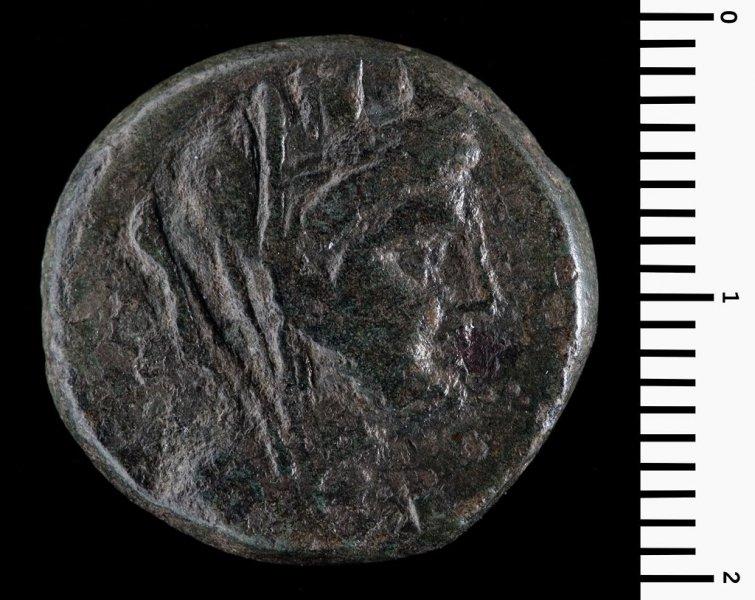
2011.1.18

Object Title
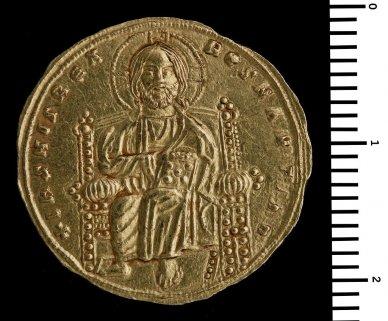
Histamenon of Romanus III
Measurements
4.47g
Creation Date
1028-1034
Credit Line
Harvard Art Museums/Arthur M. Sackler Museum, Gift of Wellington F. Scott, III, in memory of Jane Ayer
Culture
Country of Origin
Object Type
Materials / Techniques
Object URL
http://www.harvardartmuseums.org/art/336401
Provenance Information
[Muenzen und Medaillen AG, Basel, FPL, 537, October 1990 no. 30], sold; to Jane Ayer Scott, Newton MA (1990-2008), by inheritance; to her husband Wellington F. Scott III, (2008-2010), gift; to the Harvard Art Museums, 2010.
Exhibition Information
No information available
Publication Information
Muenzen und Medaillen AG, FPL, 537, no. 30, Basel, October 1990.
Section of the AAMD Guidelines relied upon for the exception to 1970
Cumulative facts and circumstances
Explain why the object fits the exception set forth above
Byzantine coins were issued in very large numbers and widely circulated beyond the place where they were struck. In the past this common coinage tended to be inadequately illustrated in sales catalogues, making it difficult to trace a particular specimen.
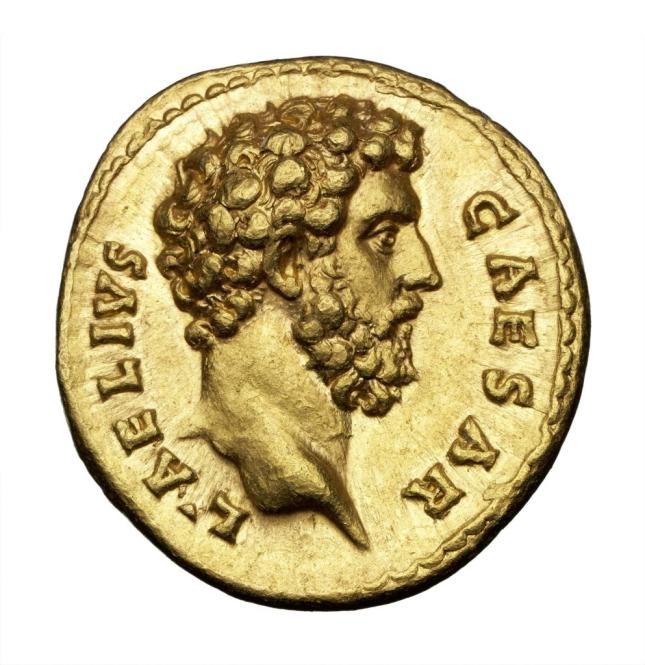
2011.1.19

Object Title
Histamenon of Romanus III
Measurements
4.48g
Creation Date
1028-1034
Credit Line
Harvard Art Museums/Arthur M. Sackler Museum, Gift of Wellington F. Scott, III, in memory of Jane Ayer
Culture
Country of Origin
Object Type
Materials / Techniques
Object URL
http://www.harvardartmuseums.org/art/336402
Provenance Information
Jane Ayer Scott, Newton MA (by 2008), by inheritance; to her husband Wellington F. Scott III, (2008-2010), gift; to the Harvard Art Museums, 2010.
Exhibition Information
No information available
Publication Information
No information available
Section of the AAMD Guidelines relied upon for the exception to 1970
Cumulative facts and circumstances
Explain why the object fits the exception set forth above
Byzantine coins were issued in very large numbers and widely circulated beyond the place where they were struck. In the past this common coinage tended to be inadequately illustrated in sales catalogues, making it difficult to trace a particular specimen.

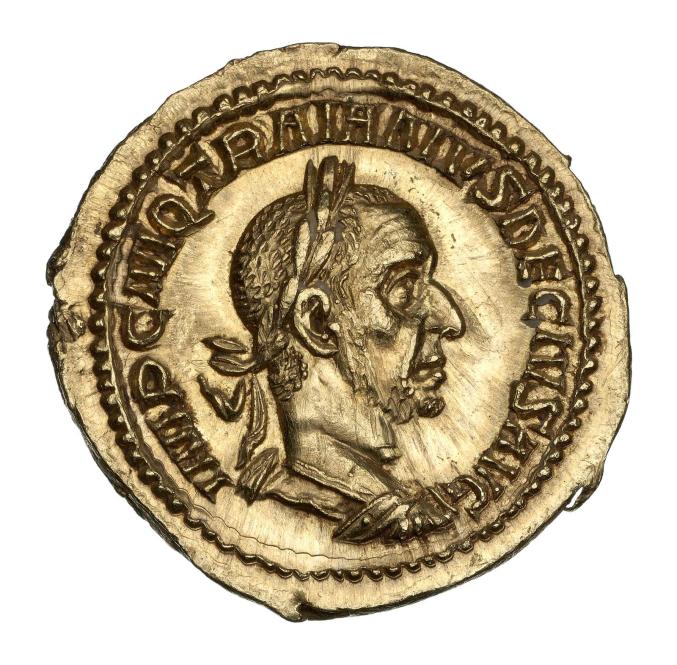
2011.1.21

Object Title
Coin of Sardis, Lydia
Measurements
6.82g
Creation Date
300-200
Credit Line
Harvard Art Museums/Arthur M. Sackler Museum, Gift of Wellington F. Scott, III, in memory of Jane Ayer
Culture
Country of Origin
Object Type
Materials / Techniques
Object URL
http://www.harvardartmuseums.org/art/336404
Provenance Information
[Colosseum Coin Exchange, Inc., Hazlet, NJ], sold; to Jane Ayer Scott, Newton MA (by 2008), by inheritance; to her husband Wellington F. Scott III, (2008-2010), gift; to the Harvard Art Museums, 2010.
Exhibition Information
No information available
Publication Information
No information available
Section of the AAMD Guidelines relied upon for the exception to 1970
Cumulative facts and circumstances
Explain why the object fits the exception set forth above
These common Roman provincial coins were struck in large quantities under the Roman Empire and circulated all over Asia Minor. They tend to be inadequately illustrated in sales catalogues making it difficult to trace a particular specimen.
2010.38

Object Title
Hemiobol of Judaea with male head, struck under Yehexqio (Hezekiah)
Measurements
Diameter: 8 mm; weight: 0.24 gm.
Creation Date
Mid-4th century B.C.
Credit Line
Theodora Wilbour Fund in memory of Zoë Wilbour
Culture
Country of Origin
Object Type
Materials / Techniques
Object URL
http://www.mfa.org/collections/object/hemiobol-12-maah-of-judaea-with-male-head-struck-under-yehexqio-hezekiah-535465
Provenance Information
About 1990, purchased in Israel from a licensed dealer by Dr. Stephen N. Gerson, Lexington, MA; 2009, with Gemini, LLC; January 10, 2010, Gemini sale, auction 6, Waldorf Astoria Hotel, New York, lot 270, sold to the MFA. (Accession Date: February 24, 2010)
Exhibition Information
None known.
Publication Information
Y. Meshorer, Otsar Matbeot Ha-Yehudim [Hebrew] (1997), pl. 3.25; Y. Meshorer, A Treasury of Jewish Coins (2001), pl. 3.24.
Section of the AAMD Guidelines relied upon for the exception to 1970
Cumulative facts and circumstances
Explain why the object fits the exception set forth above
The date and circumstances of the coin’s discovery are not known. The coin was struck around the middle of the fourth century B.C., perhaps in the vicinity of Jerusalem, on the authority of Yehexqio (Hezekiah), a governor of Judaea under Persian rule. The coin was formerly in the collection of Dr. Stephen Gerson, who certifies that it was purchased by him from a licensed dealer in Israel and was exported in full compliance with Israeli law. The coin was published by Ya’akov Meshorer (1935-2004), Professor of Numismatics at Hebrew University, Chief Curator for Archaeology at the Israel Museum, and a member of Israel’s Archaeological Council (see Publication History below). Prior to acquiring the coin, the MFA conferred with the Numismatic Department of the Israel Antiquities Authority (IAA).

2009.5039

Object Title
Aureus with bust of Aelius Verus
Measurements
Diameter: 20 mm; weight: 7.10 gm.
Creation Date
A.D. 137
Credit Line
Gift of Michael C. Ruettgers
Culture
Country of Origin
Object Type
Materials / Techniques
Object URL
http://www.mfa.org/collections/object/aureus-with-bust-of-aelius-verus-531209
Provenance Information
By 2001, with Leu Numismatik, AG, Zürich; 2001, sold by Leu to Michael C. Ruettgers, Carlisle, MA; 2009, gift of Michael C. Ruettgers to the MFA. (Accession Date: December 16, 2009)
Exhibition Information
None known.
Publication Information
None known.
Section of the AAMD Guidelines relied upon for the exception to 1970
Cumulative facts and circumstances
Explain why the object fits the exception set forth above
The date and circumstances of the coin’s discovery are not known. Gold coins of this type, while struck at Rome, circulated widely and have been found within the present-day borders of many countries. Per the MFA’s 2006 agreement with the Italian Ministry of Culture, the Museum contacted Ministry representatives prior to acquiring the coin; the Ministry raised no objection to the acquisition.

2009.2539

Object Title
Aureus with bust of Trajan Decius
Measurements
Diameter: 21 mm.; weight: 4.74 gm.; die axis: 12
Creation Date
A.D. 249
Credit Line
Gift of Michael C. Ruettgers
Culture
Country of Origin
Object Type
Materials / Techniques
Object URL
http://www.mfa.org/collections/object/aureus-with-bust-of-trajan-decius-527970
Provenance Information
1995, private collection; July 5, 1995, anonymous (private collection) sale, Sotheby’s, London, lot 154. 2002, private collection, Europe; December 5, 2002, anonymous sale (Auction 24; “property of a European Nobleman”), Numismatica Ars Classica, Zürich, lot 176. 2002 or 2003, purchased by Michael C. Ruettgers, Carlisle, MA; 2009: gift of Michael C. Ruettgers to the MFA (Accession Date: June 17, 2009)
Exhibition Information
None known.
Publication Information
X. Calicò, The Roman Aurei (Barcelona, 2003), p. 583, no. 3290.
Section of the AAMD Guidelines relied upon for the exception to 1970
Cumulative facts and circumstances
Explain why the object fits the exception set forth above
The date and circumstances of the coin’s discovery are not known. Gold coins of this type, while struck at Rome, circulated widely and have been found within the present-day borders of many countries. Per the MFA’s 2006 agreement with the Italian Ministry of Culture, the Museum contacted Ministry representatives prior to acquiring the coin; the Ministry raised no objection to the acquisition.

2008.1422

Object Title
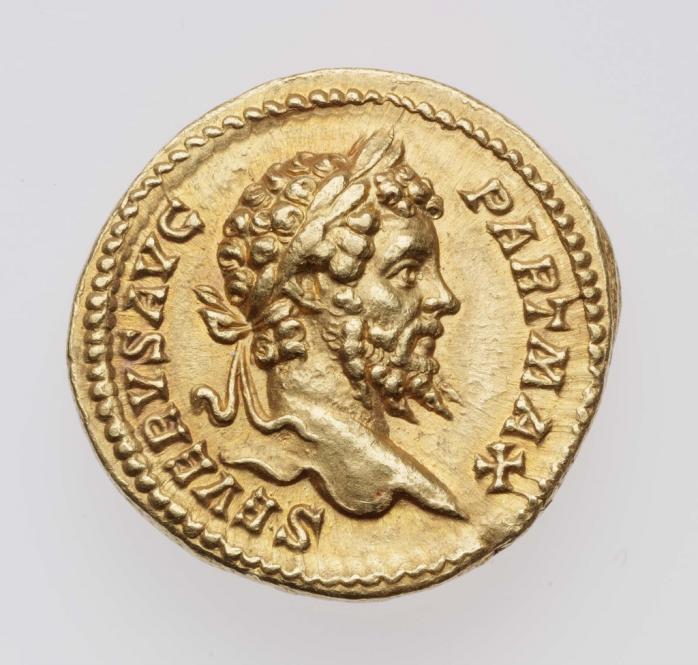
Aureus with the Bust of Septimius Severus
Measurements
Diameter: 19 mm.; weight: 7.33 gm.; die axis: 5 Creation Date: A.D. 200-201
Creation Date
A.D. 200-201
Credit Line
Gift of Michael C. Ruettgers
Culture
Country of Origin
Object Type
Materials / Techniques
Object URL
http://www.mfa.org/collections/object/aureus-with-the-bust-of-septimius-severus-522467
Provenance Information
May 17-18, 2001, anonymous sale (Auction 21), Numismatica Ars Classica, Zürich, lot 498. 2001, purchased by Michael C. Ruettgers, Carlisle, MA; 2008, gift of Michael C. Ruettgers to the MFA. (Accession Date: December 17, 2008)
Exhibition Information
None known.
Publication Information
None known.
Section of the AAMD Guidelines relied upon for the exception to 1970
Cumulative facts and circumstances
Explain why the object fits the exception set forth above
The date and circumstances of the coin’s discovery are not known. Gold coins of this type, while struck at Rome, circulated widely and have been found within the present-day borders of many countries. Per the MFA’s 2006 agreement with the Italian Ministry of Culture, the Museum contacted Ministry representatives prior to acquiring the coin; the Ministry raised no objection to the acquisition.

2008.1419

Object Title
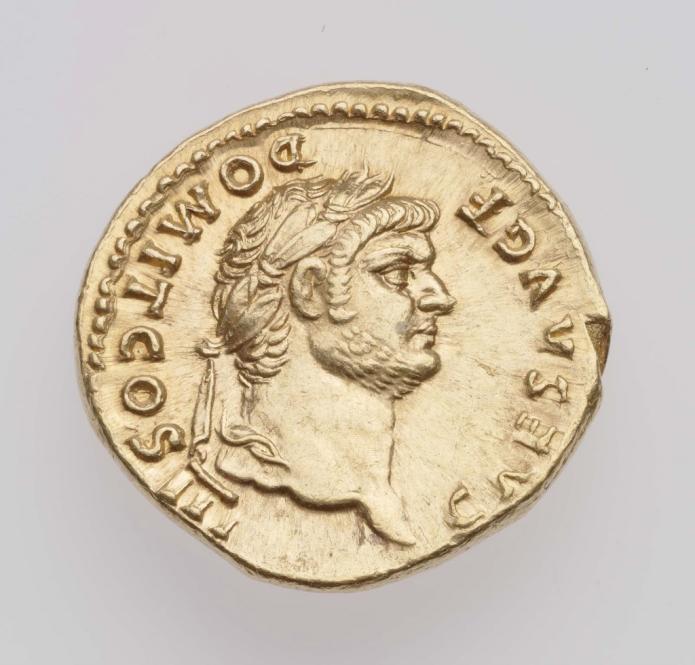
Aureus with head of Domitian
Measurements
Diameter: 20 mm; weight: 7.30 gm.; die axis: 6
Creation Date
A.D. 75
Credit Line
Gift of Michael C. Ruettgers
Culture
Country of Origin
Object Type
Materials / Techniques
Object URL
http://www.mfa.org/collections/object/aureus-with-head-of-domitian-522463
Provenance Information
March 29-30, 2000, anonymous sale (Auction 18), Numismatica Ars Classica, Zürich, lot 487. December 5, 2002, anonymous sale (Auction 24), Numismatica Ars Classica, Zürich, lot 59. 2002 or 2003, purchased by Michael C. Ruettgers, Carlisle, MA; 2008, gift of Michael C. Ruettgers to the MFA. (Accession Date: December 17, 2008)
Exhibition Information
"Rubens and the Baroque Festival," Harvard Art Museum, March 15-August 31, 2010.
Publication Information
None known.
Section of the AAMD Guidelines relied upon for the exception to 1970
Cumulative facts and circumstances
Explain why the object fits the exception set forth above
The date and circumstances of the coin’s discovery are not known. Gold coins of this type, while struck at Rome, circulated widely and have been found within the present-day borders of many countries. Per the MFA’s 2006 agreement with the Italian Ministry of Culture, the Museum contacted Ministry representatives prior to acquiring the coin; the Ministry raised no objection to the acquisition.

2011.1.22

Object Title
Persian Siglos
Measurements
5.39g
Creation Date
400-300
Credit Line
Harvard Art Museums/Arthur M. Sackler Museum, Gift of Wellington F. Scott, III, in memory of Jane Ayer Scott
Country of Origin
Object Type
Materials / Techniques
Object URL
http://www.harvardartmuseums.org/art/336405
Provenance Information
Jane Ayer Scott, Newton MA (by 2008), by inheritance; to her husband Wellington F. Scott III, (2008-2010), gift; to the Harvard Art Museums, 2010.
Exhibition Information
No information available
Publication Information
No information available
Section of the AAMD Guidelines relied upon for the exception to 1970
Cumulative facts and circumstances
Explain why the object fits the exception set forth above
Fourth century Persian sigloi have been found in large numbers. They show different styles and different reverses and have been attributed by scholars to a variety of mints. They circulated all over the western part of the Persian Empire and tend to be inadequately illustrated in sales catalogues making it difficult to trace a particular specimen.
Subscribe to Coins