Home

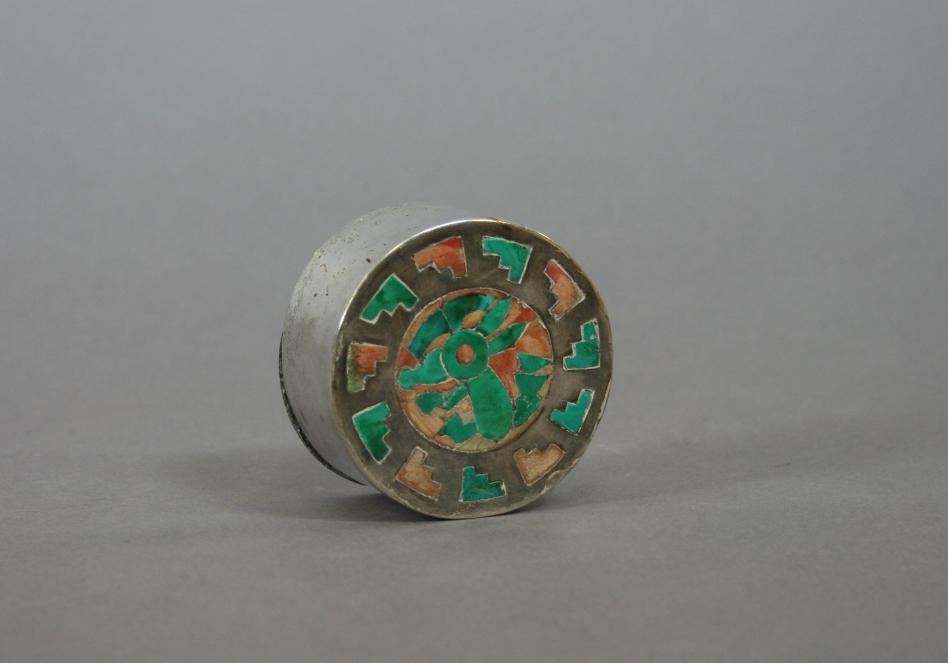
2018.887a, b

Object Title
Pair of earflares
Measurements
Diam. 2 1/4 in. (5.7 cm)
Creation Date
13th–15th century
Credit Line
Lucille and Martin E. Kantor Gift, 2018
Culture
Country of Origin
Object Type
Materials / Techniques
Object URL
https://www.metmuseum.org/art/collection/search/318668
Provenance Information
Collection of Alan Lapiner (d. 1976); Laurence C. Witten II, until 1995, and then to the Cora Williams Witten Unitrust from 1995 through 1996; [Sotheby’s, New York, November 26, 1996, lot 38]; Blake Perlingieri, WA, until 2000 [Spencer Throckmorton, New York]; Collection of Lucille and Martin E. Kantor (d. 2013), New York, 2000-2018. Promised Gift from Lucille and Martin E. Kantor to The Metropolitan Museum of Art, 2000; Gift from Lucille Kantor to The Metropolitan Museum of Art, 2018.
Exhibition Information
On loan to and on display at, The Metropolitan Museum of Art, New York, in the exhibition Rain of the Moon: Silver in Ancient Peru, November 3, 2000 – April 22, 2001.
Publication Information
Sotheby's. Precolumbian Art. New York, November 25, 1996, no. 38.

King, Heidi, Luis Jaime Castillo Butters, and Paloma Carcedo de Mufarech. Rain of the Moon: Silver in Ancient Peru. New York, New Haven and London: The Metropolitan Museum of Art, 2000, no. 57.
Section of the AAMD Guidelines relied upon for the exception to 1970
Gift or bequest expected or on loan prior to 2008
Explain why the object fits the exception set forth above
According to the 1996 Sotheby’s catalogue, the Ear Ornaments come from the collection of Alan Lapiner, a scholar of ancient Peruvian art active in the 1960’s and early 1970’s. The Ear Ornaments were promised as a gift to the Museum by Lucille and Martin E. Kantor in 2000.
2018-12

Object Title
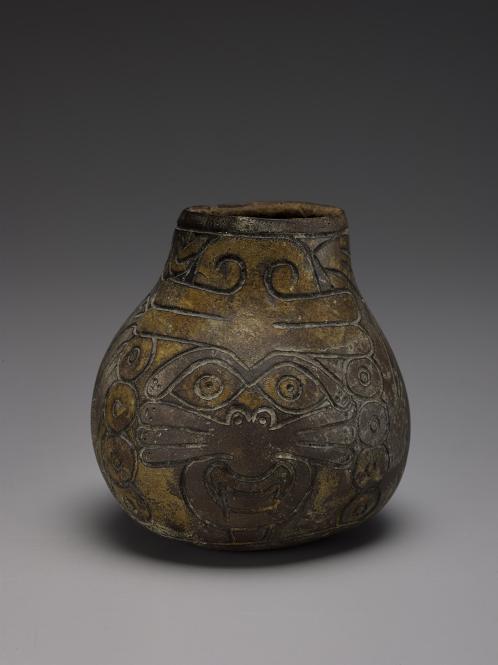
Incised and painted bottle gourd
Measurements
approx. h. 10.2 cm (4 in.)
Creation Date
A.D. 80–260
Credit Line
Museum purchase, Gillett G. Griffin Art of the Ancient Americas Fund
Culture
Country of Origin
Object Type
Materials / Techniques
Object URL
https://artmuseum.princeton.edu/collections/objects/133370
Museum's Definition of Antiquity
1532
Provenance Information
By 1965, Alan C. Lapiner, New York; 1965-2018, private New York collection (collector object #3)
Exhibition Information
none
Publication Information
none
Section of the AAMD Guidelines relied upon for the exception to 1970
Informed judgement that works were outside of the country of modern discovery before 1970
Explain why the object fits the exception set forth above
Based on the results of provenance research, the Princeton University Art Museum can make an informed judgment that the object was outside its probable country of modern discovery before 14 November 1970. The collector maintained a sequential inventory of their collection with the year of each acquisition specified. The accuracy of the list is corroborated by a number of works in the inventory that were either published in other collections prior to the collector’s acquisition date or published or exhibited shortly after the acquisition, in each instance with the appropriate ownership history indicated. According to the inventory, the collector acquired this work in the second half of 1965 from Alan C. Lapiner, a New York art dealer.

2018-9

Object Title
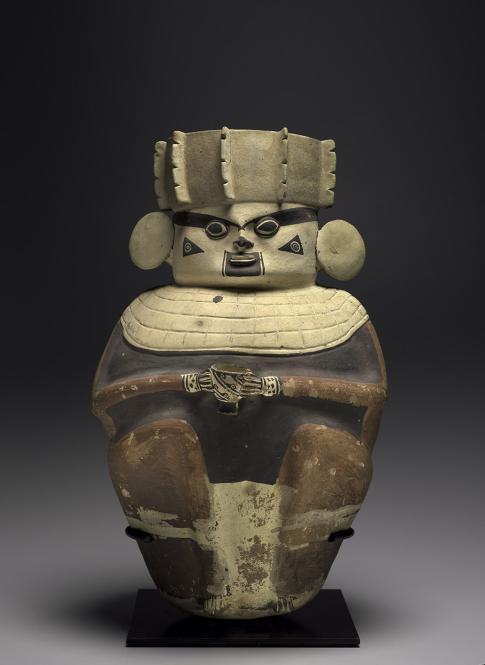
Vessel in the form of a seated figure holding a cup ('China')
Measurements
approx. h. 76.2 cm (30 in.)
Creation Date
A.D. 1100-1400
Credit Line
Museum purchase, Peter Jay Sharp, Class of 1952, Fund
Culture
Country of Origin
Object Type
Materials / Techniques
Object URL
https://artmuseum.princeton.edu/collections/objects/133367
Museum's Definition of Antiquity
1532
Provenance Information
By 1967, Alan C. Lapiner, New York; 1967-2018, private New York collection (collector object #92)
Exhibition Information
none
Publication Information
none
Section of the AAMD Guidelines relied upon for the exception to 1970
Informed judgement that works were outside of the country of modern discovery before 1970
Explain why the object fits the exception set forth above
Based on the results of provenance research, the Princeton University Art Museum can make an informed judgment that the object was outside its probable country of modern discovery before 1970. The collector maintained a sequential inventory of their collection with the year of each acquisition specified. The accuracy of the list is corroborated by a number of works in the inventory that were either published in other collections prior to the collector’s acquisition date or published or exhibited shortly after the acquisition, in each instance with the appropriate ownership history indicated. According to the inventory, the collector acquired this work in the second half of 1967.

2018-8

Object Title
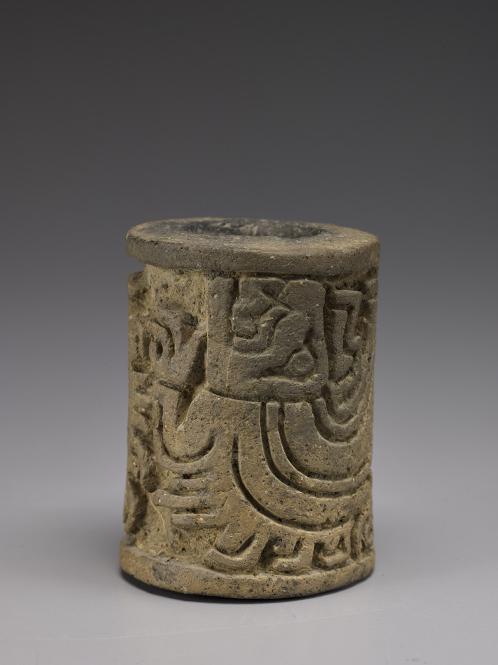
Cylinder stamp with supernatural figure
Measurements
h. 6.6 × diam. 5 cm (2 5/8 × 1 15/16 in.)
Creation Date
1000-500 B.C.
Credit Line
Museum purchase, Fowler McCormick, Class of 1921, Fund
Culture
Country of Origin
Object Type
Materials / Techniques
Object URL
https://artmuseum.princeton.edu/collections/objects/133366
Museum's Definition of Antiquity
1532
Provenance Information
1967 (July or later)-2018, private New York collection (collector object #80)
Exhibition Information
none
Publication Information
none
Section of the AAMD Guidelines relied upon for the exception to 1970
Informed judgement that works were outside of the country of modern discovery before 1970
Explain why the object fits the exception set forth above
Based on the results of provenance research, the Princeton University Art Museum can make an informed judgment that the object was outside its probable country of modern discovery before 1970. The collector maintained a sequential inventory of their collection with the year of each acquisition specified. The accuracy of the list is corroborated by a number of works in the inventory that were either published in other collections prior to the collector’s acquisition date or published or exhibited shortly after the acquisition, in each instance with the appropriate ownership history indicated. According to the inventory, the collector acquired this work in the second half of 1967.

2018.3.3

Object Title
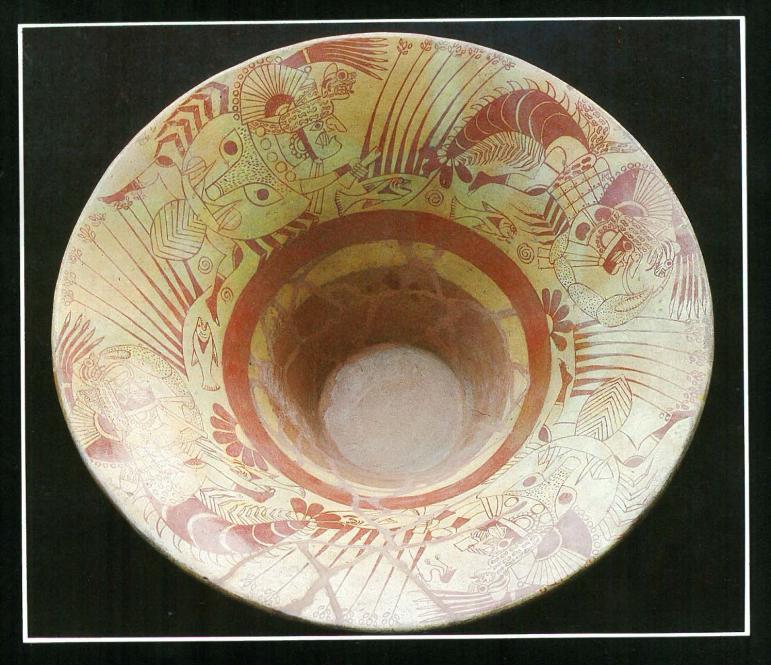
Flaring Bowl (Florero)
Measurements
height: 9 1/2 in.; diameter: 17 1/8 in.
Creation Date
ca. AD 450-550
Credit Line
Gift in honor of Assen Nicolov
Culture
Country of Origin
Object Type
Materials / Techniques
Object URL
http://art.seattleartmuseum.org/objects/30845/flaring-bowl-florero?ctx=cbb29e3f-9980-4b77-9df1-9493fb88bd3c&idx=2
Provenance Information
Collection of Robert and Marianne Huber, New York; [Sotheby’s, New York, Pre-Columbian Art, Nov. 20, 1995, sale no. 6778, lot no. 11, reproduced]; purchased by Assen and Christine Nicolov, Seattle, Washington
Exhibition Information
Seattle, Washington, Seattle Art Museum, Feasting with the Gods: Art and Ceremony in Ancient Mesoamerica and the Central Andes, Dec.11, 2003-July 19, 2004
Publication Information
José Antonio de Lavalle, Moche, Lima, 1985, pg. 55.
Section of the AAMD Guidelines relied upon for the exception to 1970
Cumulative facts and circumstances
Explain why the object fits the exception set forth above
The cumulative facts and circumstances known to the Seattle Art Museum (SAM) at the time of acquisition allowed the museum to make an informed judgment to acquire the object. Although it is not known when the work was outside its probable country of modern discovery (Peru), or acquired by Robert and Marianne Huber—important collectors of Pre-Columbian objects—this bowl featured prominently in the publication Moche (1985) by José Antonio de Lavalle. In addition, the work was included in an exhibition at the Seattle Art Museum, titled Feasting with the Gods: Art and Ceremony in Ancient Mesoamerica and the Central Andes, from December 11, 2003-July 19, 2004. This bowl cleared a search conducted by the Art Loss Register. SAM has ten Mochica vessels in its collection depicting warriors, humans, supernatural beings and animals, but not such a distinctive flaring vessel with exceptional quality of fine line painting. The vessel provides a visual documentation of an important theme in Mochica art and culture: mythical hunters and warriors.

2018.3.2

Object Title
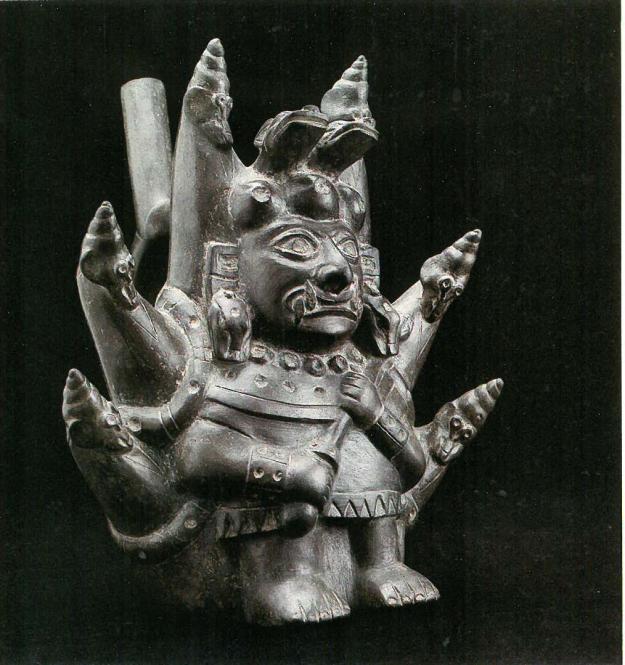
Ai-Apec stirrup spout vessel
Measurements
10 x 8 1/2 x 8 in.
Creation Date
ca. AD 200-500
Credit Line
Gift in honor of Assen Nicolov
Culture
Country of Origin
Object Type
Materials / Techniques
Object URL
http://art.seattleartmuseum.org/objects/47102/aiapec-stirrup-spout-vessel?ctx=013ca58f-85bb-4169-85ca-85b1217f275c&idx=0
Provenance Information
[Galerie El Jaguar, Caracas, Venezuela]; purchased by Lenora and Jimmy Belilty, Paris, France, probably by 1979; [Sotheby’s, New York, Pre-Columbian Art, Nov. 23, 1998, sale no. 7224, lot no. 14, reproduced]; purchased by Assen and Christine Nicolov, Seattle, Washington
Exhibition Information
None known
Publication Information
José Antonio de Lavalle, Coleccion Arte y Tesoros del Peru, Moche, Lima, 1985, pl. 53.

José Antonio de Lavalle, Coleccion Arte y Tesoros del Peru, Trujillo, Lima, 1990, pg. 133.
Section of the AAMD Guidelines relied upon for the exception to 1970
Cumulative facts and circumstances
Explain why the object fits the exception set forth above
Based on the results of provenance research, this Mochica Ai-Apec stirrup vessel was in Caracas, Venezuela by the late 1970s, when it was purchased by its previous owner, collector Jimmy Belilty. This piece featured prominently in two publications by José Antonio de Lavalle: Coleccion Arte y Tesoros del Peru Moche (1985 and 1990). Together, these cumulative facts and circumstances known at the time of acquisition allowed the Seattle Art Museum (SAM) to make an informed judgment to acquire the object. The vessel cleared a search conducted by the Art Loss Register. SAM’s collection has some examples of blackware ceramics, but nothing as rich as this piece in composition and iconography.

2016-86

Object Title
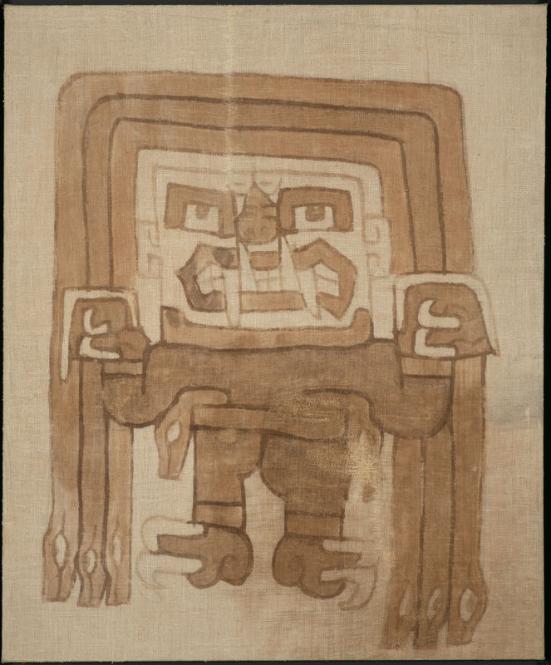
Painted textile with supernatural
Measurements
71.1 × 59.1 cm (28 in. x 23 ¼ in.)
Creation Date
400-200 B.C.
Credit Line
Museum purchase, Fowler McCormick, Class of 1921, Fund
Culture
Country of Origin
Object Type
Materials / Techniques
Object URL
http://artmuseum.princeton.edu/collections/objects/124460
Museum's Definition of Antiquity
1532
Provenance Information
said to be found by Dario Ramirez, prior to 19 May 1970; owned by André Emmerich, held by Alan Lapiner (ST-0-65), New York, Nov-Dec 1970; Richard Grey Gallery, Chicago, May 1971-?; Ron Messick, Santa Fe, 1990s; private collection, Chicago, purchased from Ron Messick (as per owner), 1990s-2016; acquired by the Princeton University Art Museum, 2016
Exhibition Information
November 1970 Textile Museum, Washington, D.C. (lent but may not have been displayed for public); March 30, 1971–May 8, 1971 Richard Grey Gallery, Chicago
Publication Information
Richard Grey Gallery. 1971. Pre-Columbian Art: Mexico, Meso-America [exhib. cat.]. Richard Grey Gallery, Chicago. Illus., cat. no. 147.
Cordy-Collins, Alana. 1976. An Iconographic Study of Chavín Textiles from the South Coast of Peru: The Discovery of a Pre-Columbian Catechism. Unpublished Ph.D. dissertation, University of California, Los Angeles. Illus., p. 67, fig. 46a (line drawing).
Lapiner, Alan. 1976. Pre-Columbian Art of South America. Harry N. Abrams, Inc., New York. Illus., p. 439.
Cordy-Collins, Alana. 1979. “Cotton and the Staff God: Analysis of an Ancient Chavin Textile.” In The Junius B. Bird Pre-Columbian Textile Conference, May 19th and 20th, 1973. Ann Pollard Rowe, Elizabeth P. Benson, Anne-Louise Schaffer, eds., pp. 51-60. Washington, D.C.: The Textile Museum and Dumbarton Oaks. Illus., fig. 15.
Section of the AAMD Guidelines relied upon for the exception to 1970
Informed judgement that works were outside of the country of modern discovery before 1970
Explain why the object fits the exception set forth above
Based on the results of provenance research, the Princeton University Art Museum can make an informed judgment that the object was outside its probable country of modern discovery before November 1970. Letter to Junius Bird from Alan C. Lapiner dated 19 May 1970 (AMNH archives) indicates that the Karwa textiles were in Peru but in the process of being transported to the United States. Further, it is likely that this particular textile was part of a group of approximately 120 textiles on loan to the Textile Museum in Washington, D.C. by 1970. In a 1972 publication, Alan Sawyer, then director of the Textile Museum, wrote that these objects were on loan for study and were viewed by a group of scholars on November 1, 1970.

Mary Frame, a former Sawyer student, has most of Sawyer’s slide collection and has shared scans of all related materials. Although this particular object is not among the small number of remaining slides, a number of the Karwa textile slides are appropriately date-stamped May-September 1970 with notes indicating they were with Lapiner at the time. André Emmerich’s papers (Sotheby’s, New York) include mention of this object (ST-0-67 in his registry) and include a date stamped slide of the object labeled “November 1970.” Therefore, it is likely that this particular textile was part of the group of Karwa textiles that was in the United States prior to November 1, 1970.

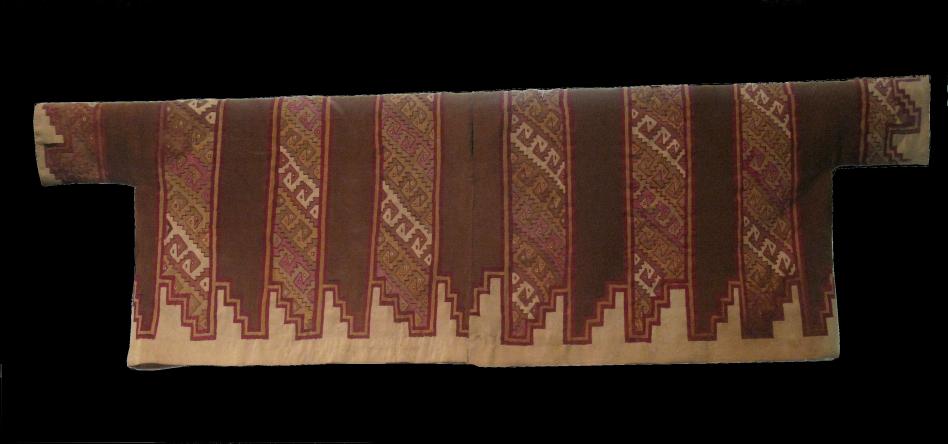
2017.193

Object Title
Sleeved Tunic
Measurements
L 40.5 x W 127.5 cm (16 x 50 in)
Creation Date
probably AD 1470-1532
Credit Line
The Cleveland Museum of Art, Severance and Greta Millikin Purchase Fund 2017.193
Culture
Country of Origin
Object Type
Materials / Techniques
Museum's Definition of Antiquity
1970
Provenance Information
probably Alan Lapiner, New York City, before 1970; Justin Kerr, New York City, probably before 1970
Exhibition Information
None
Publication Information
None
Section of the AAMD Guidelines relied upon for the exception to 1970
Informed judgement that works were outside of the country of modern discovery before 1970
Explain why the object fits the exception set forth above
Justin Kerr, a professional photographer and the immediate past owner, has confirmed the tunic was in his collection by at least 1975, when he and his late wife moved from one home to another, but he does not recall when or from whom he acquired it. He further confirms that Brigga (Brigitte) Lapiner, deceased, mounted the tunic; that in the 1960s he occasionally worked with Mrs. Lapiner’s husband, Alan Lapiner, a well-known Pre-Columbian dealer who died on February 3, 1975; and that during this period he acquired several objects from Mr. Lapiner. According to Mr. Kerr, there are only two people still alive who might recall having seen the tunic at his home in the early days. Both state that the tunic was displayed at the Kerr residence for many years but they do not remember the dates on which they first saw it. One adds that, according to his memory, he saw the tunic in Mr. Lapiner’s gallery in the late 1960s and that Mrs. Lapiner had stopped treating textiles in about 1970 in order to care for the Lapiners’ children. Taken together, these statements suggest that Mr. Kerr obtained the tunic before 1970 from Mr. Lapiner.

Ancient Andean weavers created one of the world’s most distinguished textile traditions, and the Chancay corpus forms an important chapter in that history. The museum’s exhibition-worthy Chancay holdings comprise only one other garment—a tie-dyed head cloth made of plain weave. This fine tunic, woven in the tapestry technique, will allow the museum to present to the public a more complete picture of Chancay garment types, weaving structures, and imagery. It also instantiates a major event in ancient Andean history since it represents a recently defined subtype that probably post-dates the Inca conquest of Chancay territory.

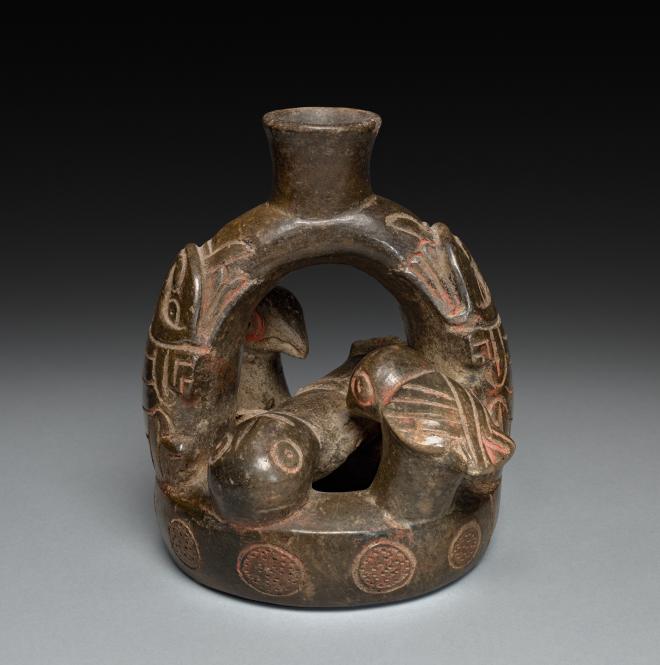
2017.55

Object Title
Vessel with Reclining Figure and Birds
Measurements
H. 5 5/8 x W. 6 in (14.3 x 14.9)
Creation Date
2200-200 BC
Credit Line
The Cleveland Museum of Art, Gift of John and Agneta Solomon
Culture
Country of Origin
Object Type
Materials / Techniques
Provenance Information
Robert Sonin, New York, New York before 1970; by inheritance to an American private collector in 2012
Exhibition Information
none
Publication Information
none
Section of the AAMD Guidelines relied upon for the exception to 1970
Informed judgement that works were outside of the country of modern discovery before 1970
Explain why the object fits the exception set forth above
Explanation: The collector, Robert Sonin, died in 2011. Prior to his death, Mr. Sonin told at least two individuals—including the immediate past owner of the vessel, who received the work by inheritance from Mr. Sonin in 2012—that he assembled his collection of Andean antiquities in the 1950s and 1960s during trips to Peru and did not acquire ancient Peruvian objects after 1970. One of these individuals recalls seeing the vessel in Mr. Sonin’s apartment in about 2008. A third individual saw the vessel in Mr. Sonin’s apartment in the late 1980s and again in about 2000. The museum has obtained letters about these facts and/or recollections from all three parties. The Cleveland Museum of Art’s collection of Cupisnique art works is very modest, comprising only one other exhibition-worthy vessel made of ceramic, a major Cupisnique art medium. Thus, this fine vessel allows the museum to better represent the artistic achievements of one of Peru’s earliest art-making cultures to the public. The vessel’s unusual imagery—a human pecked by birds along with mythical creatures—is an intriguing and important document of ancient thought.

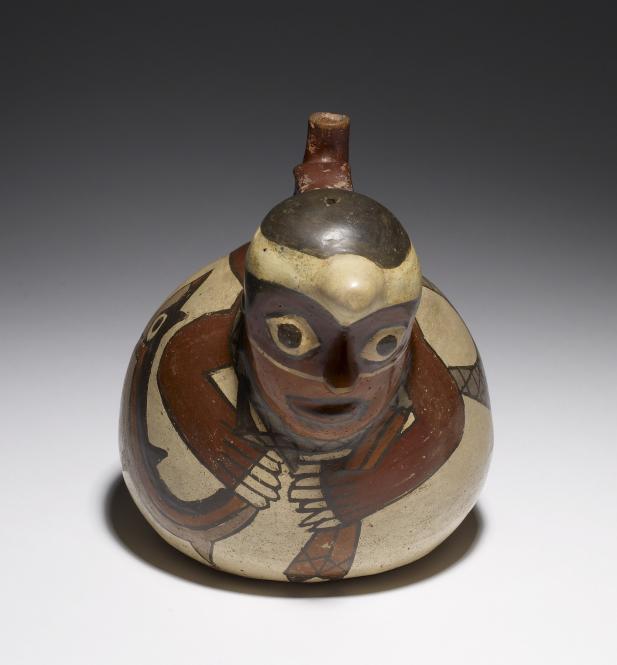
48.2865

Object Title
Fisherman Vessel
Measurements
H: 7 1/16 x W: 5 15/16 x D: 7 1/2 in. (18 x 15.1 x 19.1 cm)
Creation Date
200BC-AD600
Credit Line
Gift of Dr. Ernst Niedermeyer, 2009
Culture
Country of Origin
Object Type
Materials / Techniques
Object URL
http://art.thewalters.org/detail/33518/happy-fisherman-vessel/
Provenance Information
Dr. Uldarico Rocca, Lima, Peru [date and mode of acquisition unknown]; Dr. Ernst Niedermeyer, Baltimore, July 1978, by gift; Walters Art Museum, 2009, by gift.
Exhibition Information
Crowning Glory: Art of the Americas. The Walters Art Museum, Baltimore. 2018.
Publication Information
N/A
Section of the AAMD Guidelines relied upon for the exception to 1970
Gift or bequest expected or on loan prior to 2008
Explain why the object fits the exception set forth above
Correspondence from the donor in 1999 indicating that this would be given to the Walters Art Museum.
Subscribe to Peru