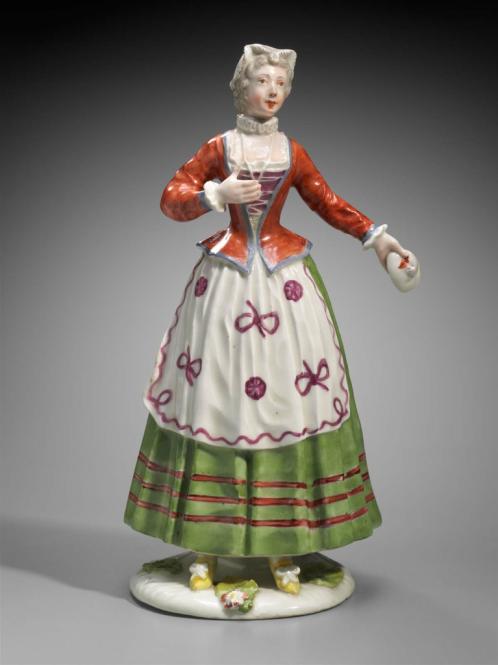
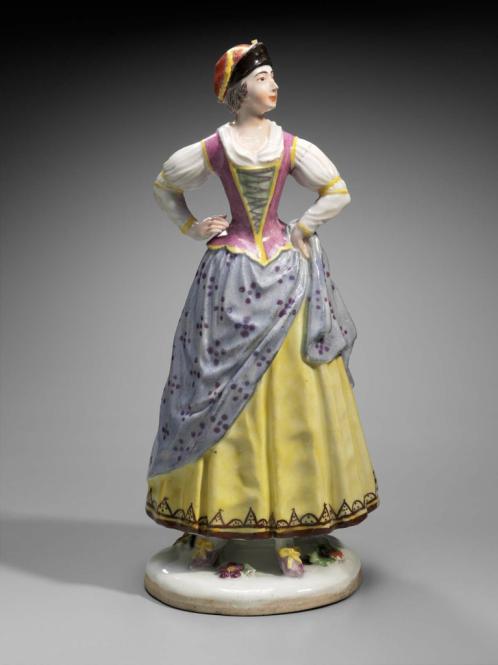
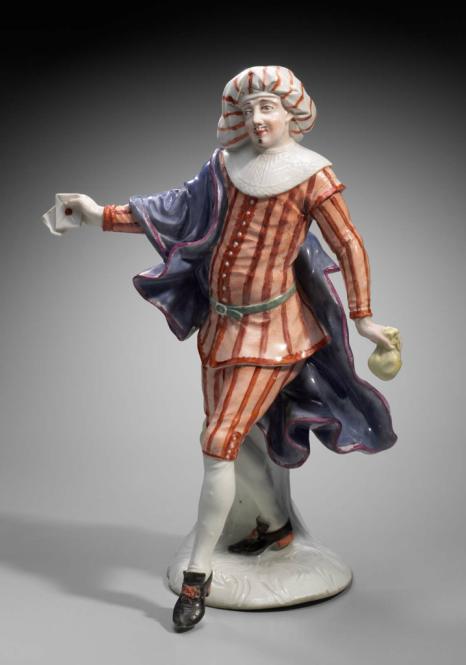
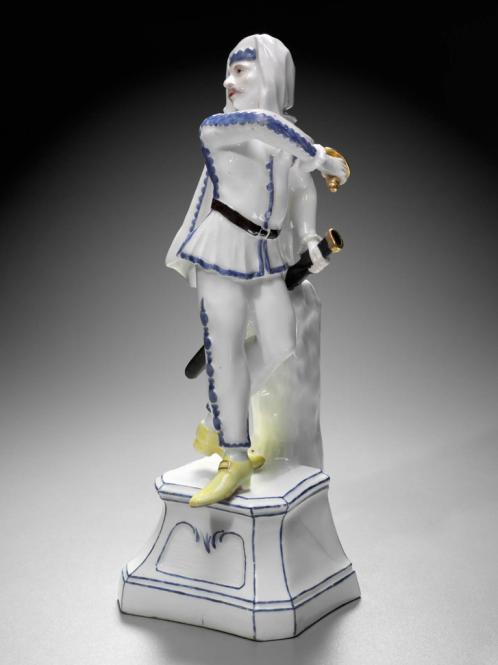
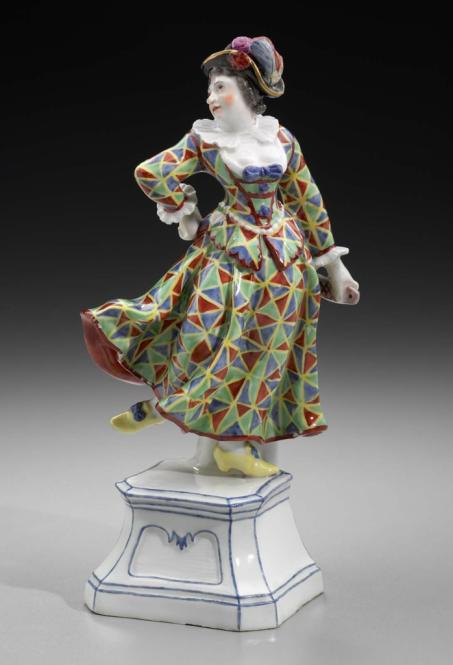
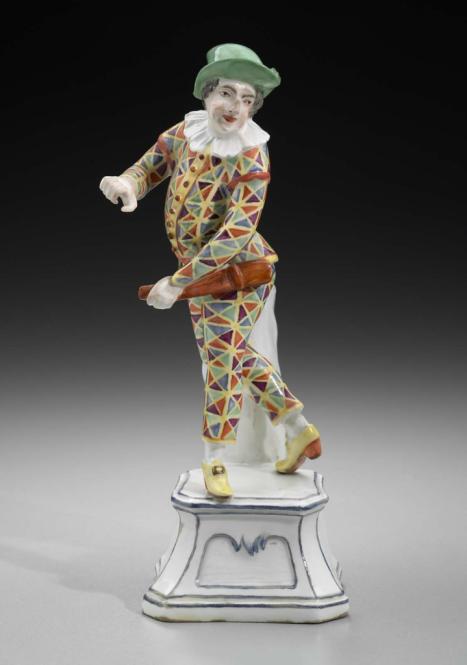
2017.82
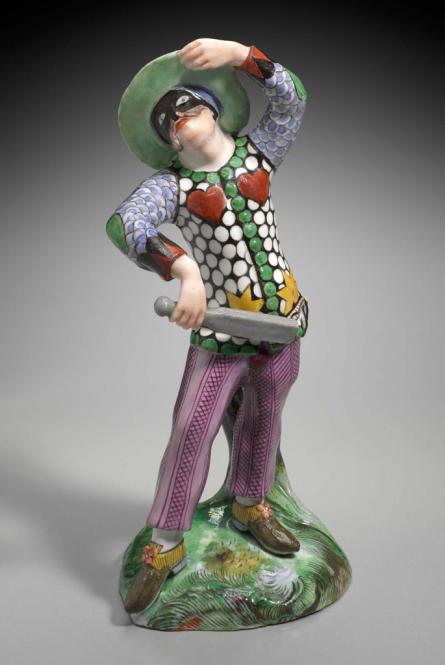
Creator
Made by Fulda Manufactory (German)
Object Title
Figure of Harlequin
Measurements
14.9 cm (5 7/8 in.) h.
Credit Line
Kiyi and Edward M. Pflueger Collection. Bequest of Edward M. Pflueger and Gift of Kiyi Powers Pflueger, from the Estate of Emma Lazarus Budge
Creation Date
about 1765
Museum Name
Object Type
Object URL
http://www.mfa.org/collections/object/figure-of-harlequin-466336
Claim Resolution
Resolution
Agreement reached, museum retained work
Resolution Date
March 1, 2017
Details of Resolution
In March 2017, the Museum of Fine Arts reached an agreement with the Estate of Emma Budge, allowing the Museum to retain seven pieces of 18th century German porcelain that were sold in Berlin in 1937.
The commedia dell’arte figures, made by the porcelain manufactories Höchst, Fürstenburg, and Fulda, all belonged to Emma Lazarus Budge (1852 – 1937), who built a large collection of decorative arts in her home in Hamburg. Upon her death in 1937, she left the disposition of her art collection to her estate executors, specifying that she did not wish the collection to be sold within National Socialist Germany. Mrs. Budge and all of her estate executors were Jewish.
Nevertheless, on October 4-6, 1937, a large portion of Emma Budge’s art collection was auctioned in Berlin. The proceeds from the sale were very probably credited to the account of the Budge estate at M. M. Warburg Bank in Hamburg. The settlement of the estate, however, was delayed until 1939. In the meantime, Warburg Bank was Aryanized, or sold to non-Jewish owners. Several of Mrs. Budge’s estate executors were dismissed from their roles. Many of her heirs, who were Jewish, fled Germany. Those who remained were subject to persecution. The estate funds that were ultimately disbursed were placed into tightly-controlled, blocked accounts to which the heirs did not have full access. Thus, as the direct result of Nazi persecution, the proceeds from the sale were never realized.
The seven pieces of porcelain at the MFA were purchased at the 1937 auction by Otto and Magdalena Blohm, likewise porcelain collectors from Hamburg, and probably acquaintances of Emma Budge. Mrs. Blohm moved to New York after World War II, bringing the porcelain collection with her. Edward and Kiyi Pflueger acquired the figures from the Blohm collection and bequeathed them to the MFA in 2006.